These are the butterflies in Tennessee that found our flower beds in Coalmont this year, photographed between April and October 2026. Some stop for a drink and move on. A few live here.
Cloudless sulphur: the one that moved in
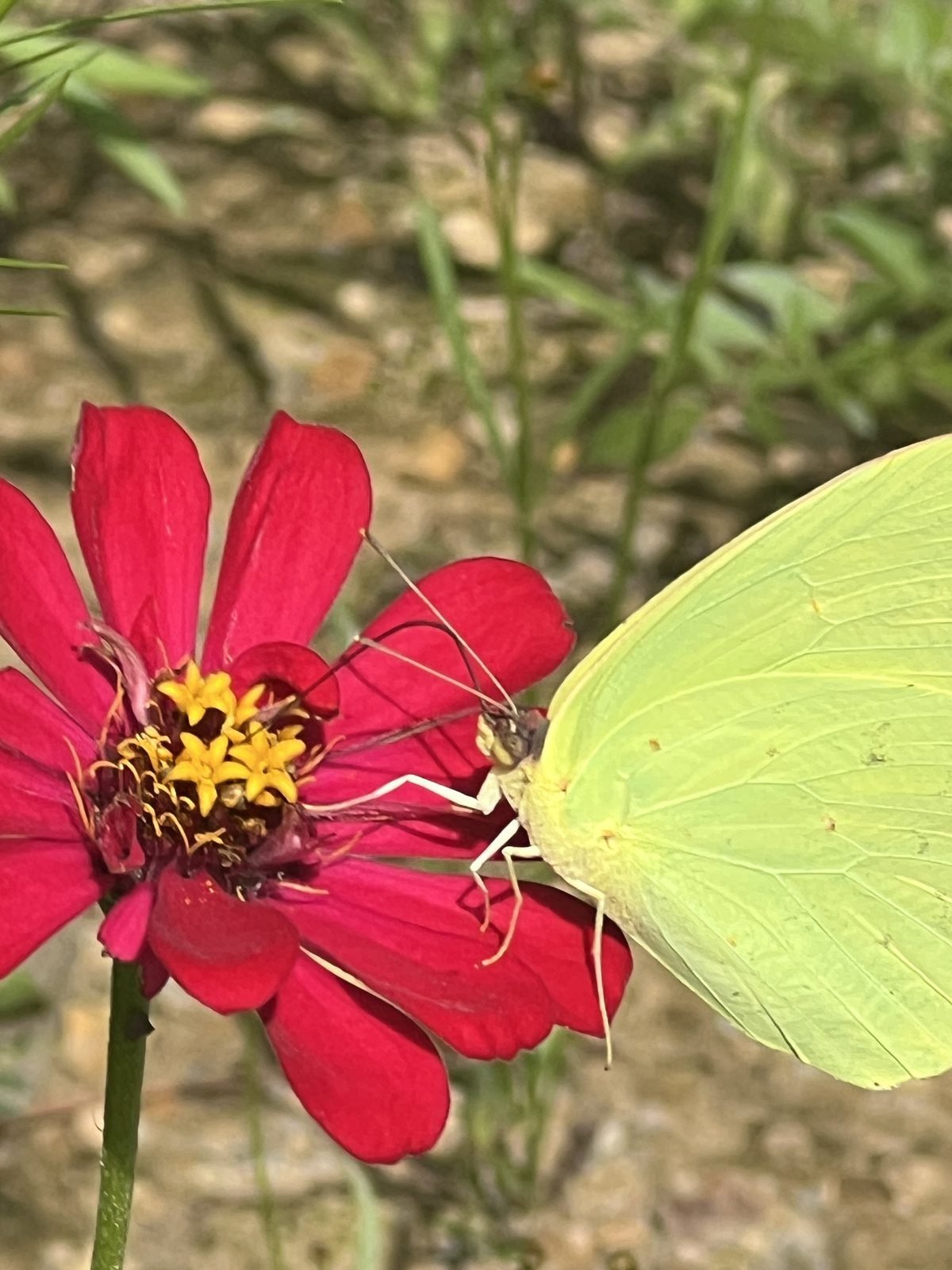
That lemon-yellow blur zipping over the beds in late summer is a cloudless sulphur, and it’s one of the few butterflies here that is raising a family. Its caterpillars eat partridge pea, a native wildflower that grows on the property and that we collect seed from every fall. When you see one dipping down to a partridge pea plant, it’s probably laying eggs.
Fun fact: the caterpillars take on the color of what they eat. They’re green while they chew leaves and turn yellow when they eat the flowers. In late summer and fall the adults drift south in loose streams, and some years you can watch a steady trickle of them all heading the same way.
Eastern tiger swallowtail: the big yellow one
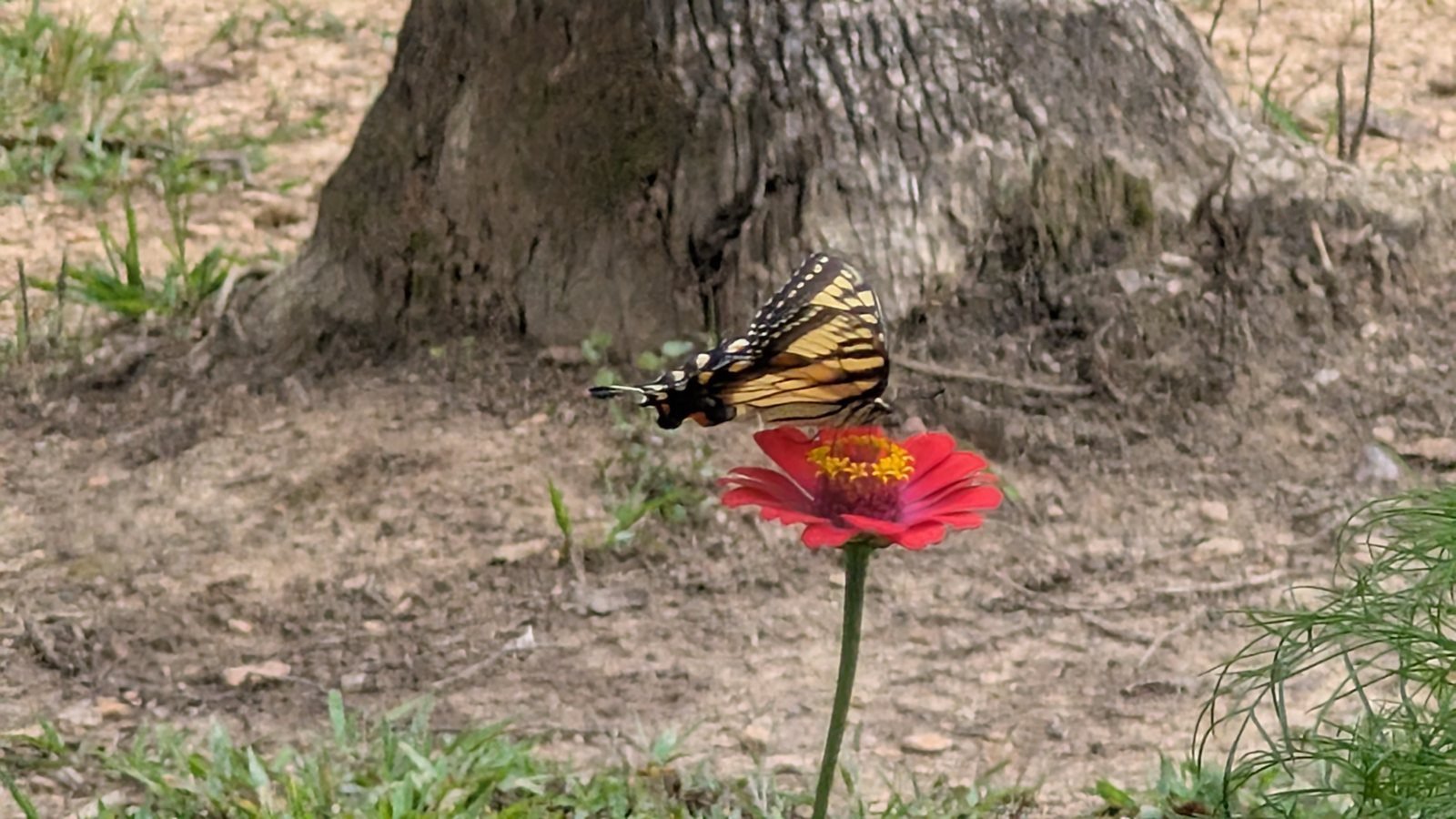
Big, yellow, striped and impossible to miss, the eastern tiger swallowtail is one of the largest butterflies most of our guests will ever see up close. Its caterpillars feed on tulip poplar and wild cherry, and we have both in the woods right next to the flower beds.
Fun fact: the males are always yellow, but some females come in a dark, almost black version. They copy the pipevine swallowtail, a butterfly that tastes terrible to birds, and the birds give them a pass. Look closely at a dark female and you can often see the ghost of her tiger stripes underneath.
One we’re still hoping for: Tennessee’s state butterfly is the zebra swallowtail, a black-and-white cousin of the tiger with long tails. Its caterpillars eat only pawpaw leaves, so it sticks close to pawpaw trees. We haven’t photographed one here yet. If you do, we’d love to see it.
The dark swallowtails
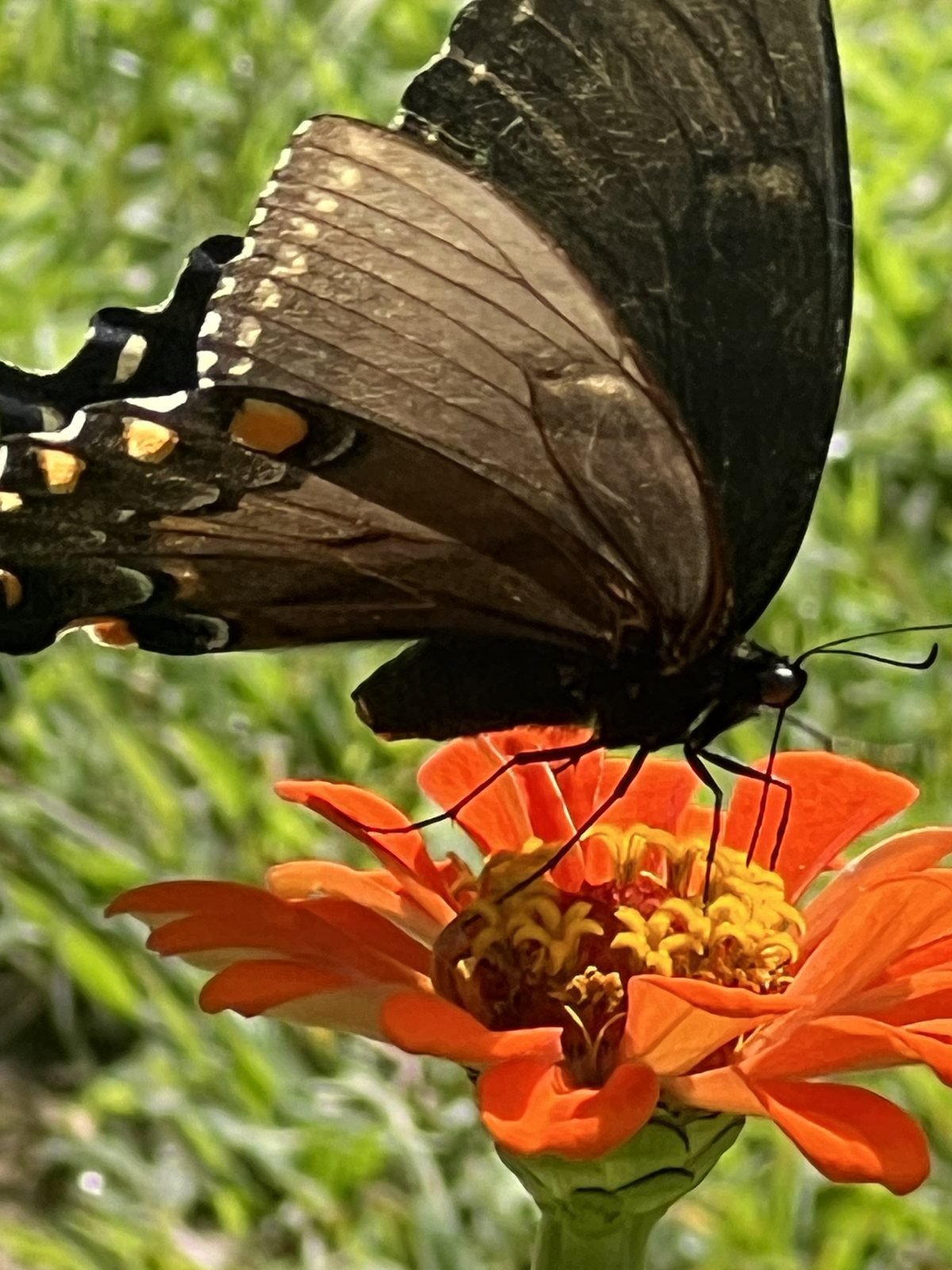
We photographed several of these on the zinnias and marigolds in July and August. They’re swallowtails, and we believe they’re the dark-form females from the section above. Telling dark swallowtails apart takes a good look at the top of the wings, and these mostly showed us the undersides.
Fun fact: swallowtails are named for the long tails on their back wings. They look a little like a swallow’s tail feathers. To tell the dark ones apart, look at the rows of orange spots under the back wings. The number and color of those spots usually give them away.
Gulf fritillary: a first for the property
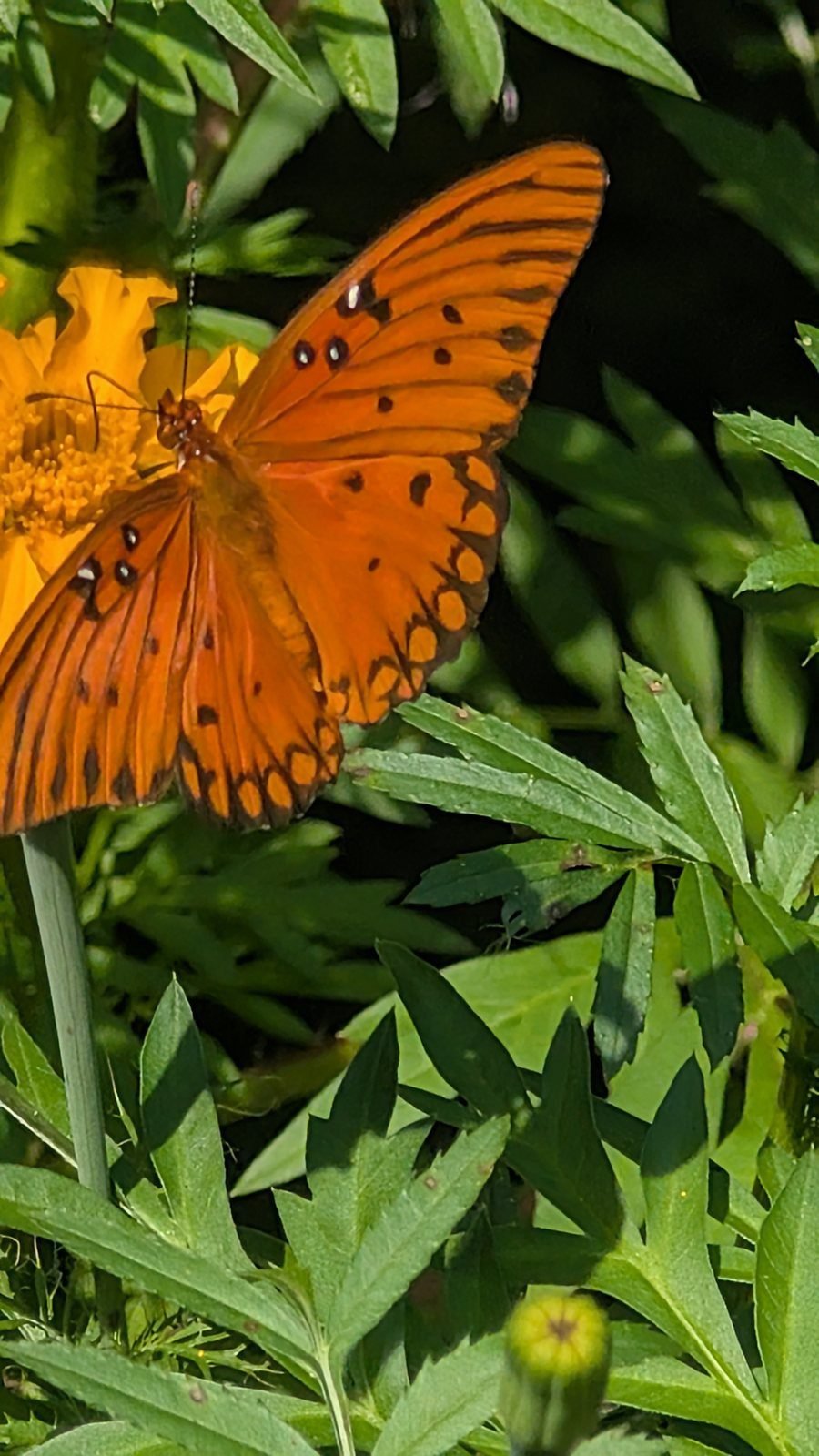
Bright orange on top, with silver spots underneath that flash when it opens and closes its wings. This one showed up on the marigolds in late September.
Fun fact: its caterpillars eat only passionflower vines, including maypop, Tennessee’s state wildflower. Gulf fritillaries spread north from the Gulf states as the summer goes on, and cold weather ends their season here. So every one you see in Tennessee is part of that yearly push north.
Red-spotted purple: the copycat
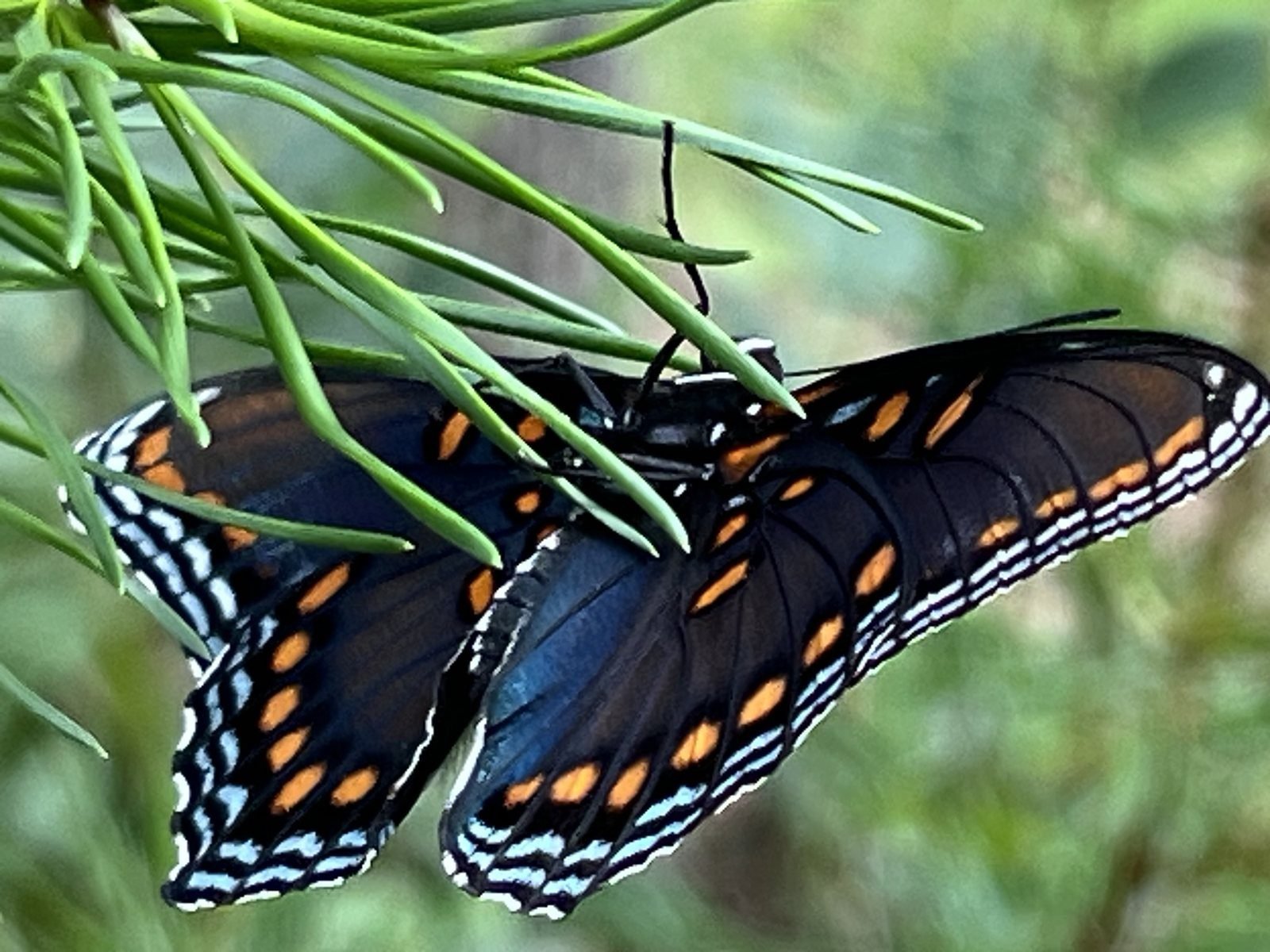
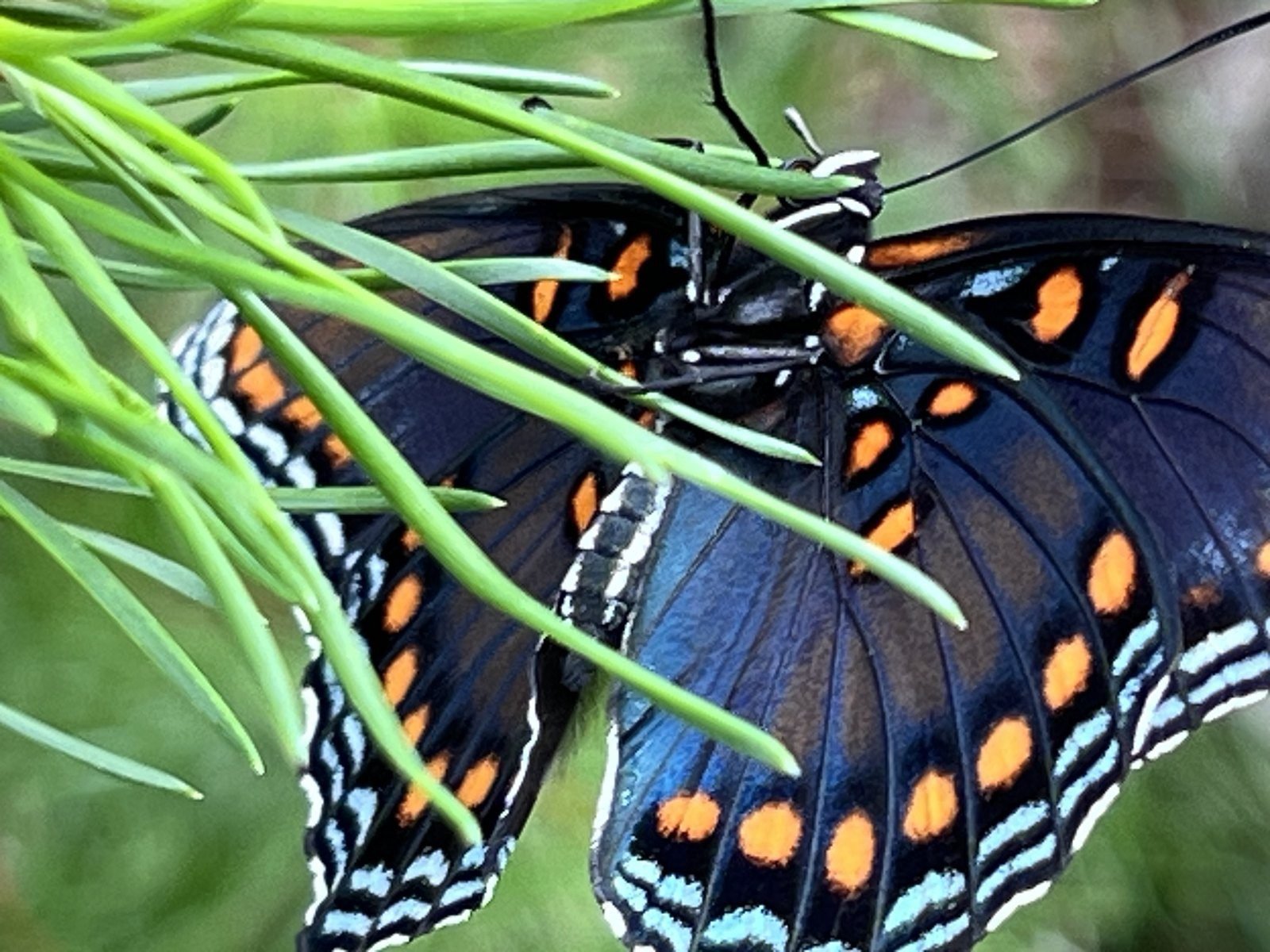
That shimmer of blue is another pipevine swallowtail impersonator, from a completely different butterfly family. Pretending to be the bad-tasting one works well enough that two unrelated butterflies both do it.
Fun fact: red-spotted purples would usually rather sip tree sap or rotting fruit than visit a flower. We see a whole second set of butterflies in the woods for the same reason. They’re there for the sap.
Skippers: the little fast ones
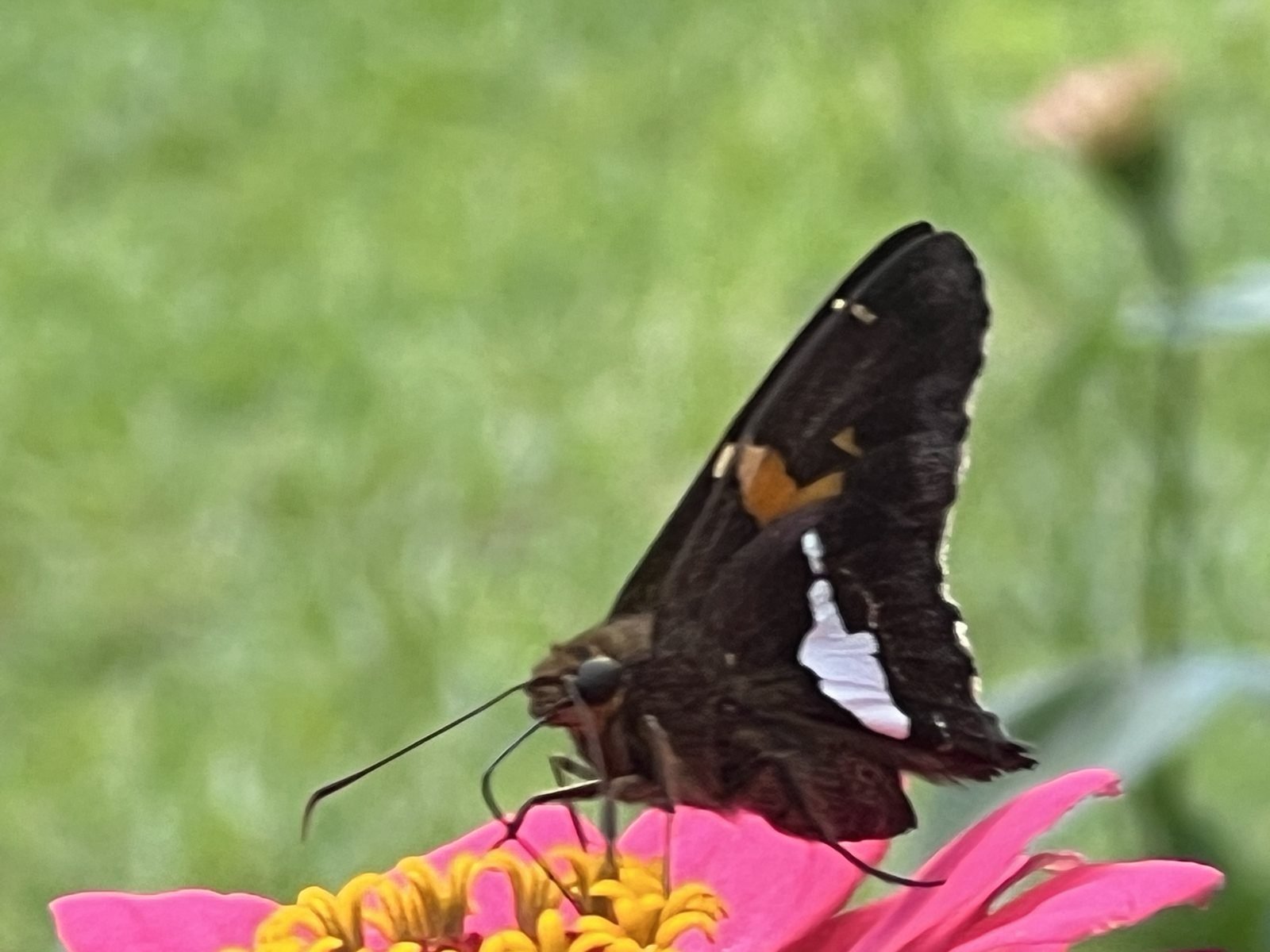
Skippers get their name from their quick, darting flight. The silver-spotted skipper is the big one, with a bright silver-white patch under each hindwing that makes it easy to name even from a few feet away.
Fun fact: its caterpillars live inside little tents they make by folding a leaf over and tying it with silk. They’re also tidy: a caterpillar flings its droppings well clear of its shelter, so the smell doesn’t lead a hungry wasp to its front door.
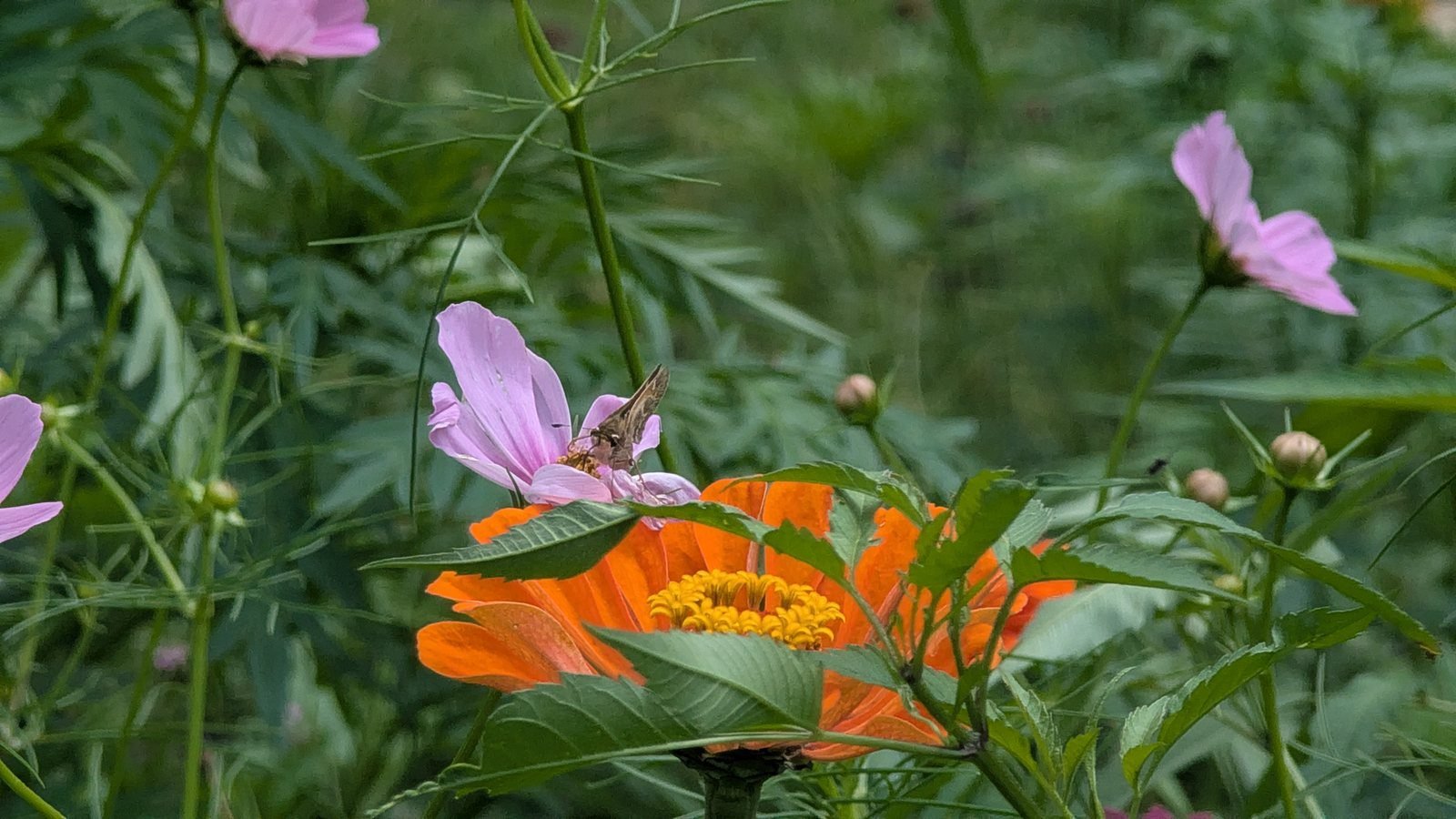
We believe this one on the cosmos is the same silver-spotted skipper, but its white patch is hidden in this shot, so we’ll just call it a skipper. Fun fact: the little orange grass skippers that dart around the cosmos in late summer perch with their front wings up and their back wings flat, like tiny fighter jets.
The night shift: big moths
Some of the best-looking visitors show up after dark, and a few of them are among the biggest moths in Tennessee. Jason photographed all of these on the property between April and July.
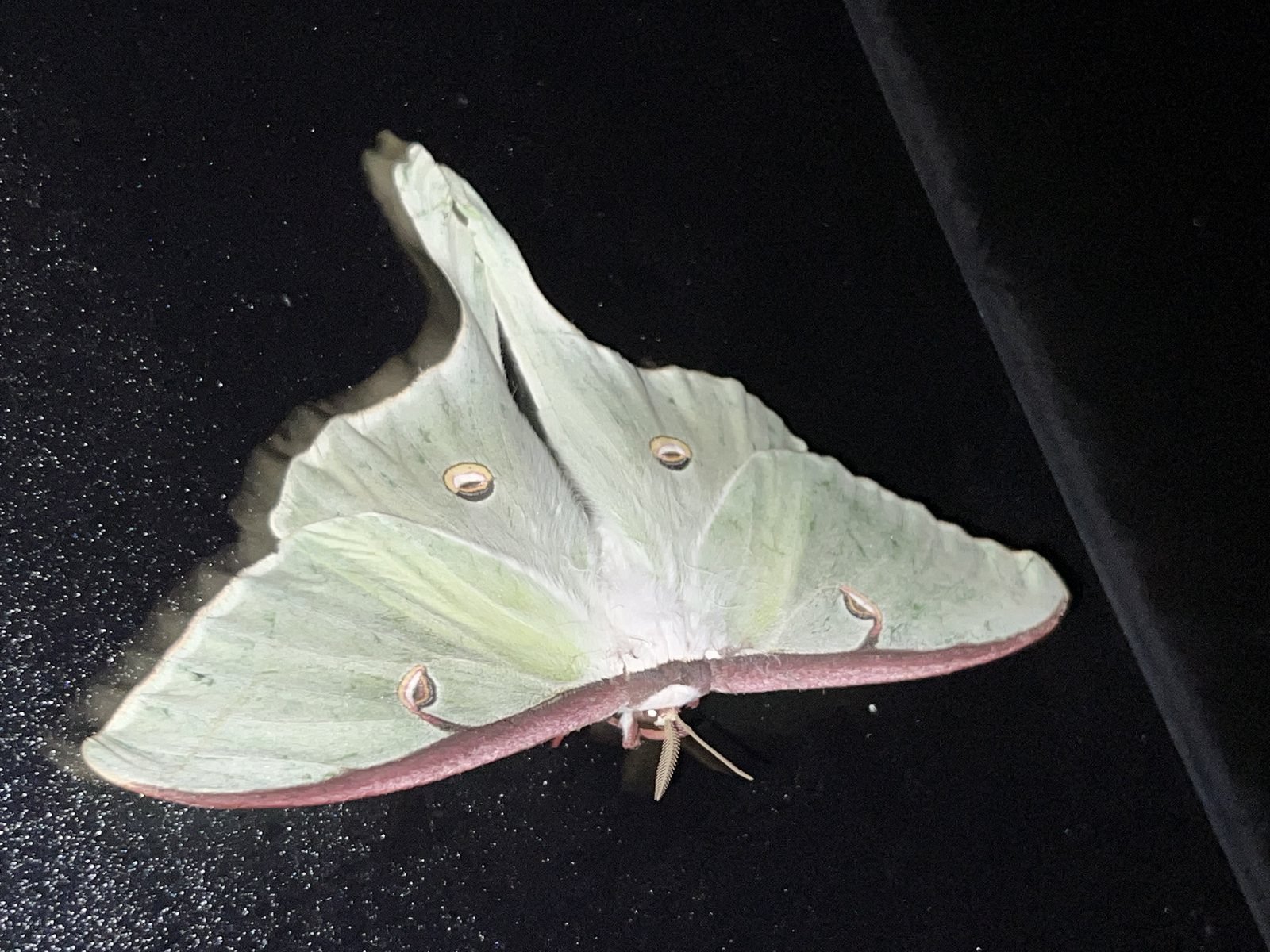
Luna moth. Pale green, as wide as your hand, with long trailing tails. Fun fact: an adult luna moth has no mouth. It doesn’t eat at all and lives about a week, just long enough to find a mate. Those long tails twist as it flies and confuse the sonar of hunting bats.
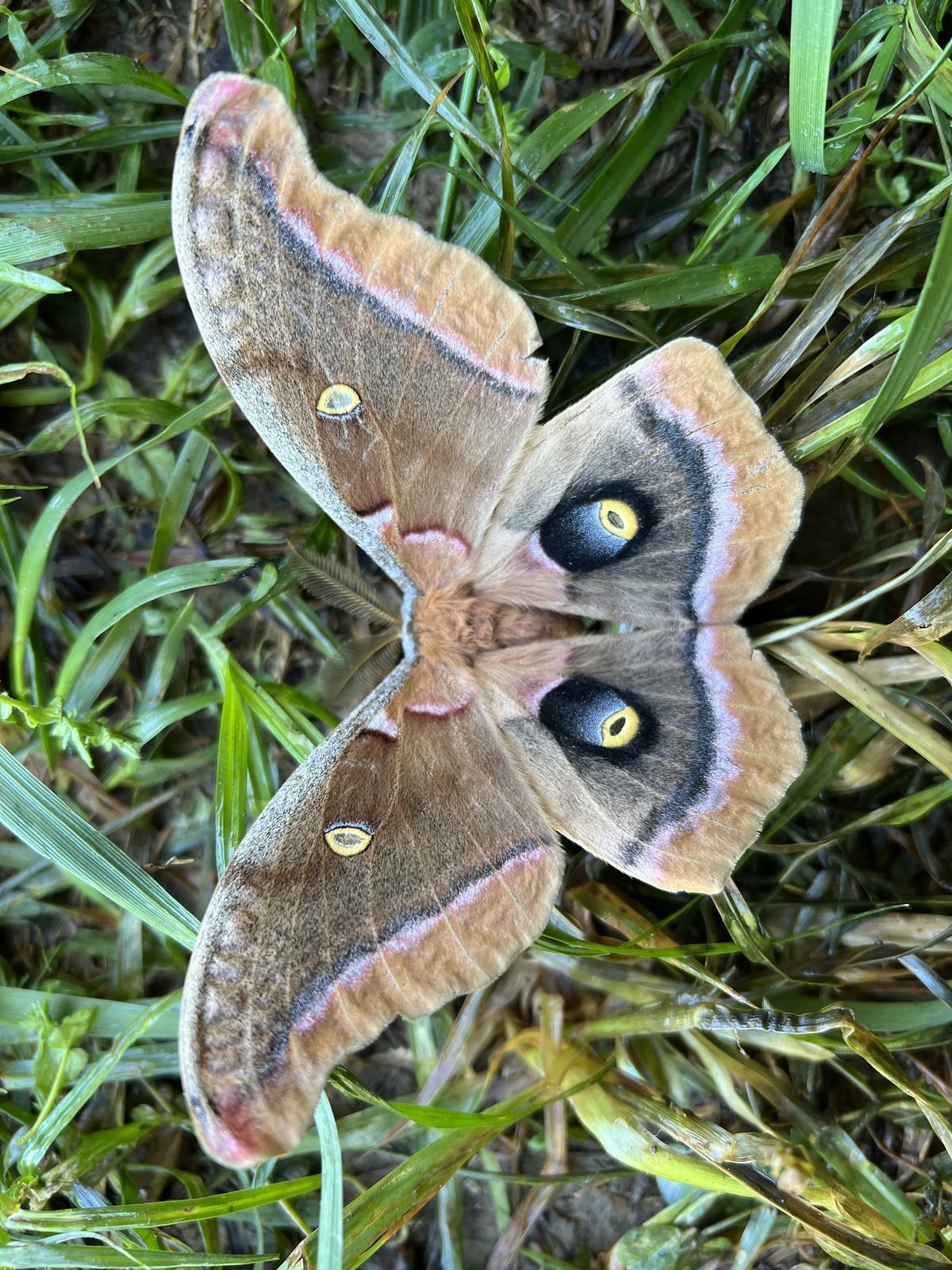
Polyphemus moth. Fun fact: it’s named after Polyphemus, the one-eyed giant from Greek myth, for the huge eyespots on its hindwings. Flash those at a bird and the bird sees a face. Like the luna, it’s a giant silk moth, and the adults don’t eat either.
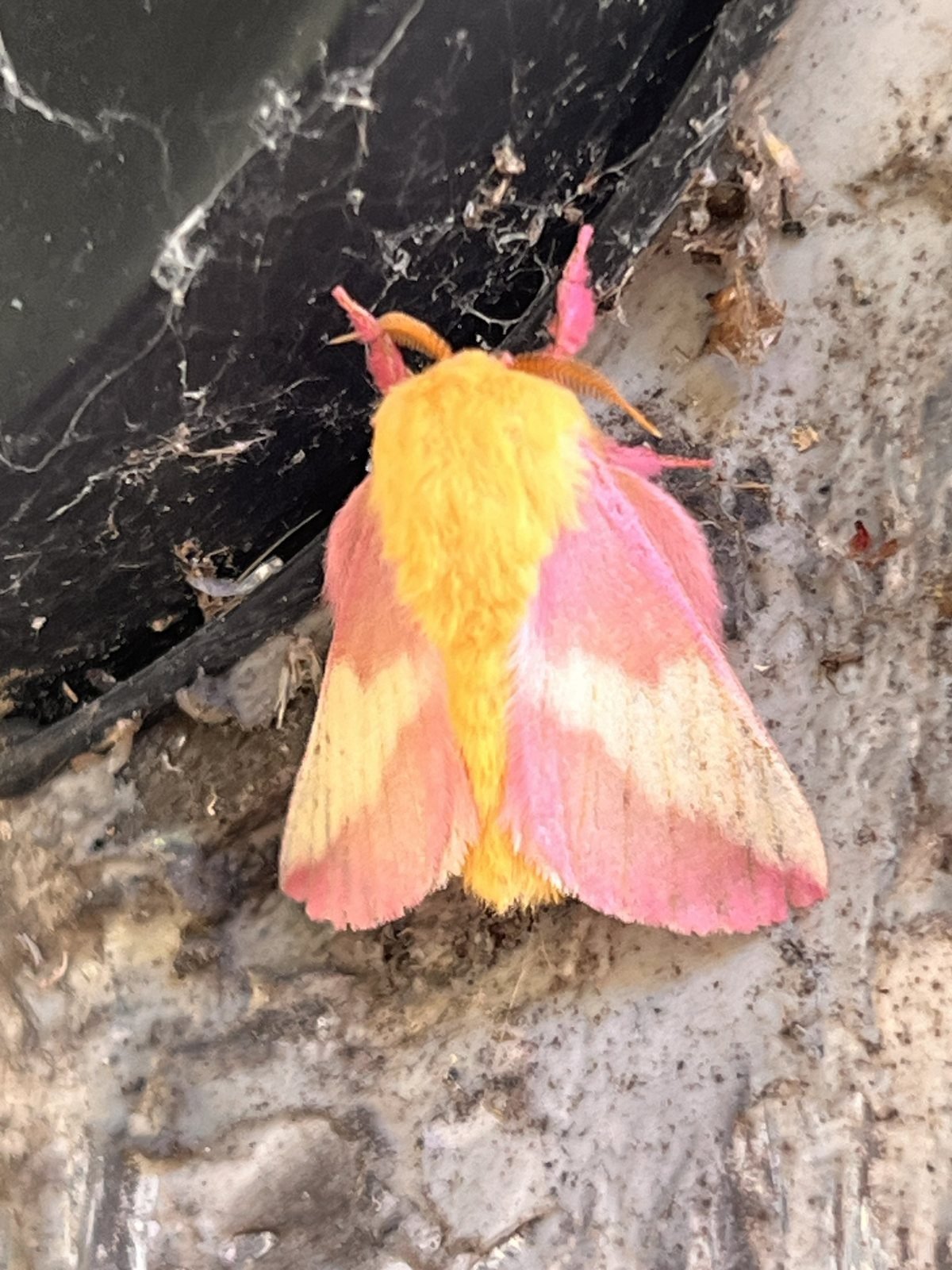
Rosy maple moth. Pink and butter-yellow, and fuzzy enough to pass for a piece of candy. Fun fact: it belongs to the giant silk moth family, the same as the luna, but it’s one of the smallest members, small enough to sit on a fingertip.
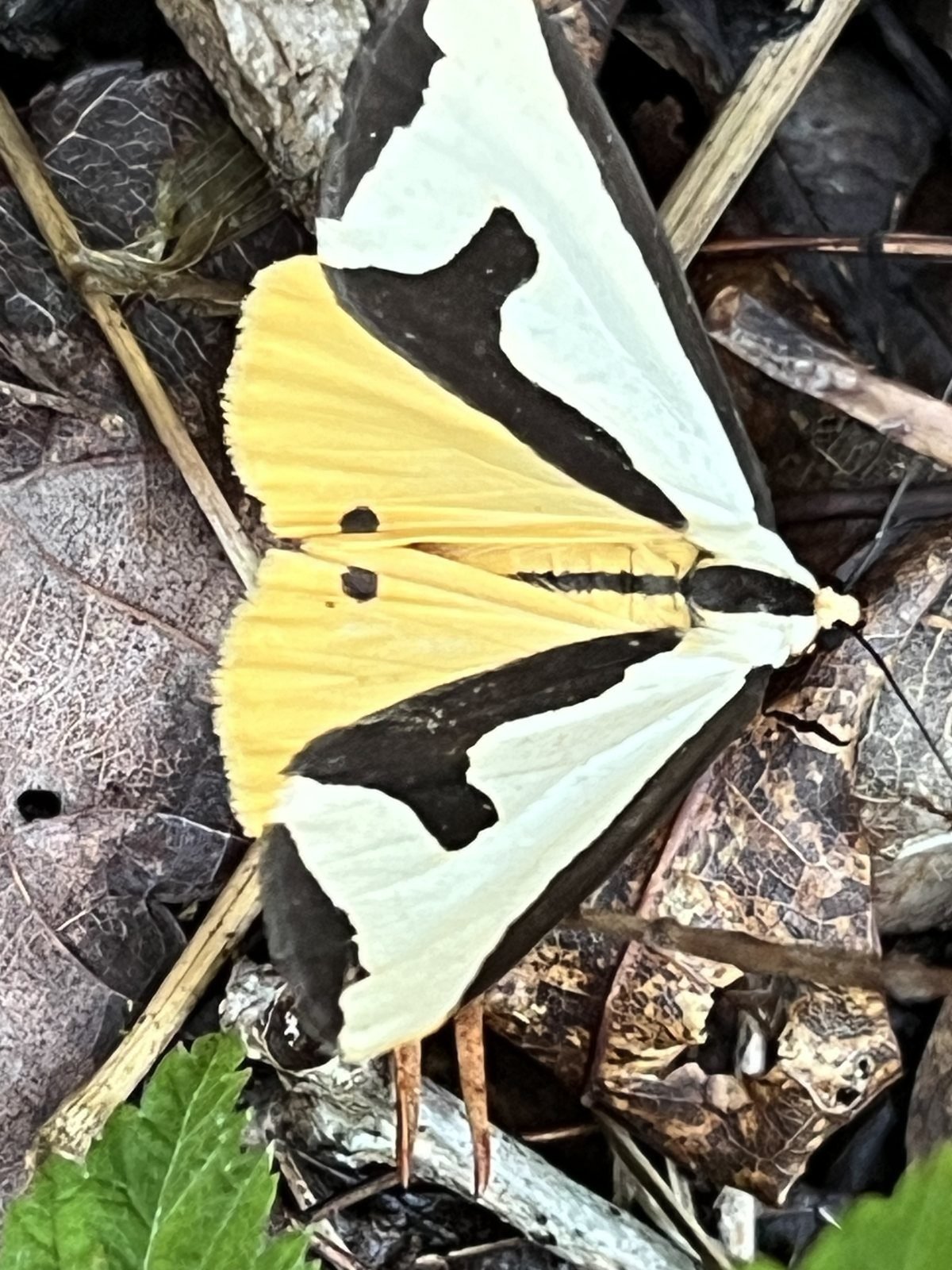
Clymene moth. Cream with a dark brown pattern that often forms a rough cross. Fun fact: it’s a tiger moth that flies by day, and it hides an orange back wing under the front ones to flash at anything that bothers it.
Where to look
The flower beds by the bathhouse deck and the beds around the Cozy Spruce Cabin are the busiest spots from late July into early October, especially on warm, sunny mornings. The woods-edge butterflies hang around tree trunks. Moths come to outdoor lights at night, so the walls near a light are worth a look on a warm evening.
Butterflies are fragile, so please look and photograph without touching. A butterfly that’s been handled loses wing scales it can’t replace.