Everything on these pages was photographed on our 18 acres in Coalmont, Tennessee, most of it within a short walk of where you’re staying. Some of it by us, and a lot of the best of it by our friend Jason B, who has a better camera and more patience.
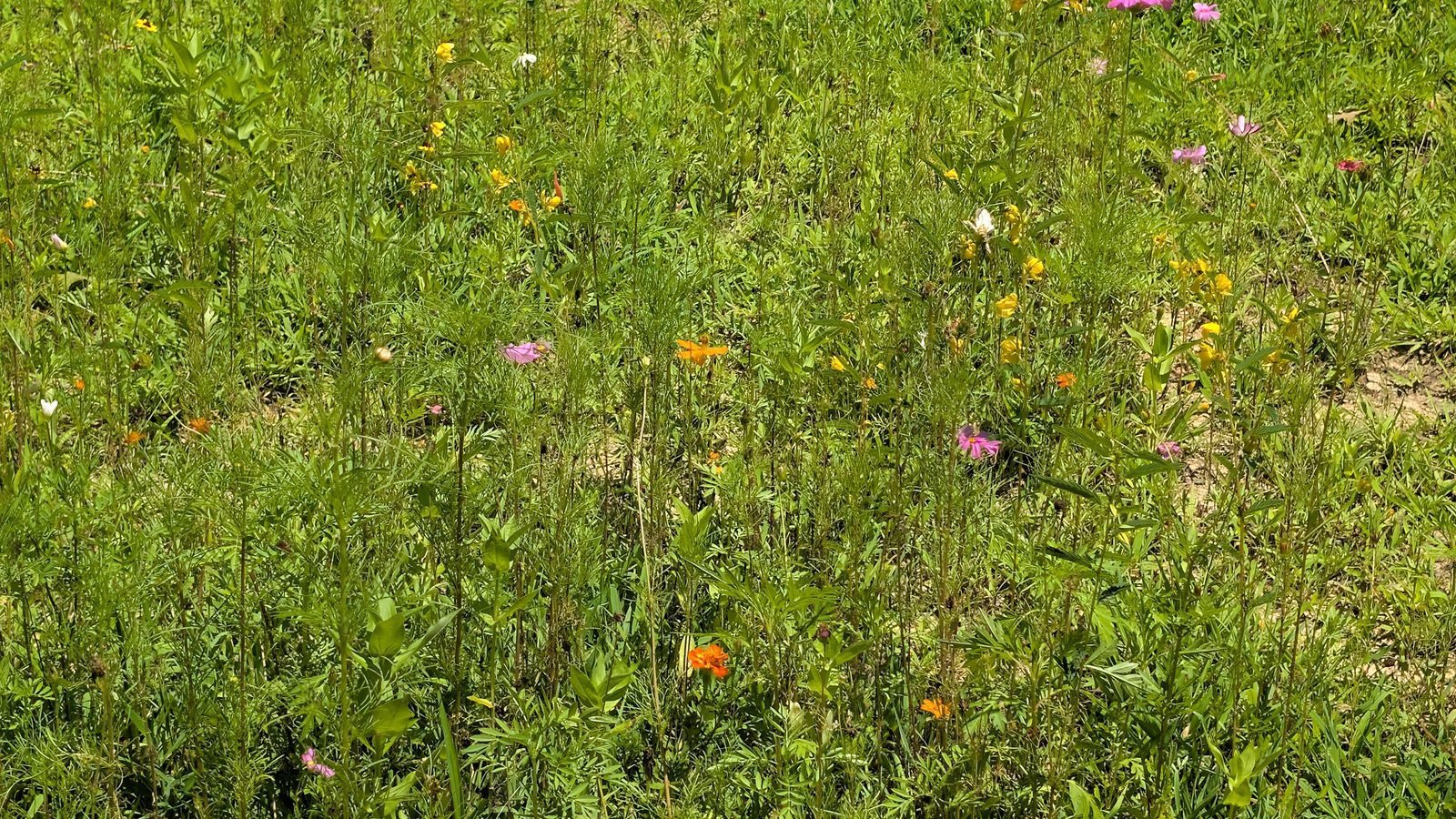
Old woods, new flowers
As far as we can tell, most of this land hasn’t been touched since at least the 1940s. The one exception is the stand of pines around the Scandinavian Cabin and the Boho Cabin. We think that patch was cut in the 1960s and replanted with pine.
We bought the property in late 2020 and started work in 2021. Before anything was cut and removed, a professional arborist spent three long days taking an inventory of every tree’s species and size and marking any that were dead or close to it. We had only those trees select-cut, and we cleared the areas where trees had already fallen. A tornado had come through several years before we bought the land and left a number of downed trees around where the bathhouse and the dome now stand. Those cleared spots and a few natural openings are where the cabins, the dome, the tent and the bathhouse went. We took down as few trees as we could.
The land is enrolled in Tennessee’s greenbelt program as forest land.
How the wildflowers got here
In 2025 we started bringing native plants and wildflowers back. It’s slow and expensive work, and not all of it goes to plan.
The first patch went in early 2025, a mix of annuals and perennials on the left as you pull in the driveway. It didn’t take. We replanted in fall 2025 and again in spring 2026, and all through summer 2026 that patch was full of black-eyed Susans and coreopsis. The perennials are growing too, and some of them may start blooming in 2027.
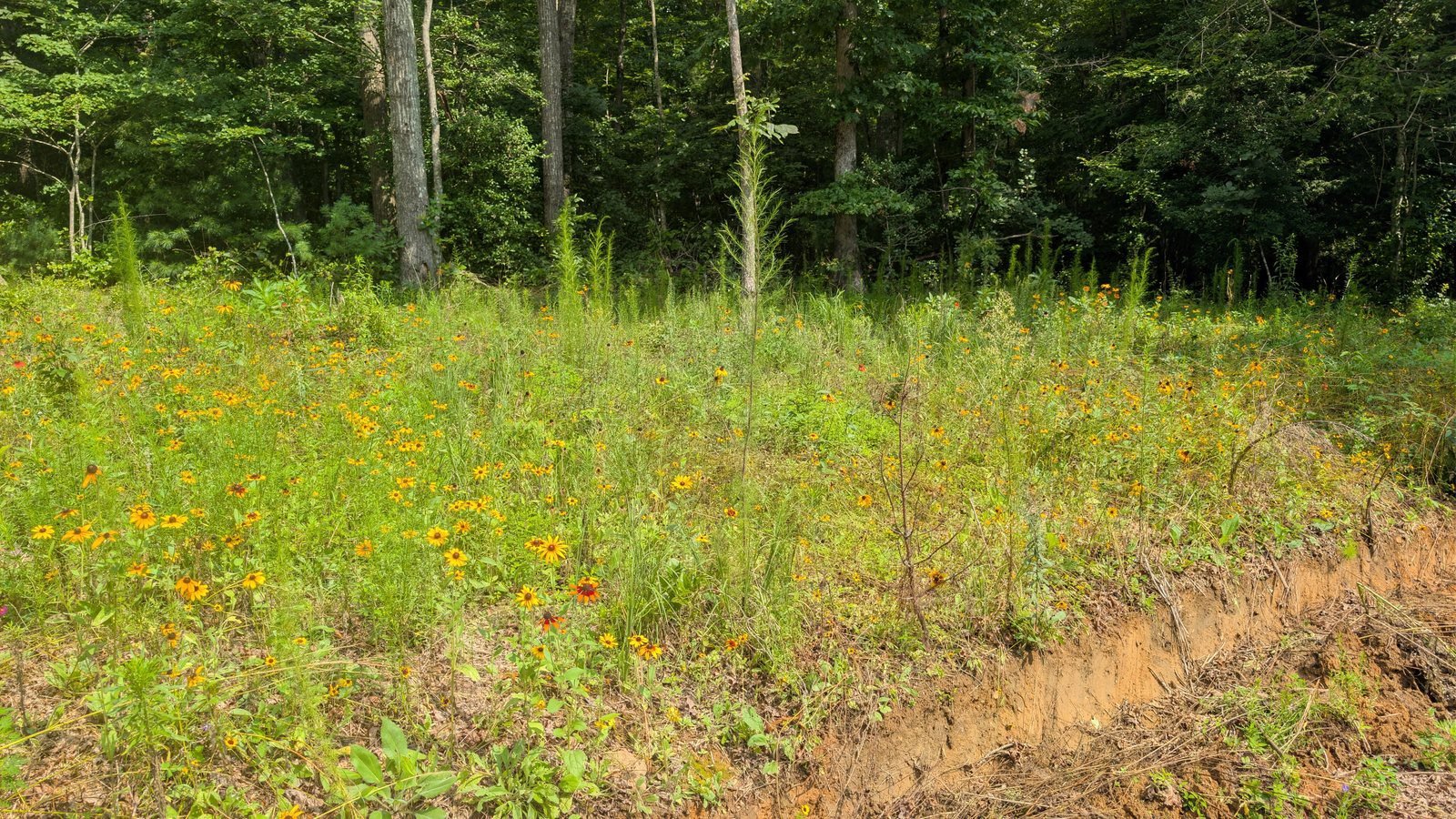
In spring 2026 we added four more beds: a big one in front of the Cozy Spruce Cabin, a narrow strip along its back wall, a larger bed across the path behind it, and a small patch beside the bathhouse deck, a few steps from the Scandinavian Cabin and the Glamping Tent. Most of those were annuals, and we spent late summer and fall collecting their seed to start new patches.
In fall 2026 we’re planting perennials in those beds and starting new ones: patches in the meadow at the far back of the property, a short, easy walk from any unit, and along the back side of the pond. The new patches are almost all native annuals that reseed themselves, with some help from us.
We hope you enjoy the flowers. We’ve enjoyed the company they brought: in summer 2026 the butterflies started showing up, along with several kinds of bees.
A cloudless sulphur butterfly raises its caterpillars here. A great egret has come back to the pond three summers running. A pair of goldfinches works the flowers by the bathhouse deck in late summer, so we leave a third of the seed heads standing for them in the fall.
Explore
- Butterflies & Moths: a caterpillar that changes color with its food, a butterfly that pretends to be a different butterfly, and a moth with no mouth.
- Wildflowers: which flowers are Tennessee natives, which ones we planted for the butterflies and bees, and one we wish would leave.
- Our Animals: Tony the duck, Rocky the rooster, four hens all named Goldie, and the rest of our flock.
- Other Neighbors: Tennessee’s state reptile, two kinds of salamander, a lizard, a very small snake, a tall white heron, and a woodpecker the size of a crow.
When to look
These photos run from April to October. Late July through September is the busiest stretch in the flower beds, especially on sunny mornings once the dew burns off. The big moths turn up at night, mostly in spring and summer. In winter the beds are resting and the seed heads belong to the birds, but the woods and the deer are there all year, and the bare trees make it easier to spot the pileated woodpecker.
If you spot something on the property that isn’t on these pages, we’d love to see your photo. Send it to us on Facebook, and if we use it, we’ll give you credit.