Not every neighbor here is wild. Our chickens and ducks roam the property during the day, and you’ll probably meet a few of them during your stay. Every one of them is friendly. They spend their days patrolling for bugs, which helps keep the ticks and mosquitoes down, and some of the hens lay the eggs that our guests may find in their unit as a gift.
Yes, you can feed them! Any leftovers are fine, just no onions, avocado, chocolate or meat bones. They love green peppers, but for some reason they don’t seem to like lettuce. They’ll act like they’ve never been fed before in their entire lives, but you can tell just by looking at them that they’re living their best lives.
Here’s who’s who.
Tony, the OG
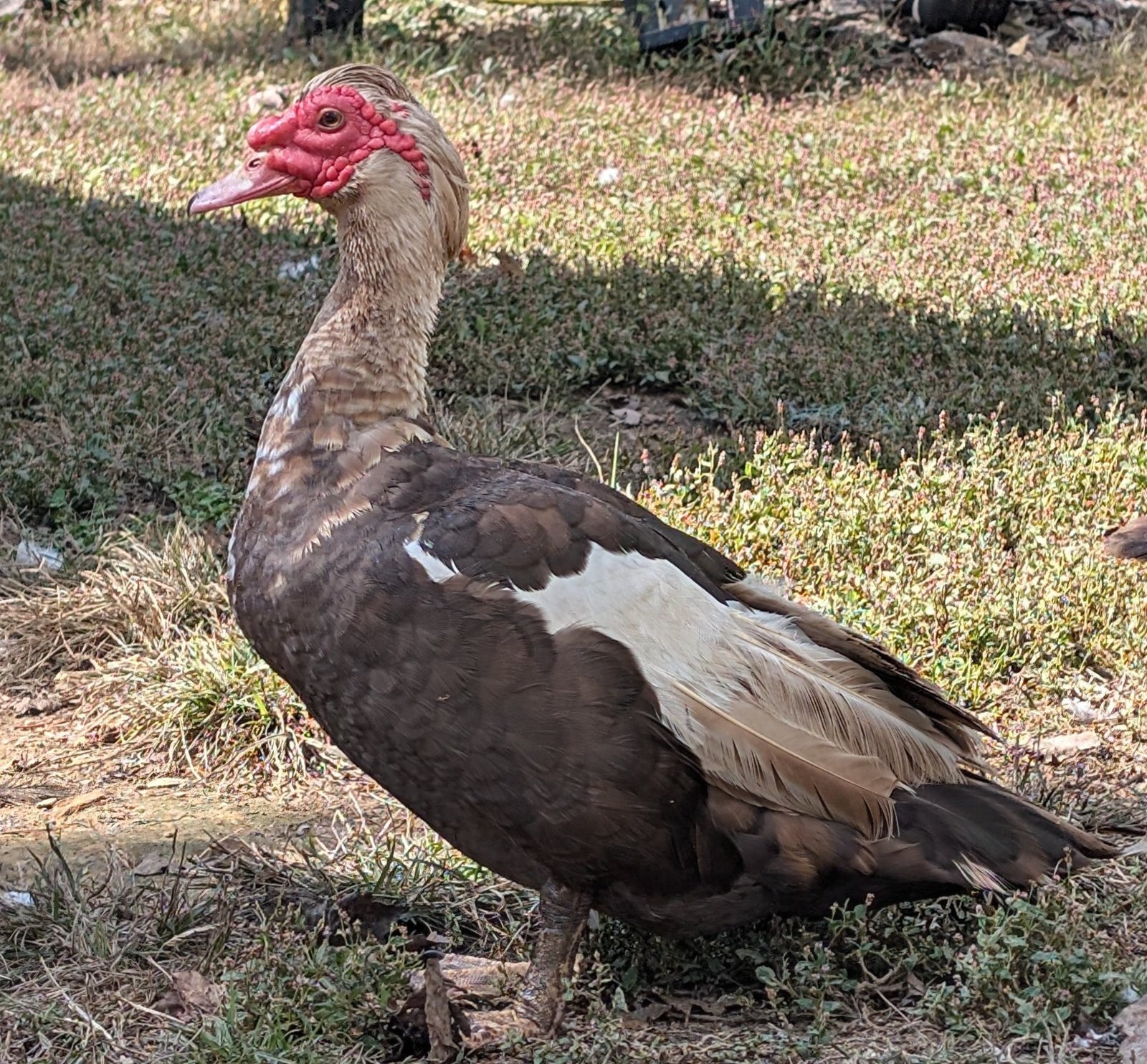
Tony is a Muscovy drake and our OG, the very first duck we got, back in 2023. He’s very friendly (like all of our chickens and ducks). He’ll eat out of your hand, and if you throw it right he can even catch food out of the air. Then he’ll beg for more.
Fun fact: the Muscovy is the only domestic duck that doesn’t descend from the mallard. Its wild relatives live in Central and South America, and that red, bumpy face is its trademark. Muscovies barely quack, either. The drakes hiss and huff instead, and the hens make soft little trills.
And they hiss for just about any reason: when they’re happy, excited, hungry, full, or whatever. That’s simply the noise they make. It can sound aggressive, but it isn’t at all.
Surprise ducklings
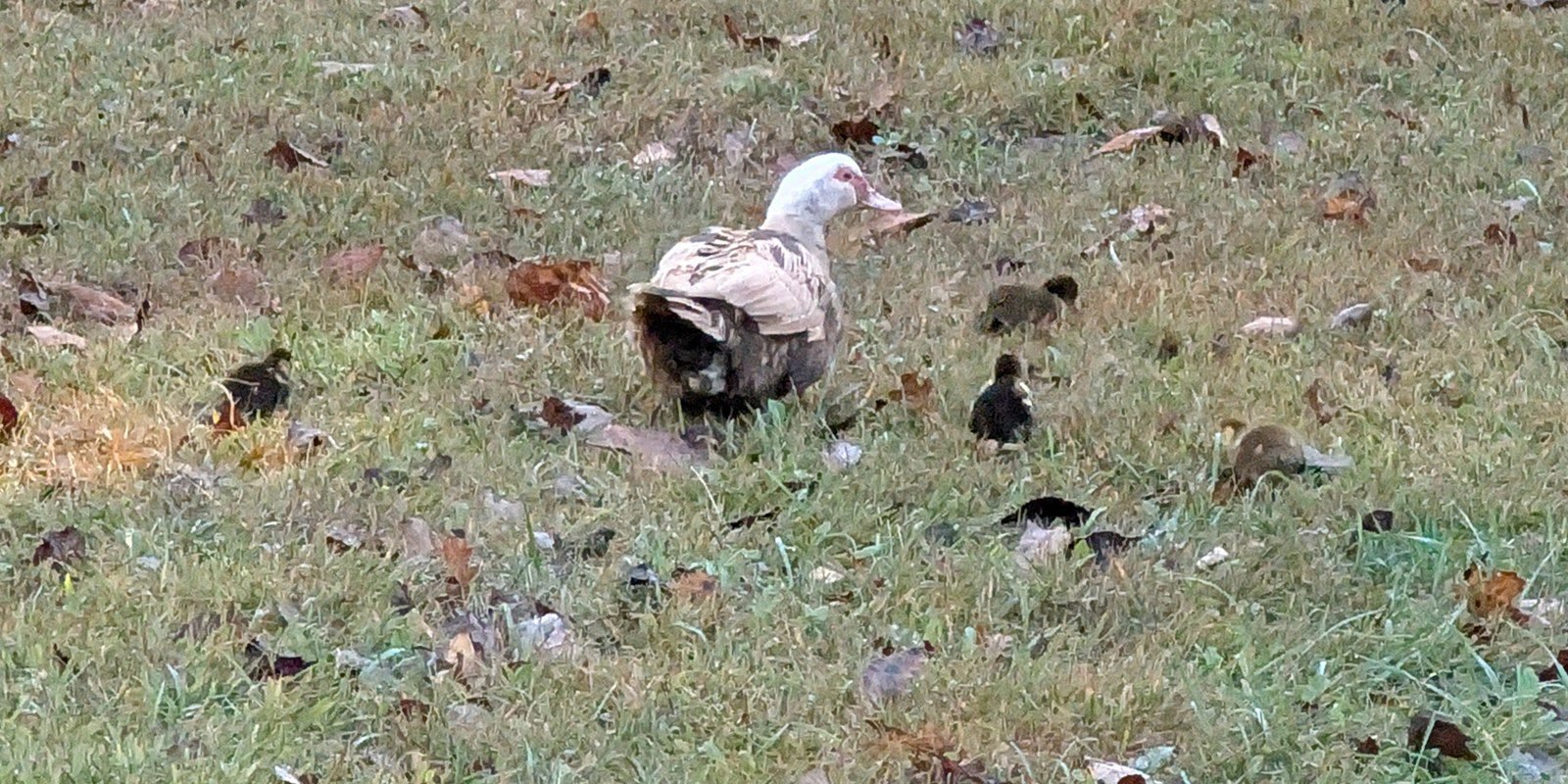
Mid October 2026, we had a little surprise. This mama duck disappeared about 5 weeks ago, and we chalked it up to “nature happens”. Turns out, nature did happen, just the opposite way of what we thought. She hid her eggs somewhere in the woods and now has brought her babies back here! Look closely, there’s ducklings mixed with the leaves!
The dark egg layers
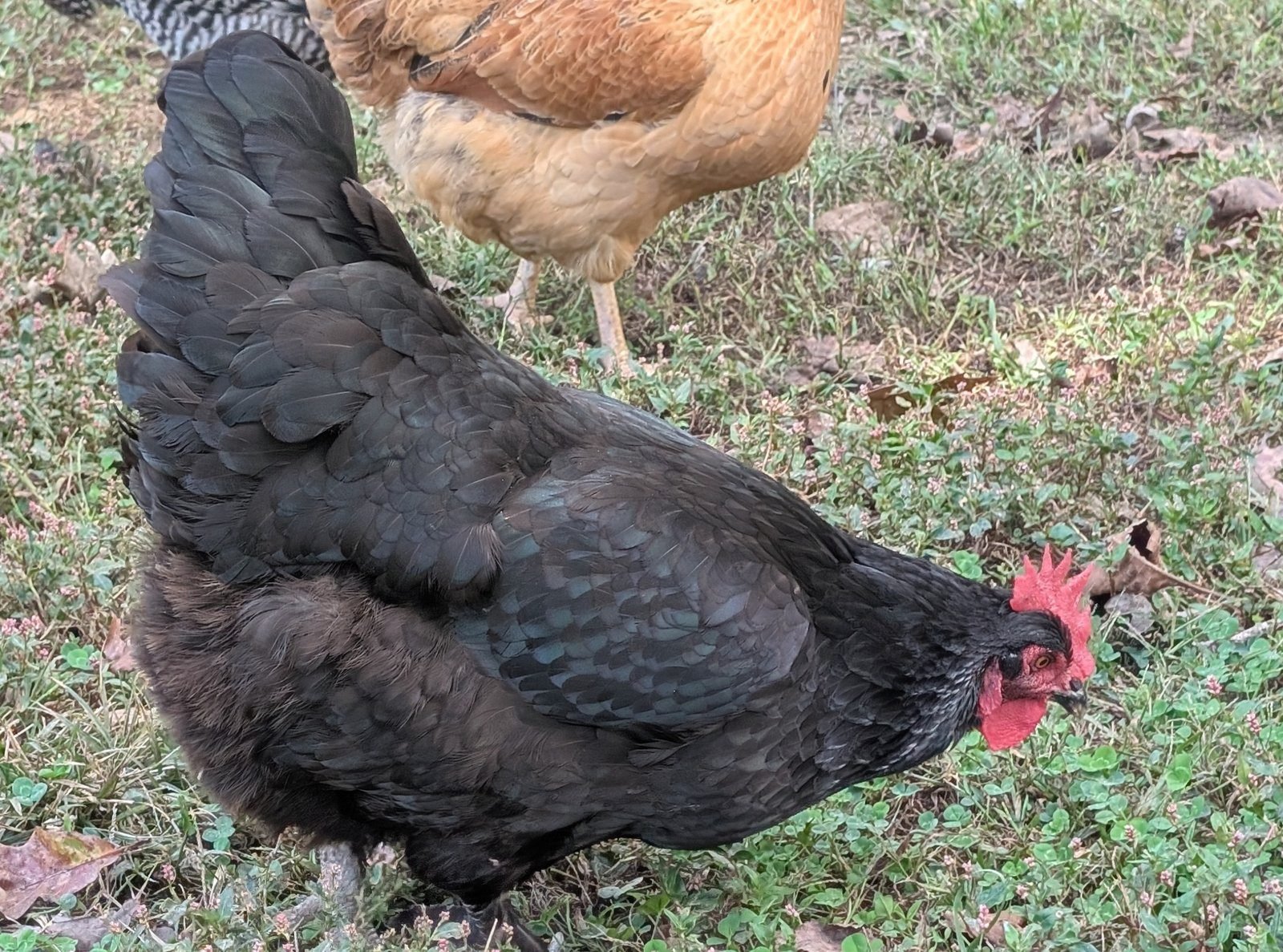
This is BB, one of the hens responsible for the dark, spotted eggs that our guests may find in their unit as a gift.
Fun fact: Marans come from the town of Marans in western France and lay some of the darkest eggs of any chicken, a deep chocolate brown, often speckled. They have a famous fan, too. In Ian Fleming’s novel From Russia, with Love, James Bond’s breakfast egg is a speckled brown one from French Marans hens.
Deuce
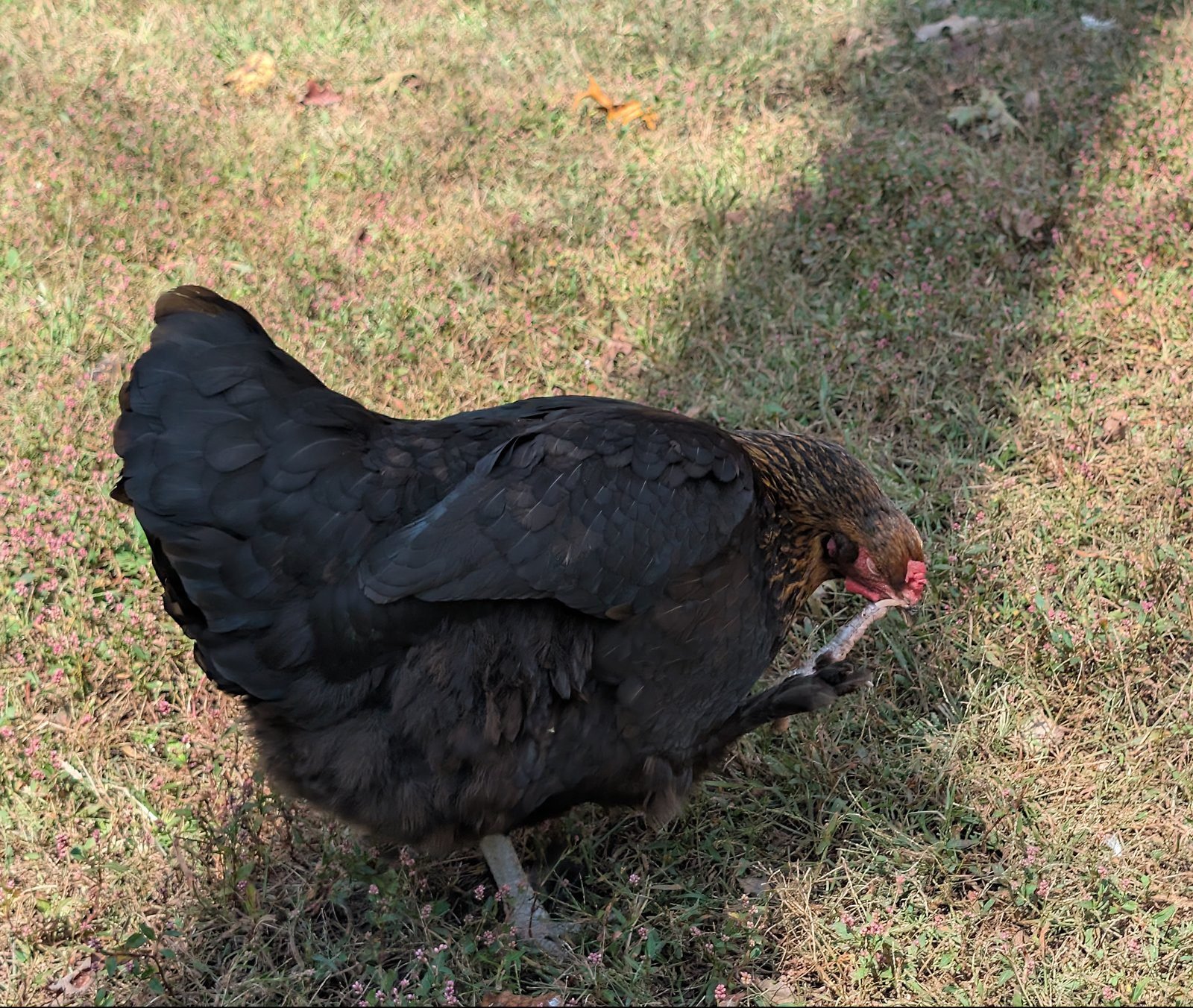
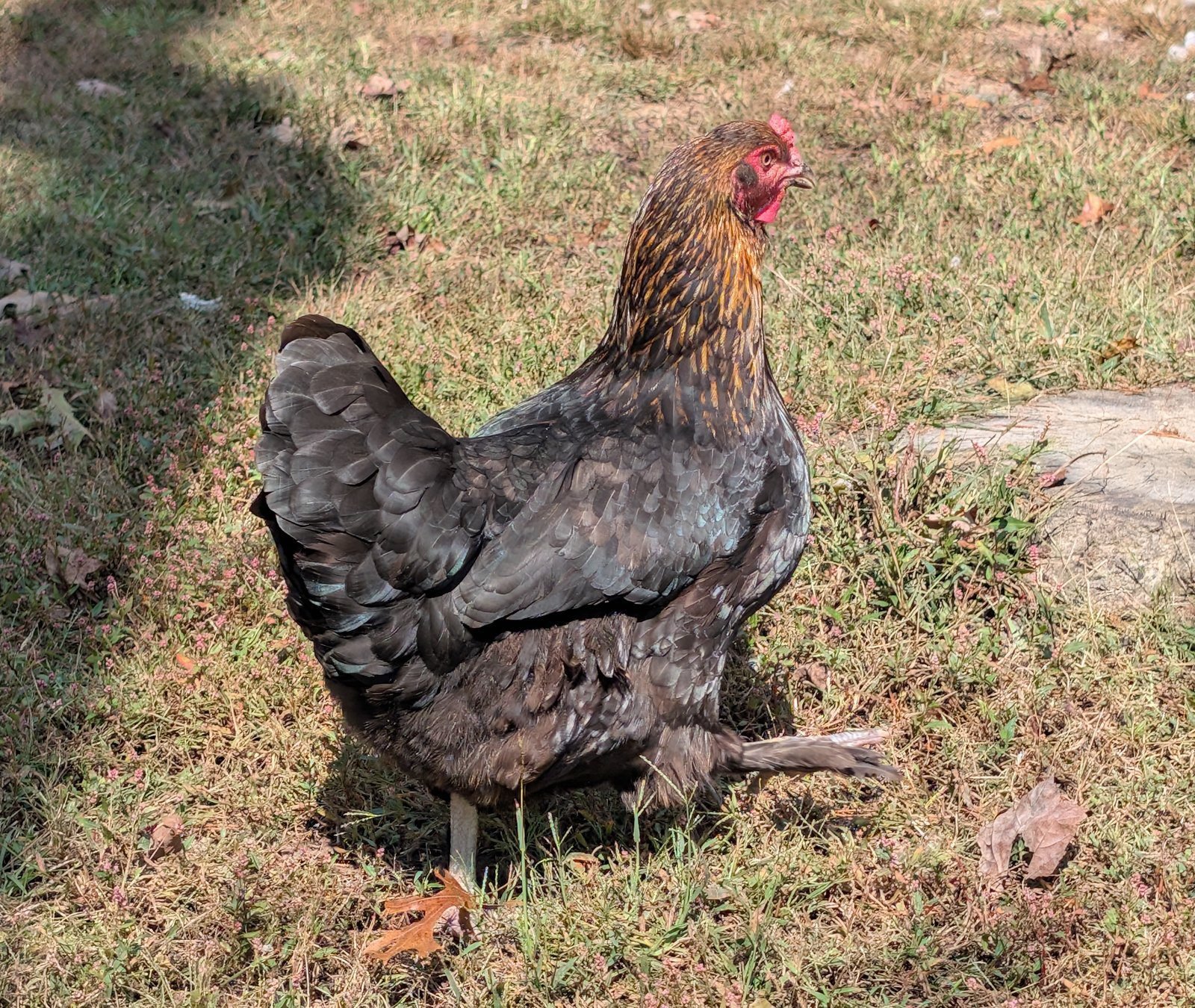
Deuce is third generation, and we know her whole family tree. Her grandma was a Black Copper Marans. Her mom, Lucy, was a mix of that Marans and a Brahma rooster, which gave her a red head. That’s how Lucy got her name: we named her after Lucille Ball. Deuce is Lucy’s daughter. She started out as Lucy 2.0 and somehow became Deuce. Her dad was another Brahma rooster, so she’s two parts Brahma and one part Marans, and she lays dark spotted eggs too. Those feathered legs and feet come mostly from the Brahma side, since Marans have only lightly feathered legs. We have two hens like her.
Fun fact: Brahmas are one of the biggest chicken breeds, gentle giants with feathers all the way down to their toes. They were developed in the United States in the 1840s from large birds shipped out of the port of Shanghai.
The Goldies
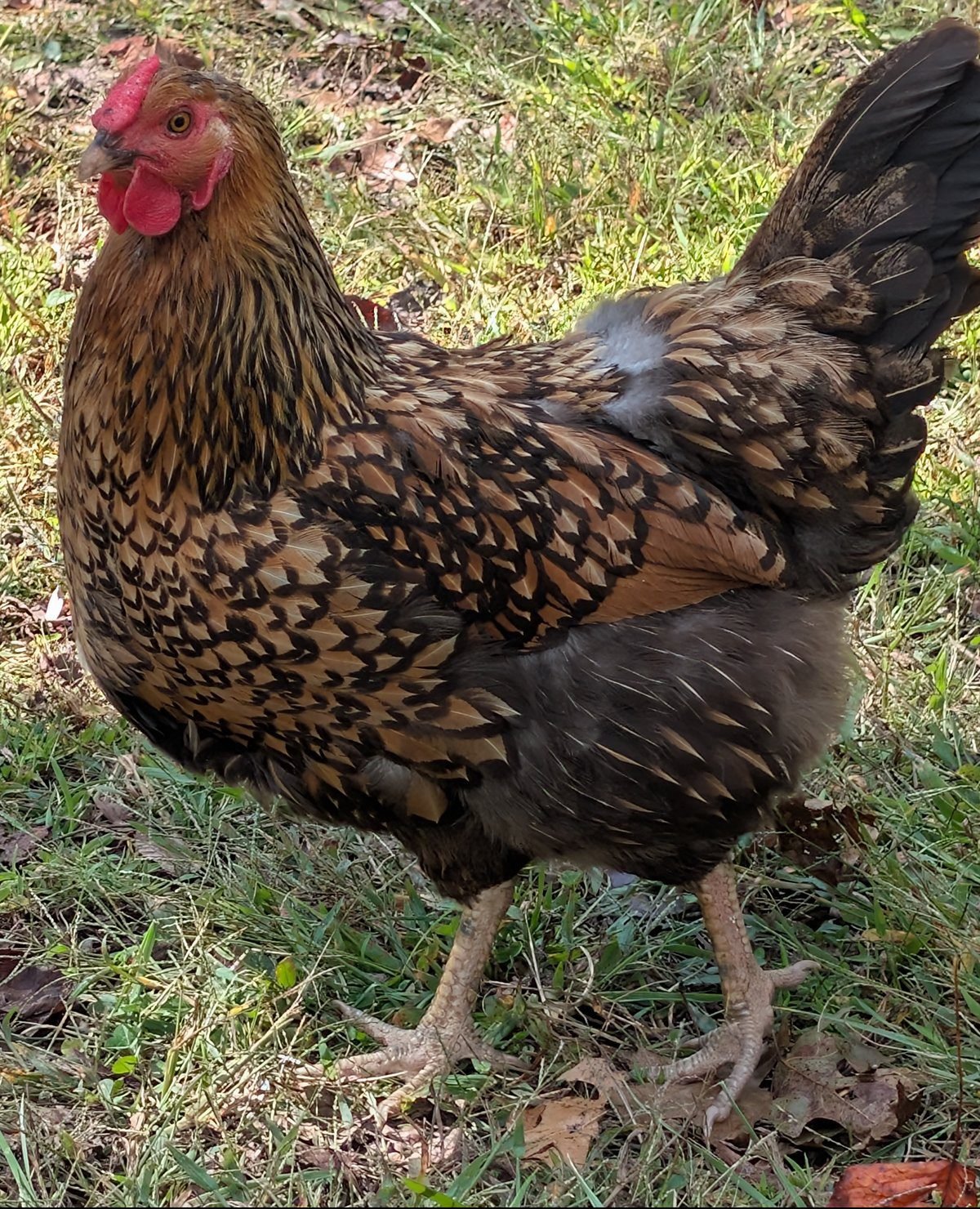
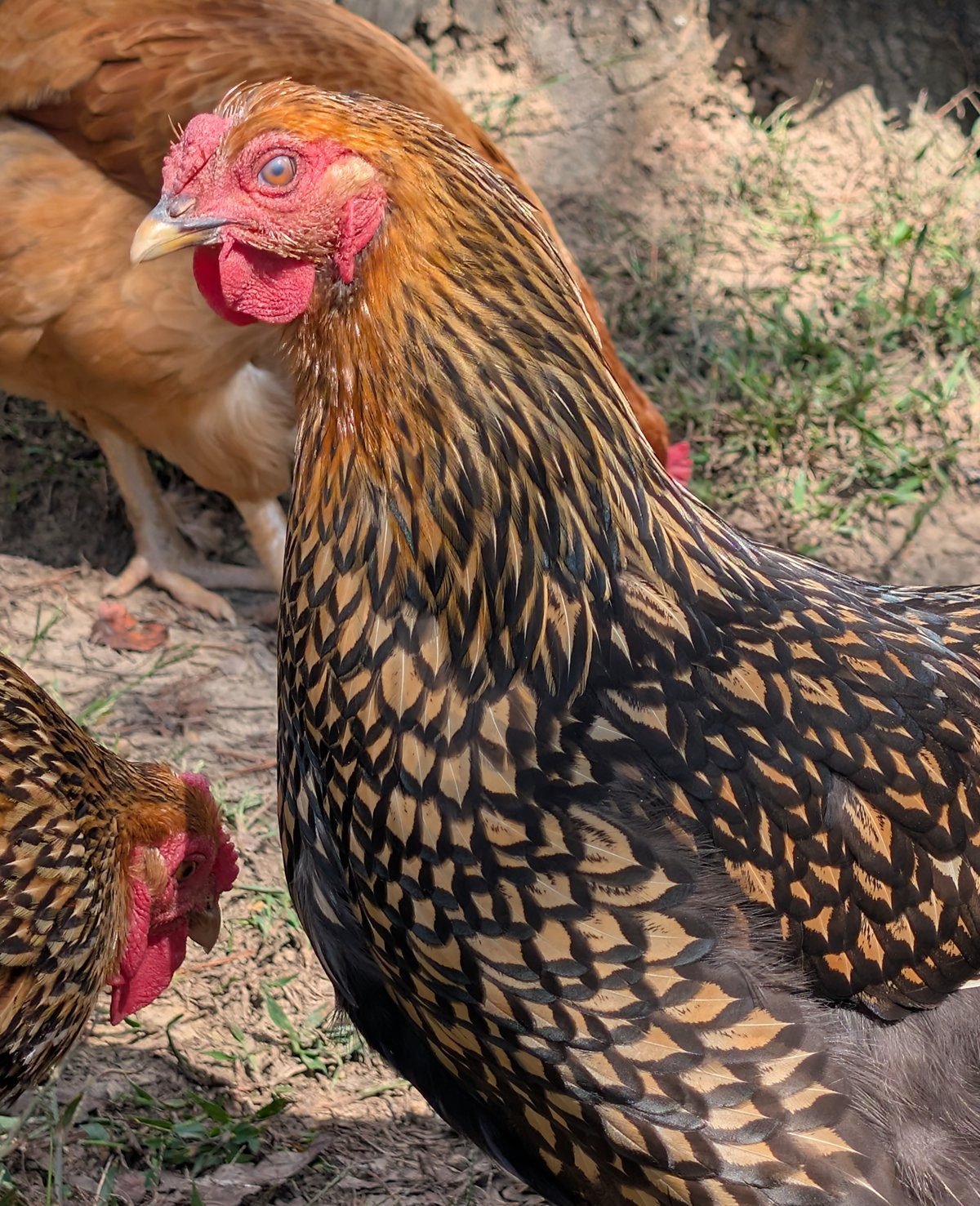
We have four Gold Laced Wyandottes, and all of their names are Goldie! These are two of them.
Fun fact: the Gold Laced Wyandotte is an American breed from the late 1800s, named after the Wyandot people. Every gold feather is edged in black. That’s what gives it the scalloped, laced look. Its small, tight comb also holds up well in cold weather.
The Easter Eggers
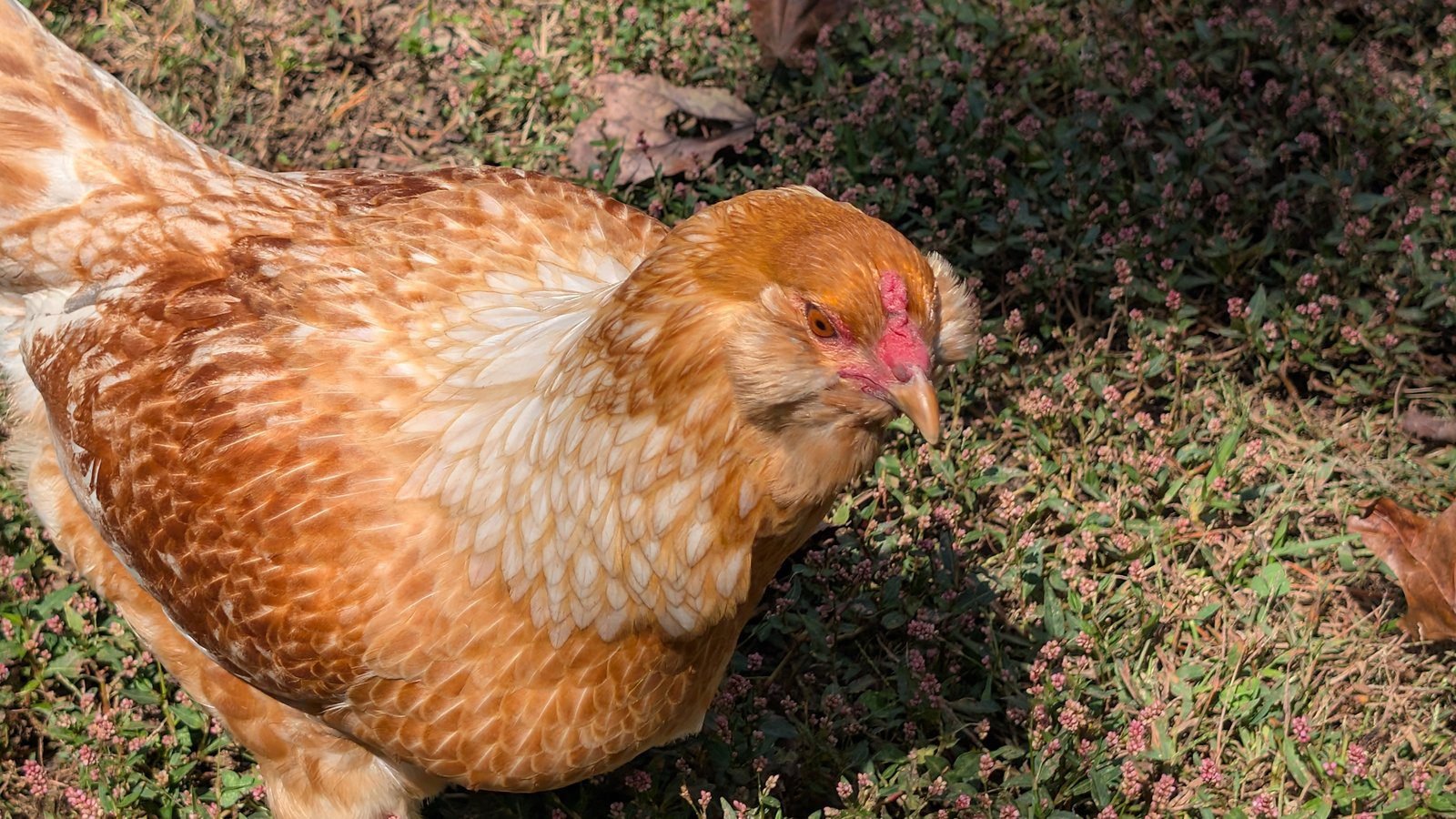
Meet Fluffy. Just take a look at those puffy cheeks! She gives us beautiful baby blue eggs. She’s the only one who posed for a photo, but she’s one of eight Easter Eggers in our flock.
Fun fact: an Easter Egger is a mixed-breed chicken that carries the blue-egg gene from South American breeds such as the Araucana. They lay blue or green eggs, and many have fluffy cheek muffs and a little beard, the puffy cheeks you can see on ours.
Rocky
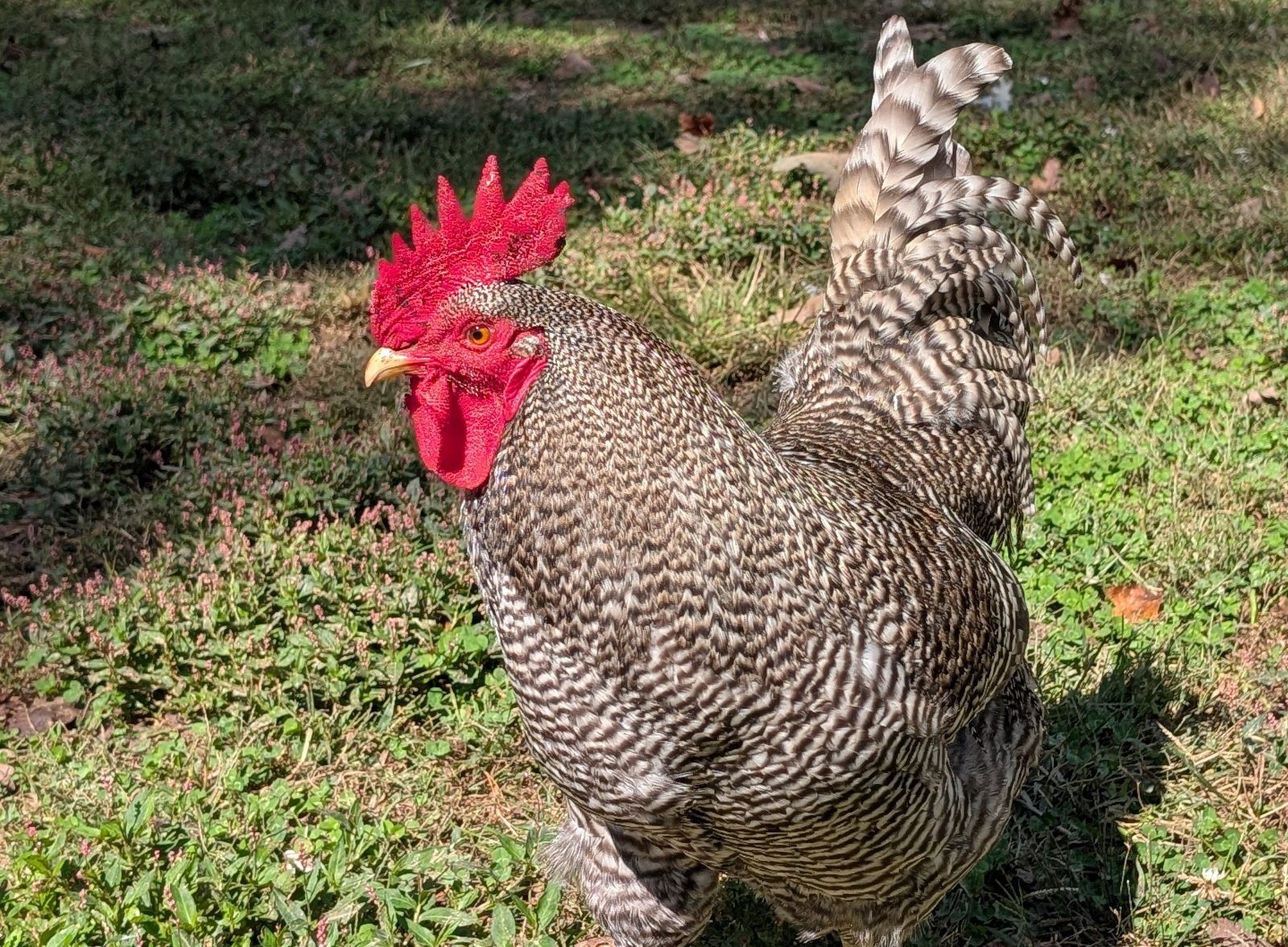
A big, healthy Barred Rock rooster, one of our friendliest chickens, and possibly the biggest in size (but not in weight). And of course, his name is Rocky.
Fun fact: the Barred Plymouth Rock is one of the oldest American chicken breeds, developed in Massachusetts in the 1800s. Its black-and-white striped feathers are called barring, and before World War II it was the most common chicken on American farms.
Rocky isn’t the only Barred Rock
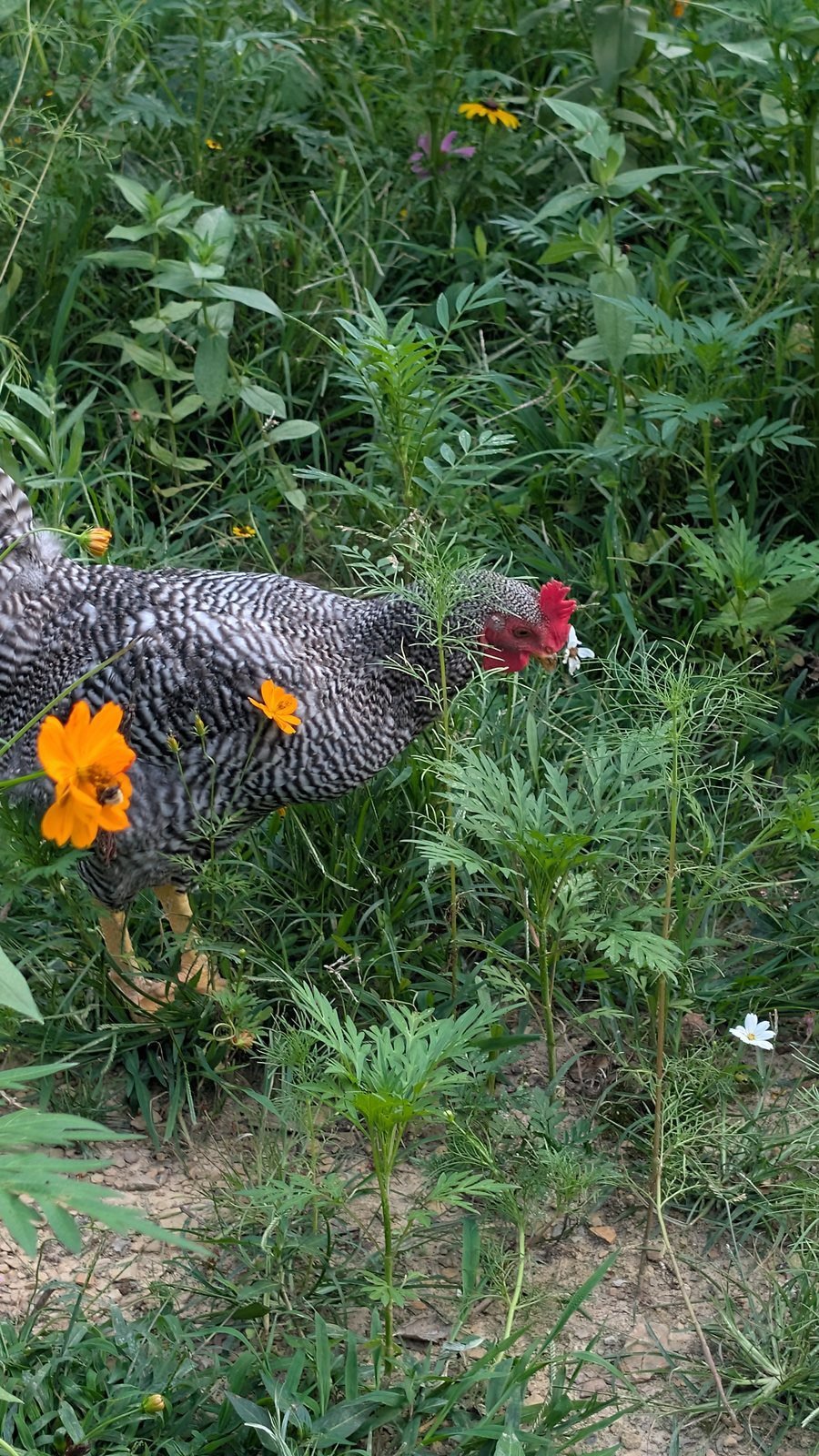
We have Barred Rock hens too. This one was working her way through the sulphur cosmos for bugs, which is good news for the flowers and bad news for the bugs.
Righty and Lefty
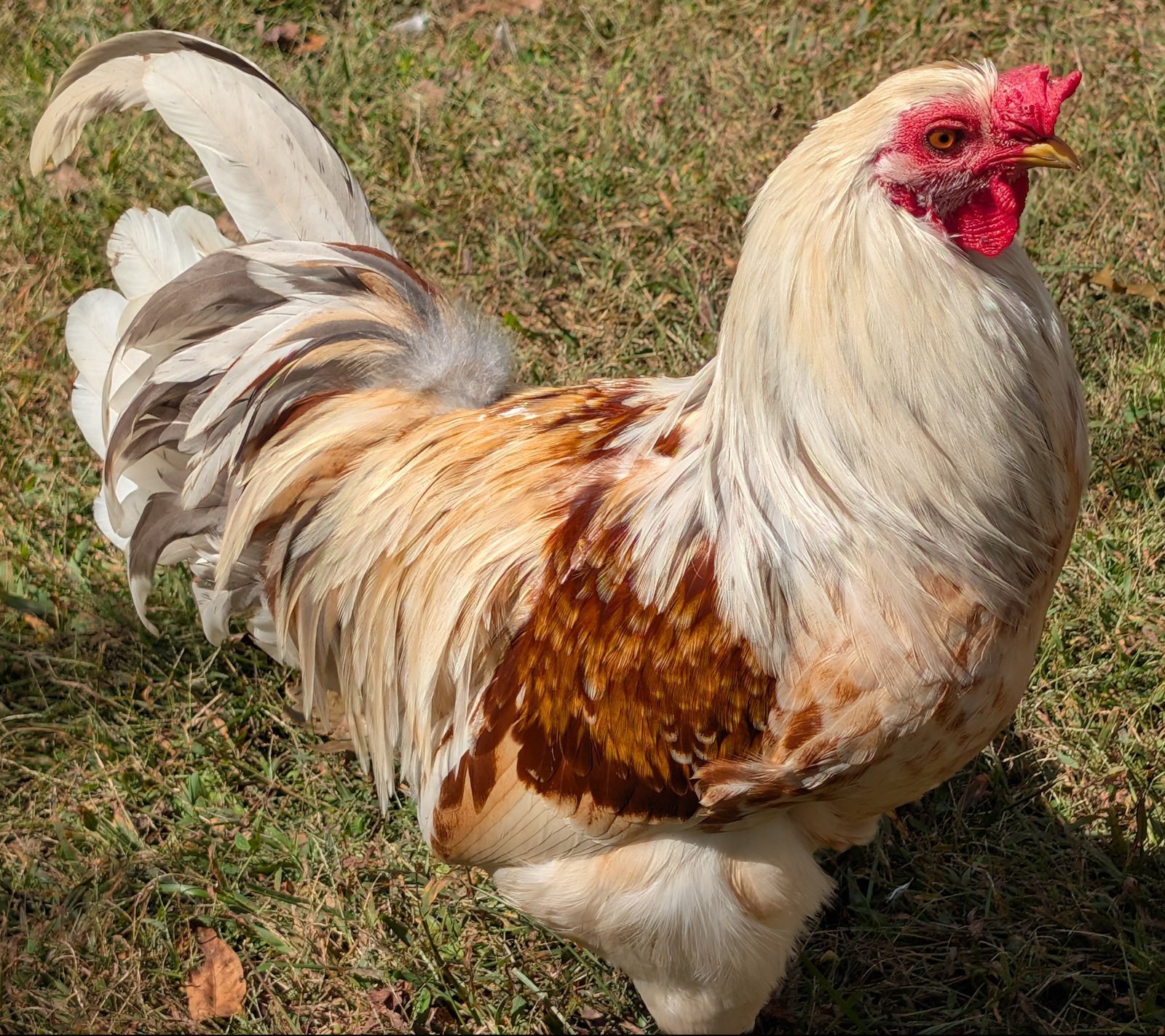
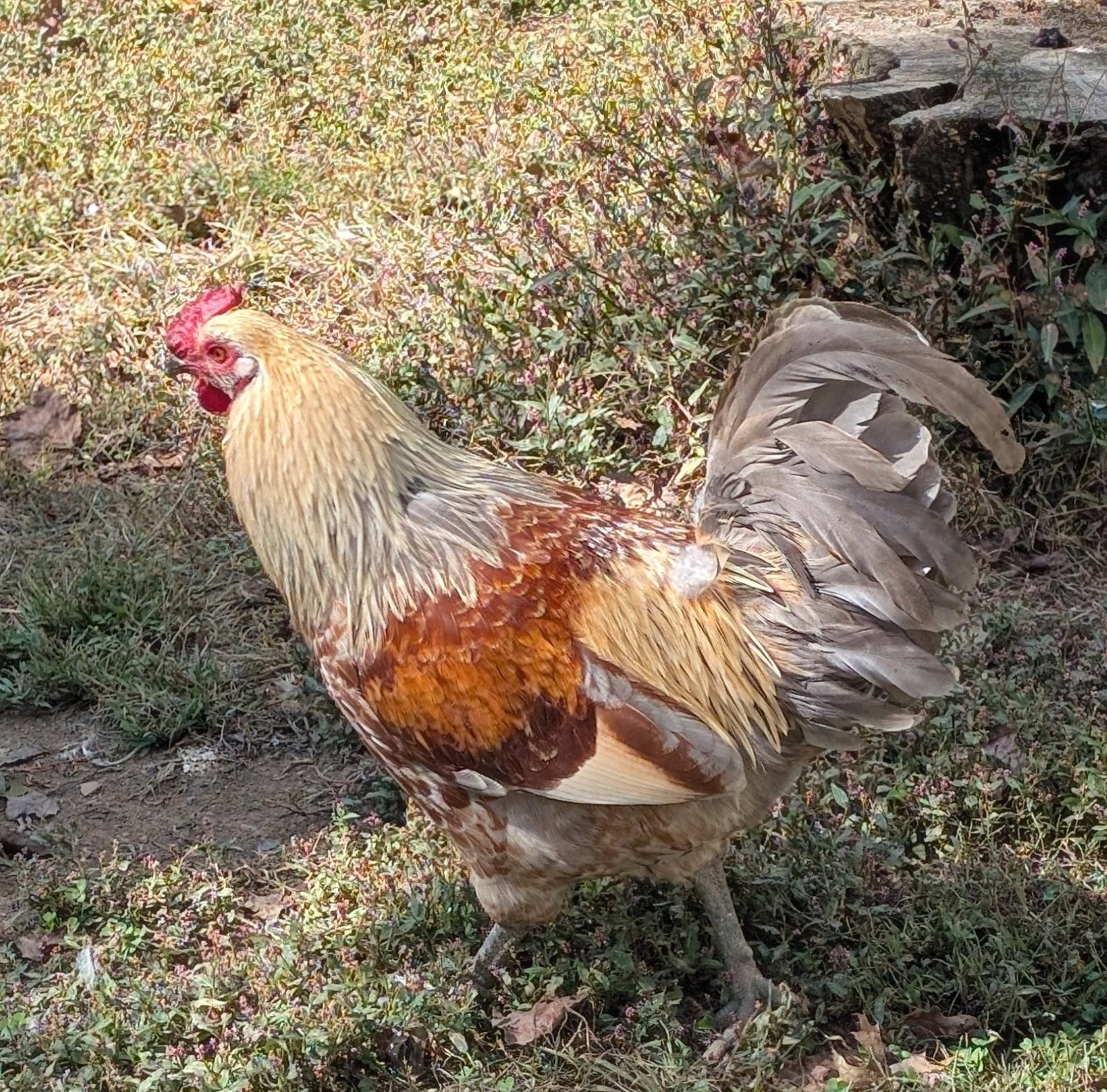
Righty’s crazy comb flops over his left eye. That’s why we named him Righty. Lefty’s comb covers his right eye, so of course he’s Lefty.
They’re both barnyard mixes, hatched here on the property: part Easter Egger for sure, and maybe part Rhode Island Red. It’s hard to tell which hen our chicks come from, because they all tend to lay in the same spots.
Fun fact: because the hens share the same few nest spots, every chick that hatches here is a bit of a surprise.
Next: back to Nature home