Our flower beds are a mix of two groups: Tennessee wildflowers that would grow here on their own, and garden flowers we plant because the butterflies and bees can’t get enough of them. We think both belong, so we’ve labeled every one.
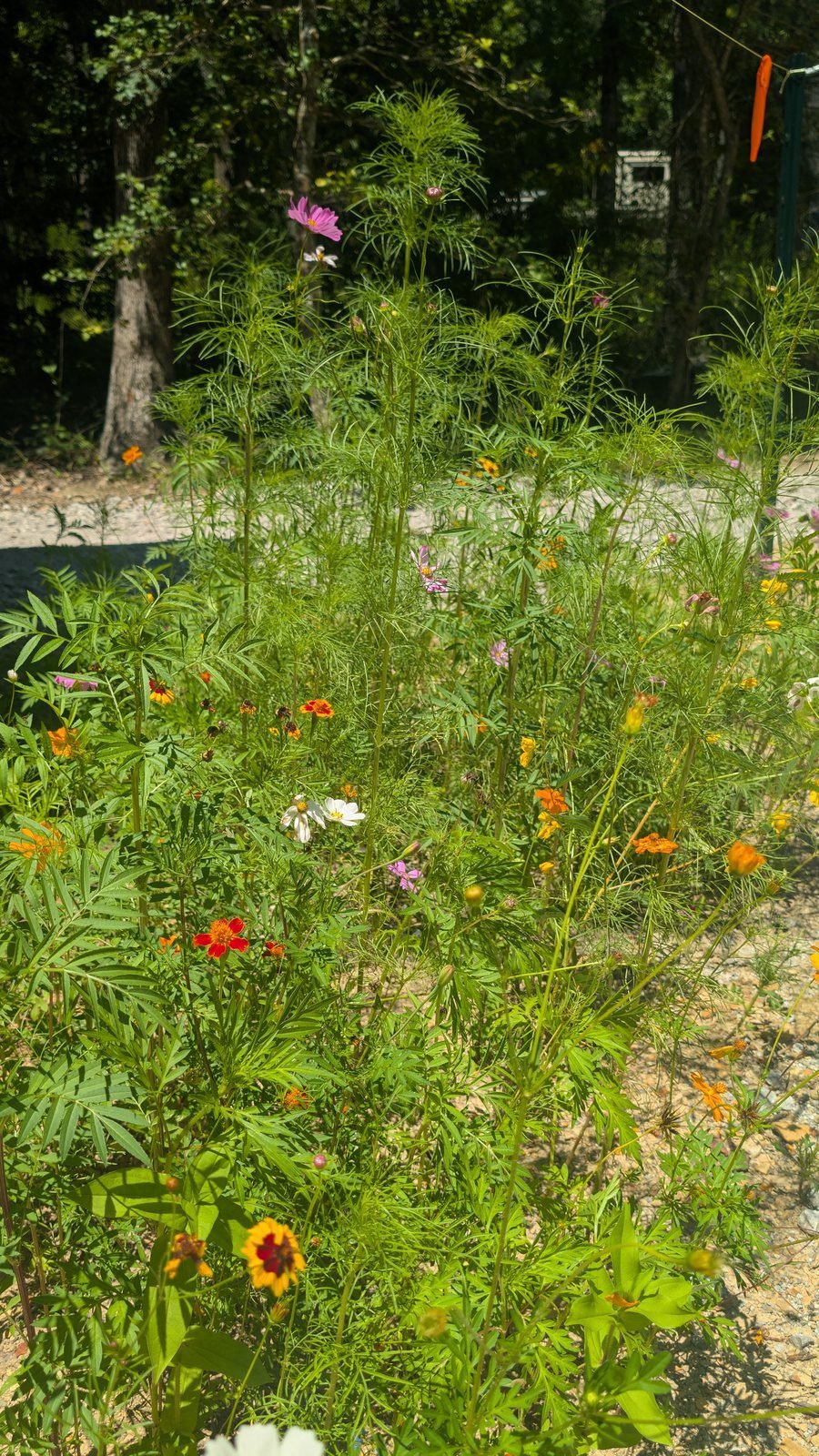
Tennessee native plants
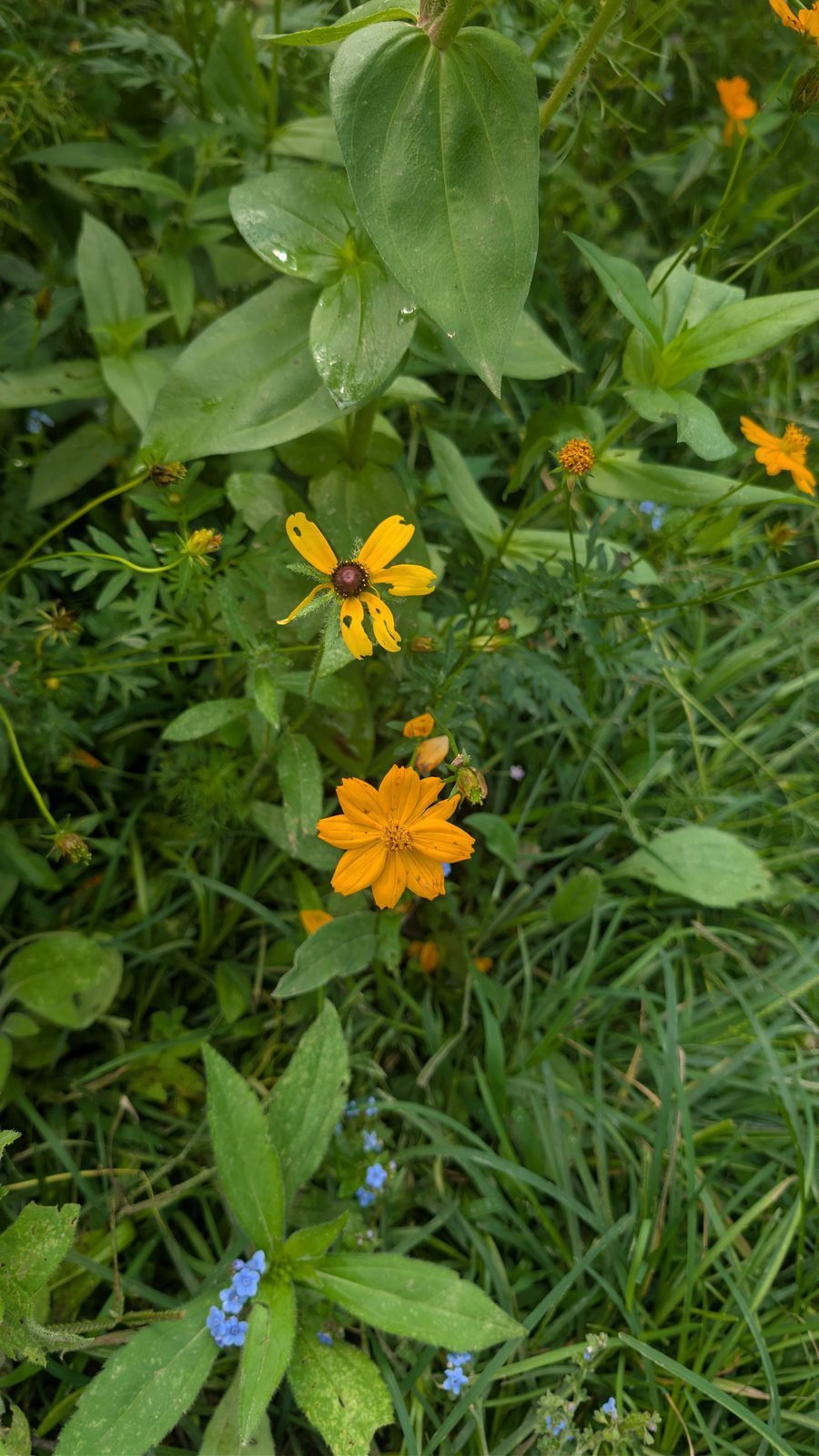
Black-eyed Susan. The gold daisy with the dark brown center. We collect its seed every fall and leave about a third of the seed heads standing, because the goldfinches pick them clean. Fun fact: it’s the state flower of Maryland, but it’s every bit as much at home on the Cumberland Plateau.
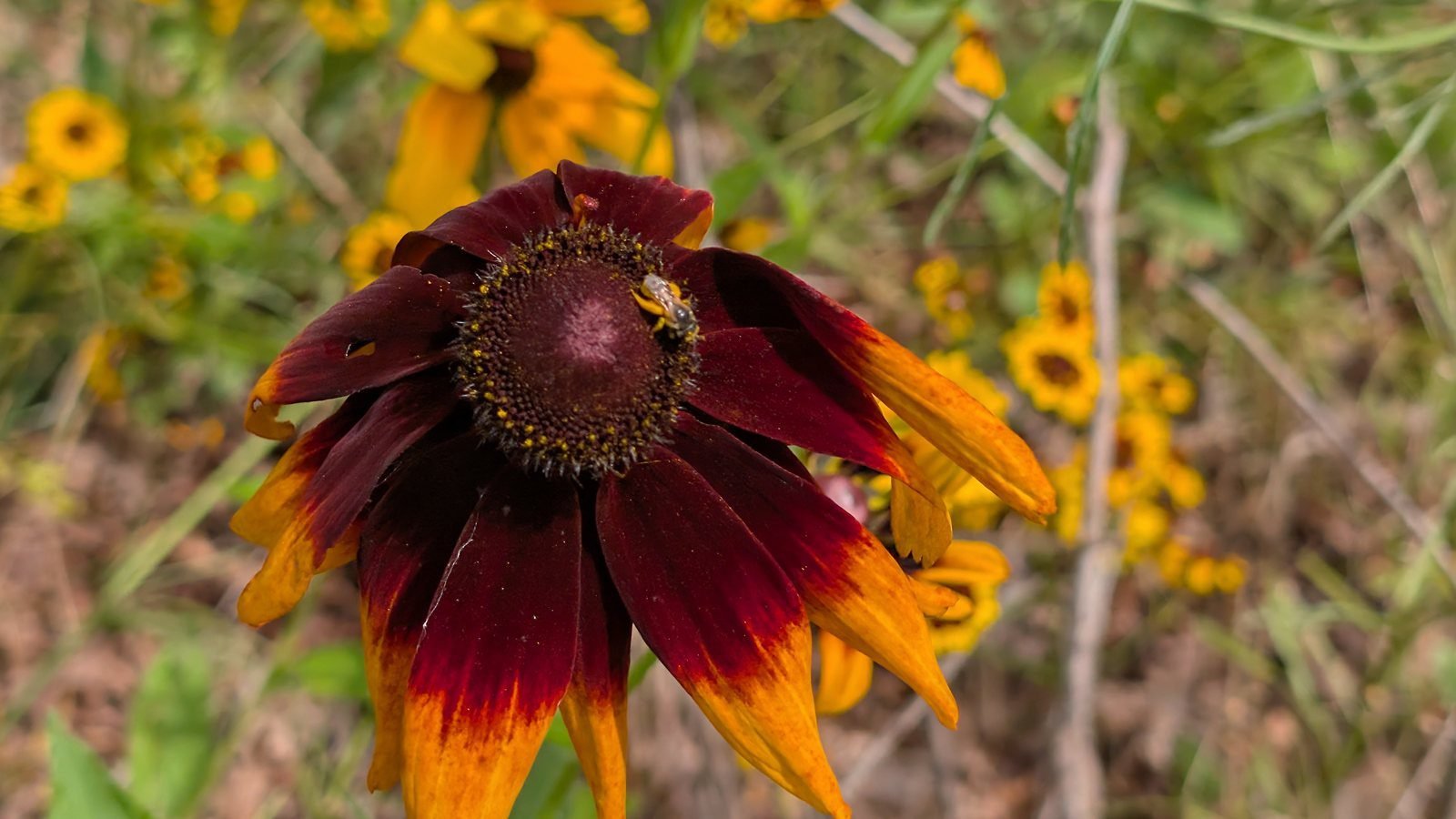
Gloriosa daisy. A garden form of the black-eyed Susan, bred in the mid-1900s for bigger flowers in mahogany and orange. Ours come up mixed in with the ordinary black-eyed Susans, so it’s a native with a little help from plant breeders.
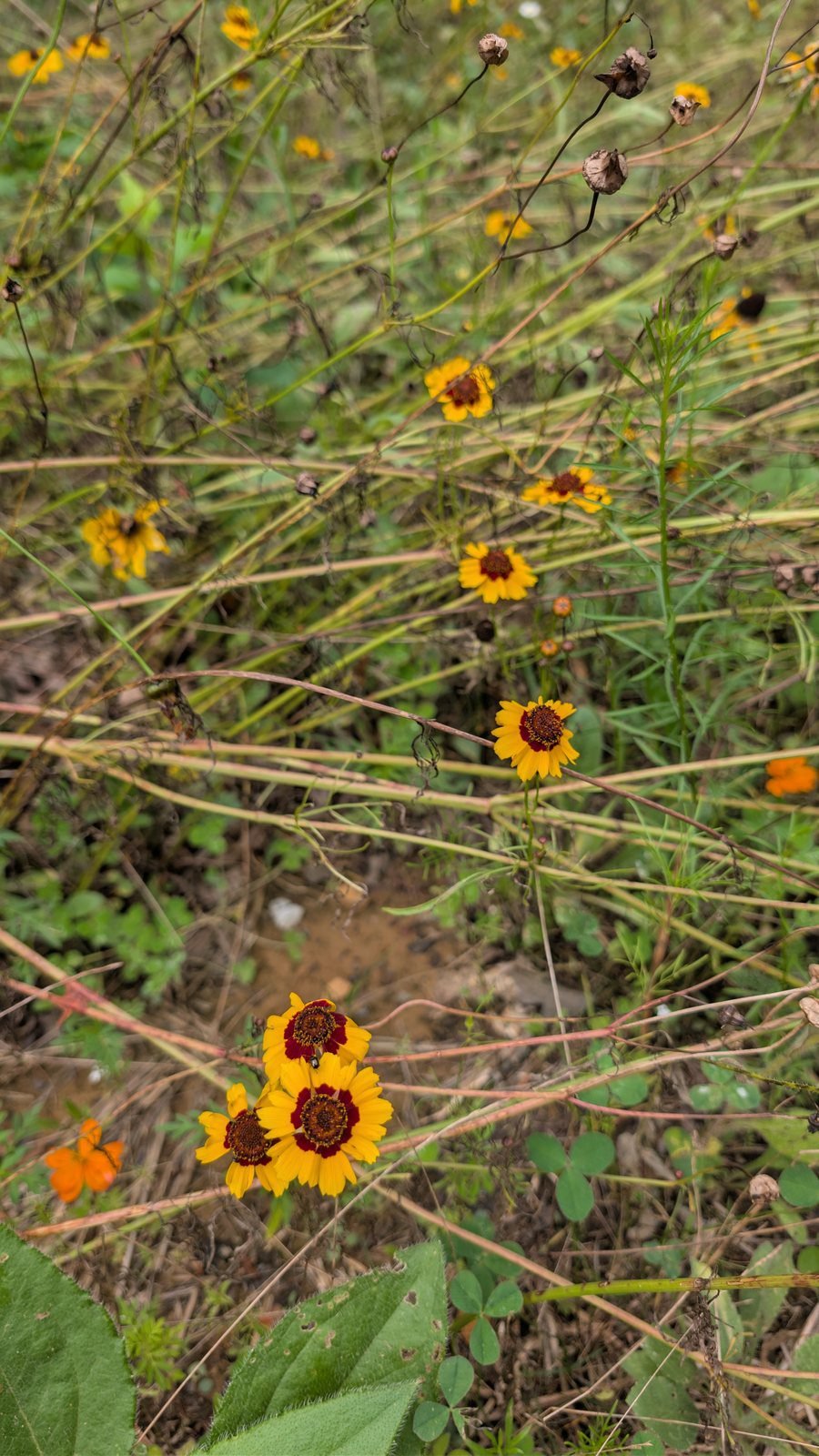
Plains coreopsis. Small yellow flowers with a maroon ring around the middle, on stems so thin the blooms seem to float. Fun fact: its other name is tickseed, because the dried seeds look like little ticks. They’re harmless, we promise. The plant has also been used to make yellow and orange dye.
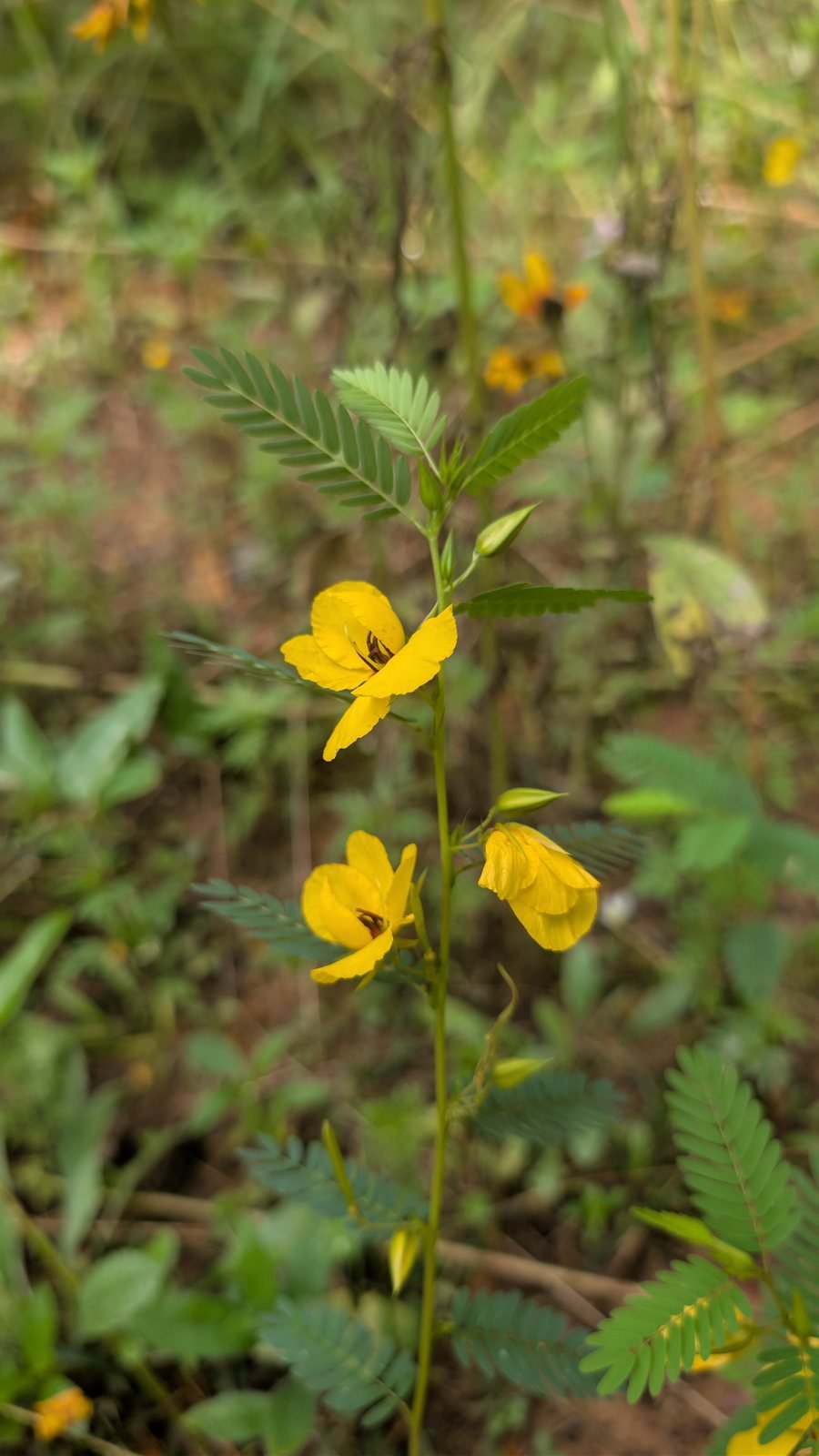
Partridge pea. The quiet star of the beds. Cloudless sulphur caterpillars eat it. That’s why the big yellow butterfly breeds on the property. Fun fact: it has tiny nectar glands on its leaf stalks that have nothing to do with the flowers. They feed ants, and the ants return the favor by chasing off insects that would chew the plant. Its pollen is locked inside tiny tubes that only open when a bee buzzes them, and honey bees can’t buzz. So partridge pea depends on bumble bees and a few other big native bees.
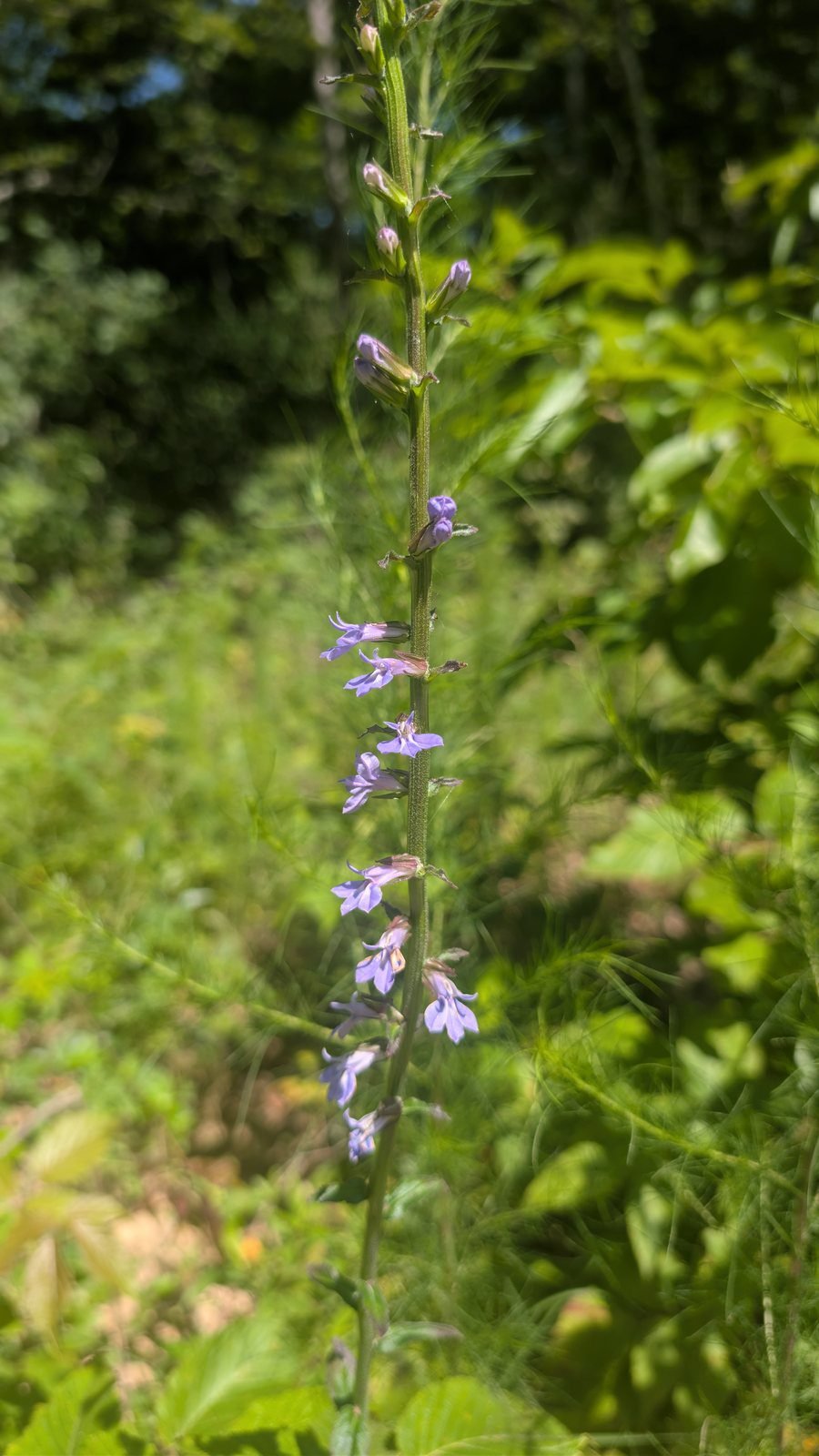
Downy lobelia. Blue-violet spikes that come up wild along the driveway in midsummer, all on their own. Bumble bees love it. It’s a plant for looking at, since lobelias are toxic.
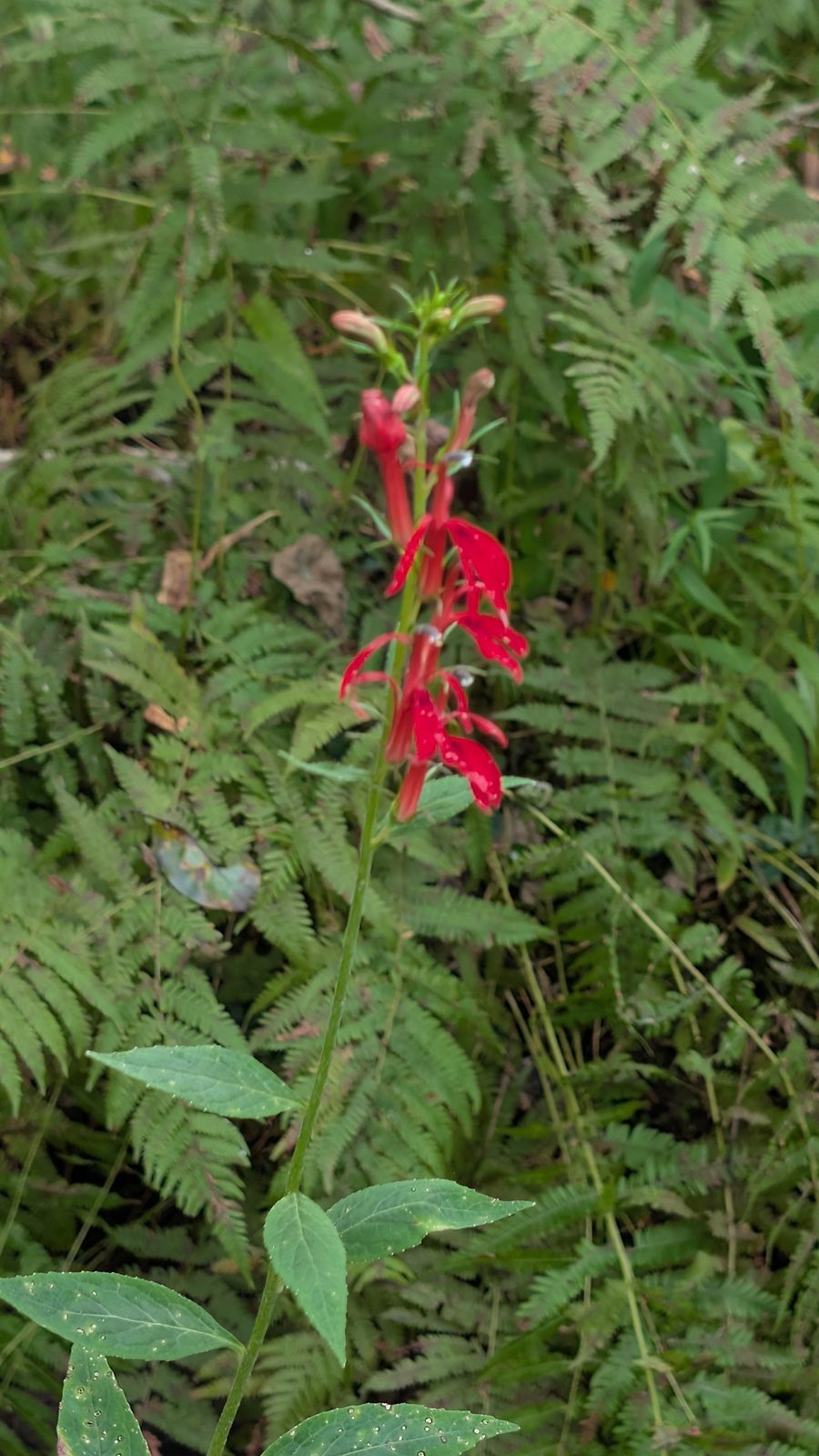
Cardinal flower. We were thrilled to find this one growing wild on the property this summer. That red is hard to beat. Of all the red wildflowers in Tennessee, this is the brightest we’ve seen. Fun fact: its long red tubes are built for ruby-throated hummingbirds, its main pollinators. Most bees can’t reach the nectar at all.
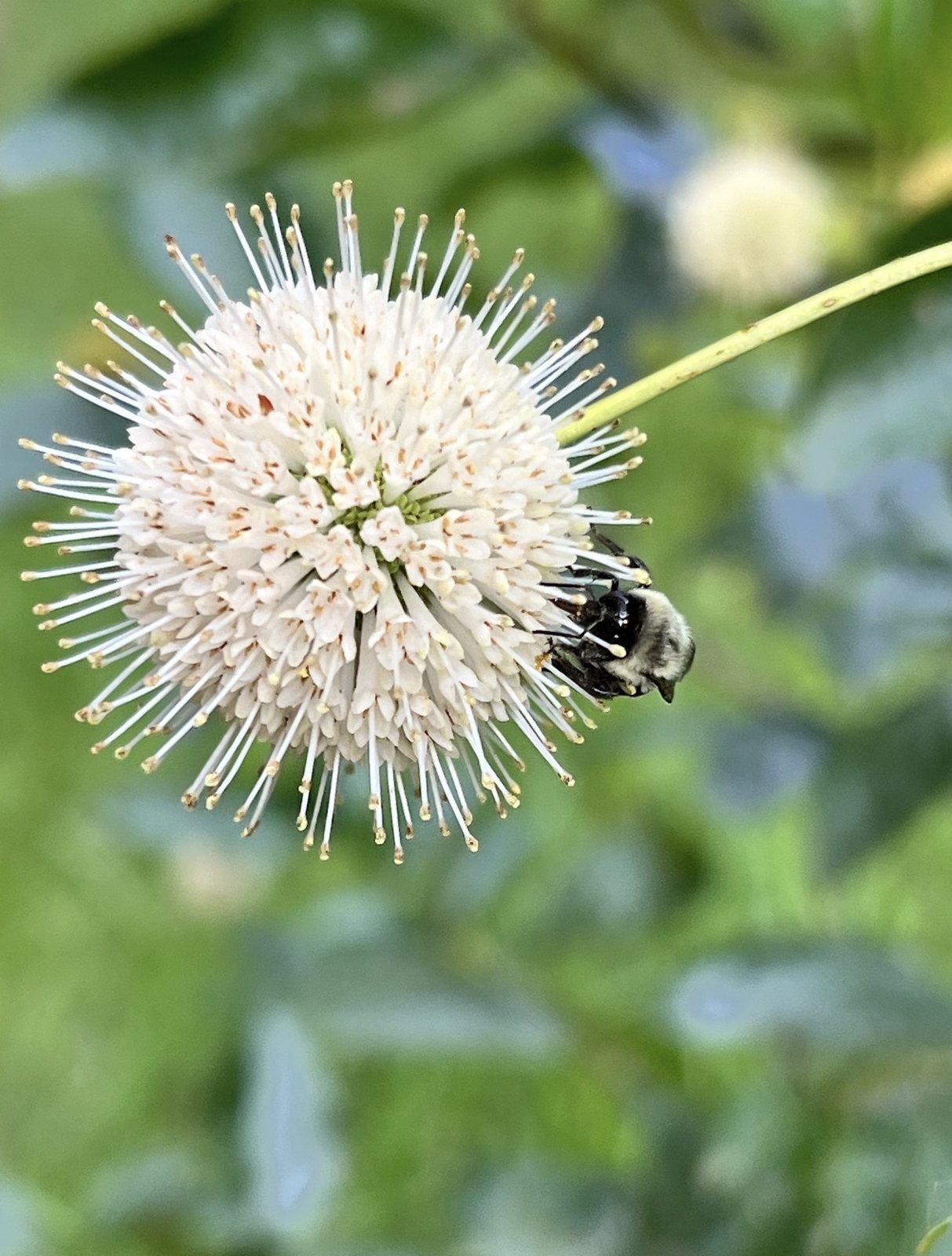
Buttonbush. A native shrub with round white flower heads that look like pincushions. Fun fact: one flower ball is really dozens of tiny tube-shaped flowers packed together. That’s why everything from bees to moths crowds onto it at once.
Planted for the butterflies and bees
These aren’t Tennessee natives. Most came from Mexico or Central America. We grow them because they bloom for months and the pollinators go wild for them. Most of them grow in the bed by the bathhouse deck, a few steps from the Scandinavian Cabin and the Glamping Tent.
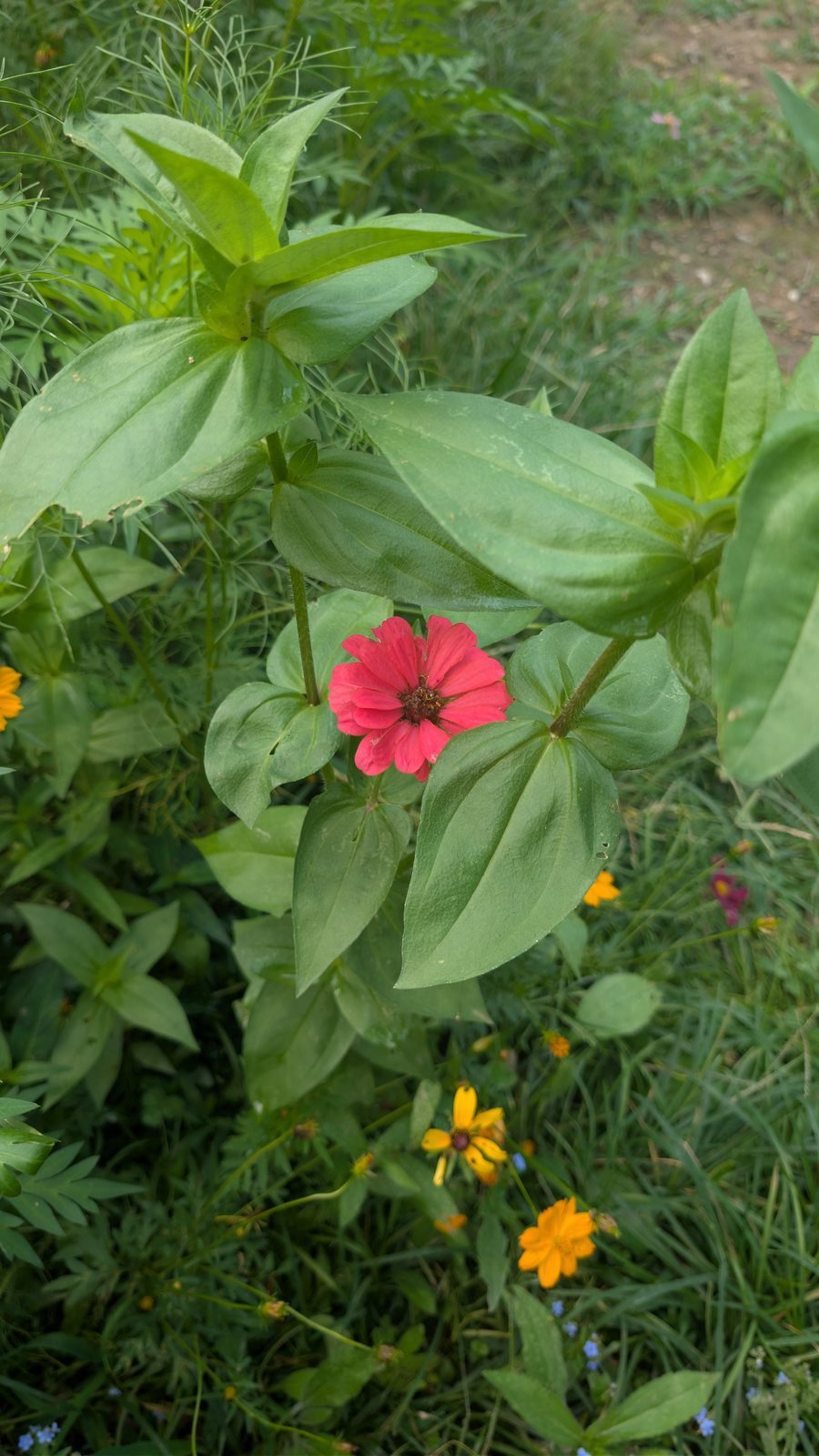
Zinnia. Butterfly magnet number one. On a single August morning, one patch here drew tiger swallowtails, silver-spotted skippers and cloudless sulphurs. Fun fact: in 2016 a zinnia bloomed aboard the International Space Station.
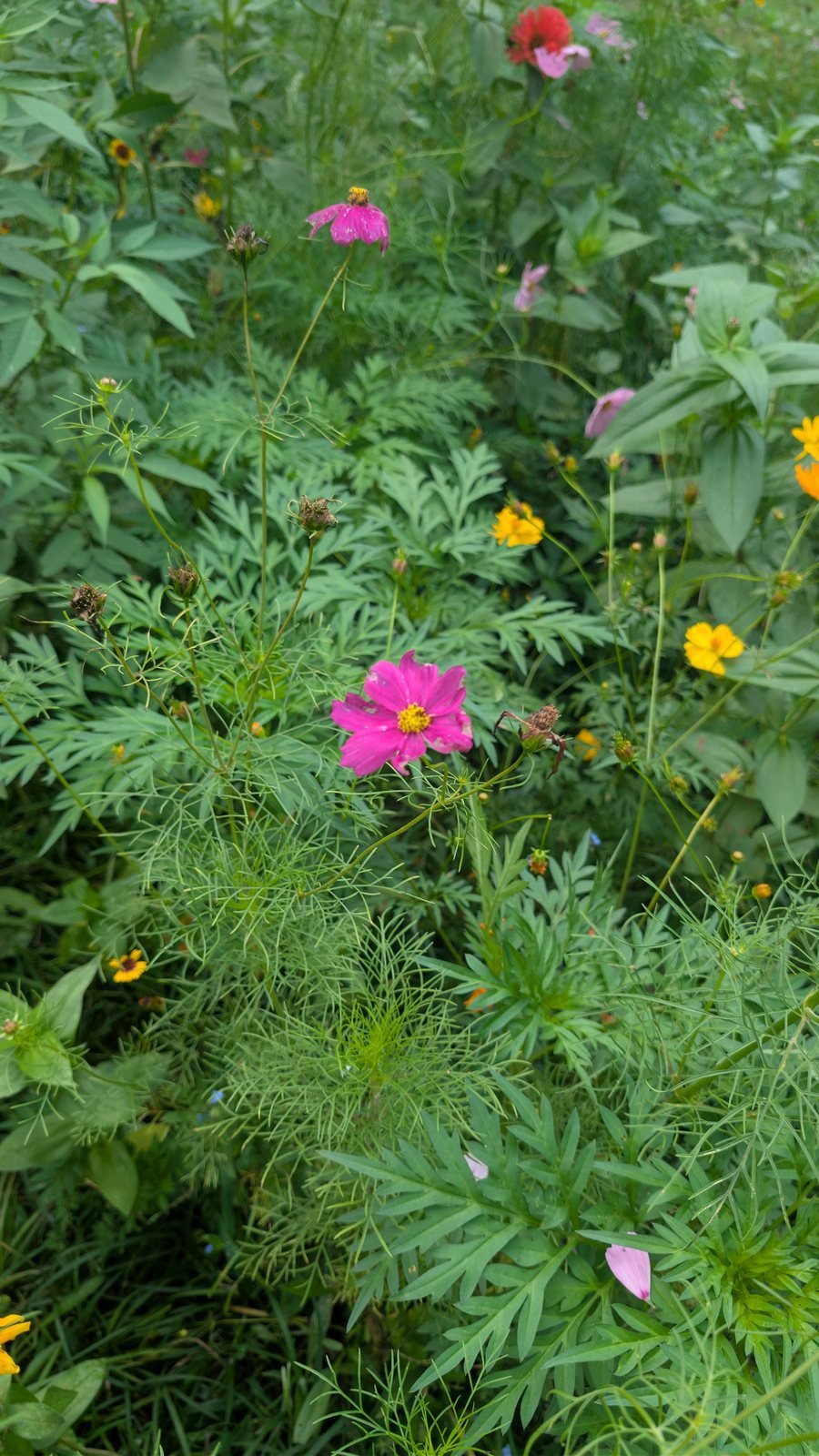
Cosmos and sulphur cosmos. The pink, white and magenta-edged ones are cosmos. The orange and yellow ones, some of them taller than a person against the Cozy Spruce Cabin’s back wall, are sulphur cosmos. Fun fact: Spanish priests in Mexico named cosmos for the neat, even spacing of its petals, from the Greek word for order and harmony.
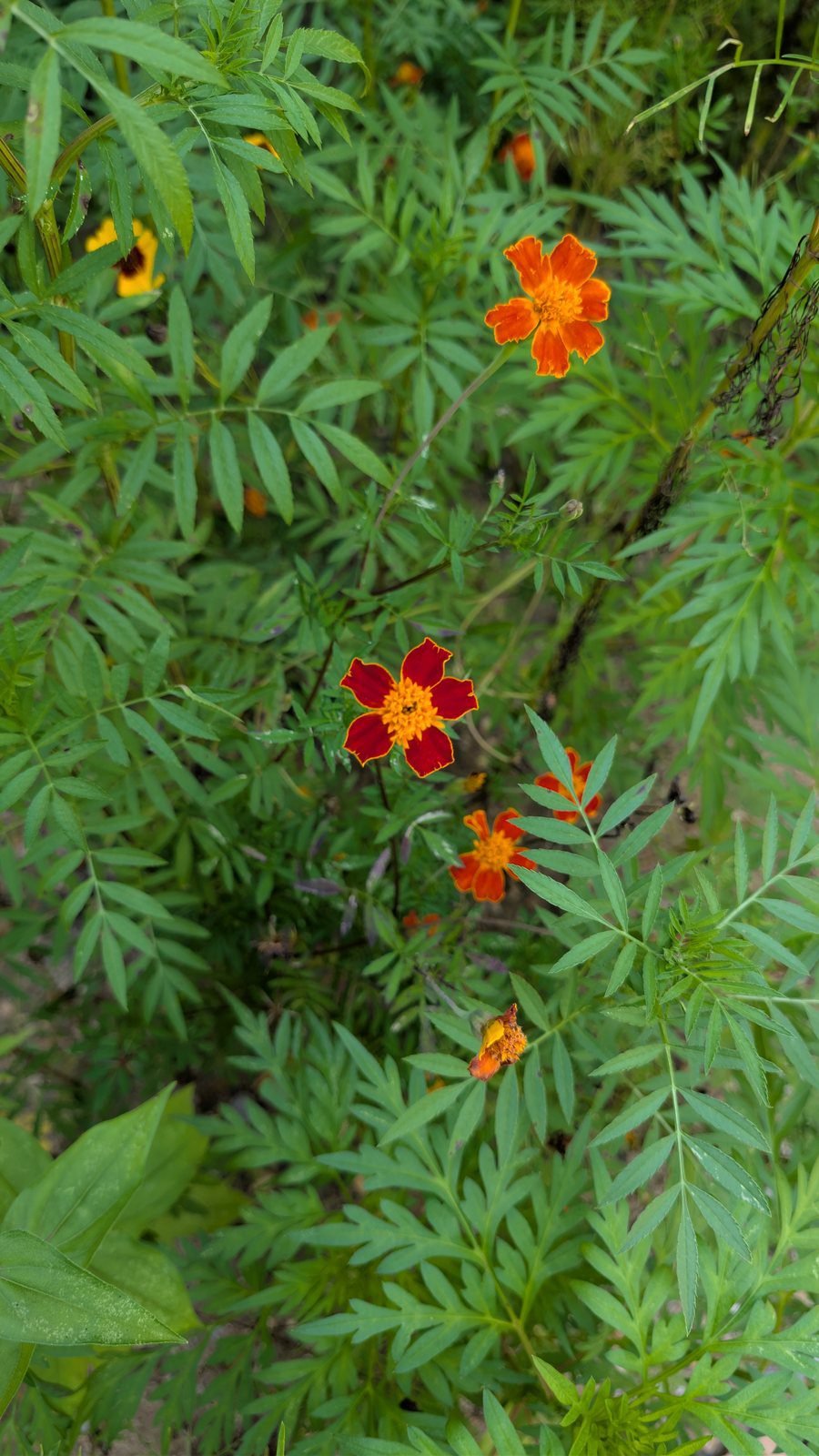
French marigold. Fun fact: it isn’t French. Marigolds come from Mexico and Central America, crossed the Atlantic in the 1500s, and came back with a European name.
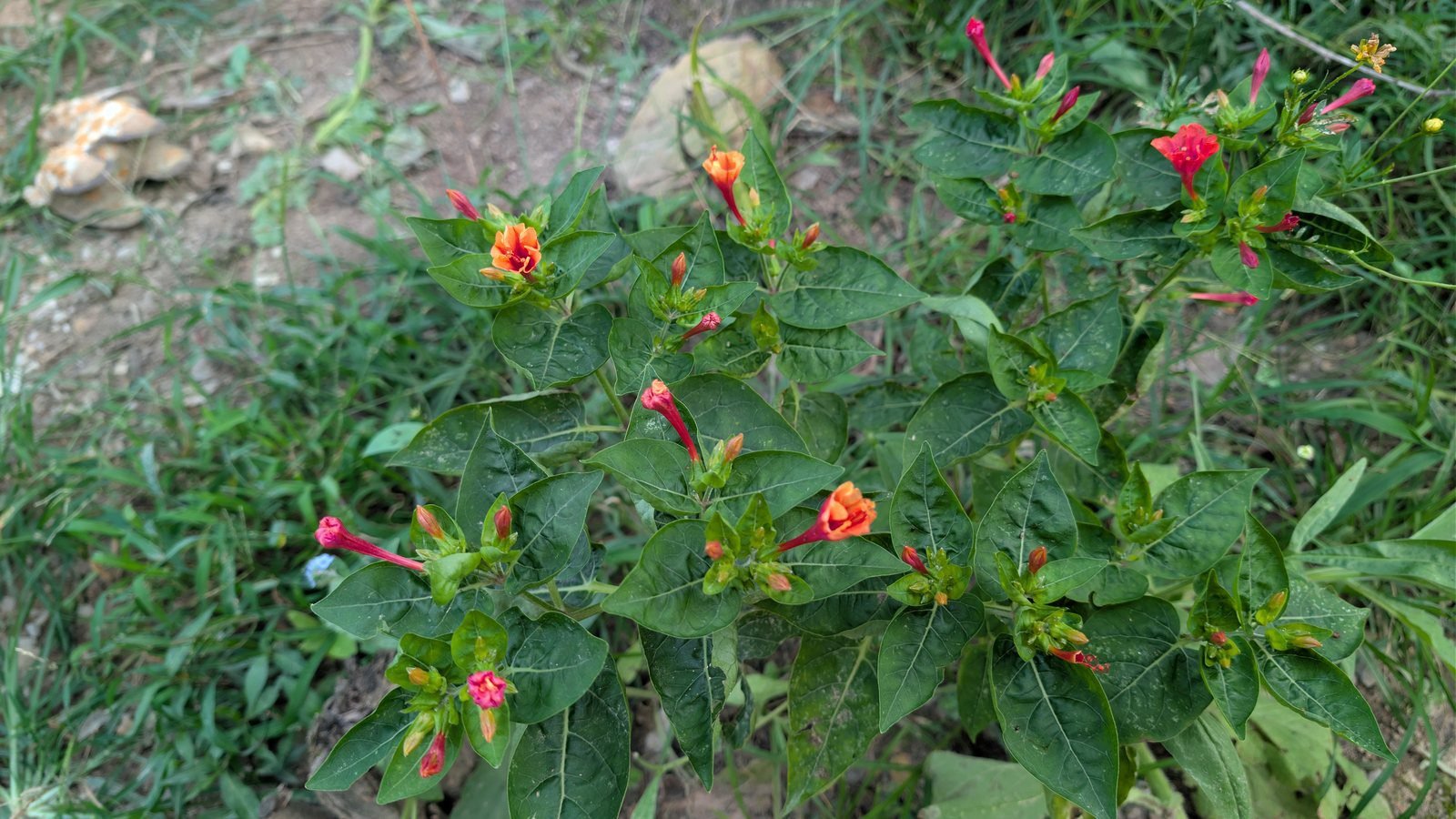
Four o’clock. Fun fact: the flowers stay shut most of the day and open in the late afternoon, hence the name. They’re timed for the moths that come out at dusk. They’re for looking at only: the seeds are toxic.
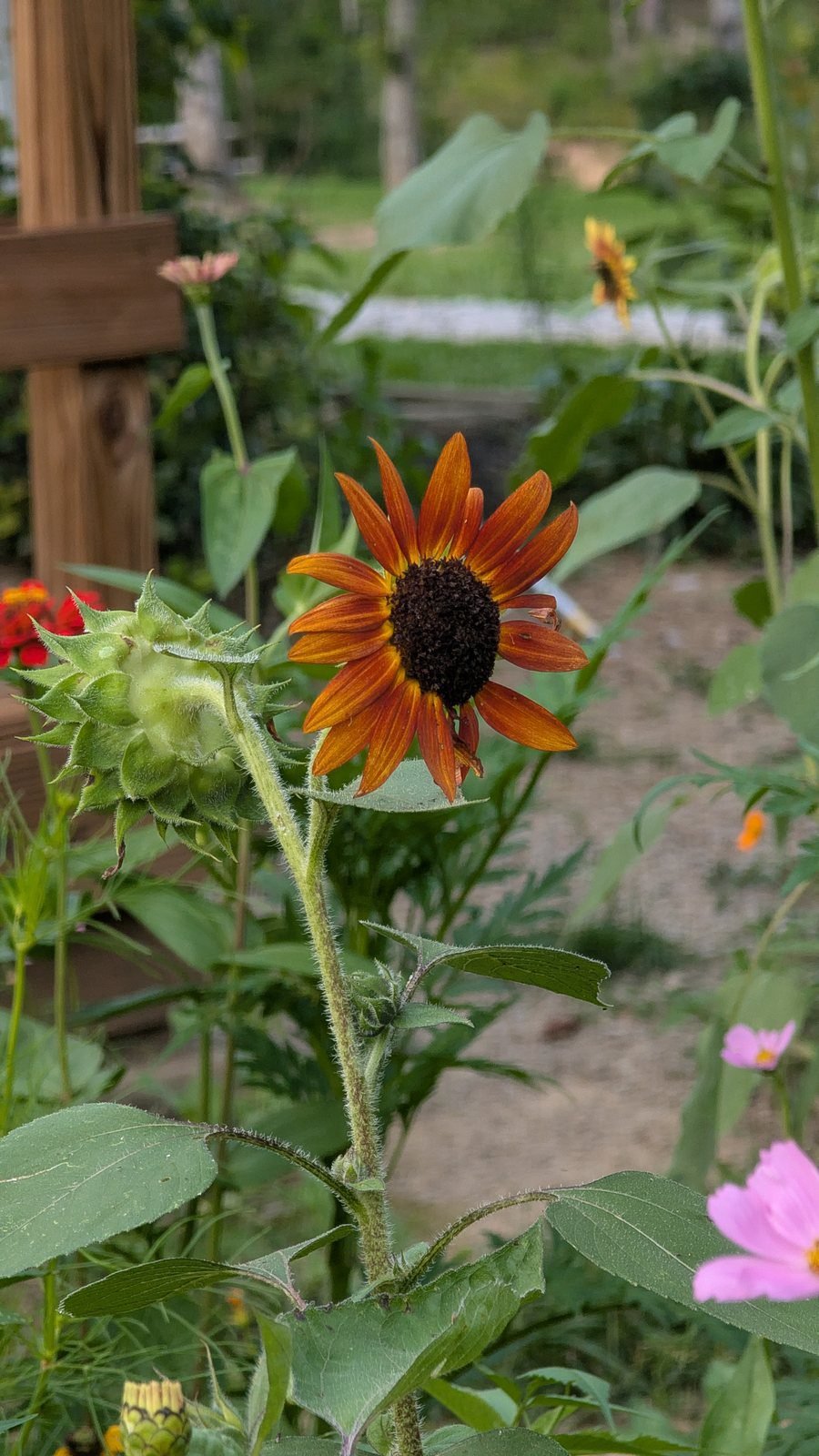
Sunflower. Ours are garden types in bronze and cream, but the sunflower itself is a North American native. Fun fact: young sunflowers turn to follow the sun across the sky each day. Once they bloom, most settle down facing east.
One that doesn’t belong
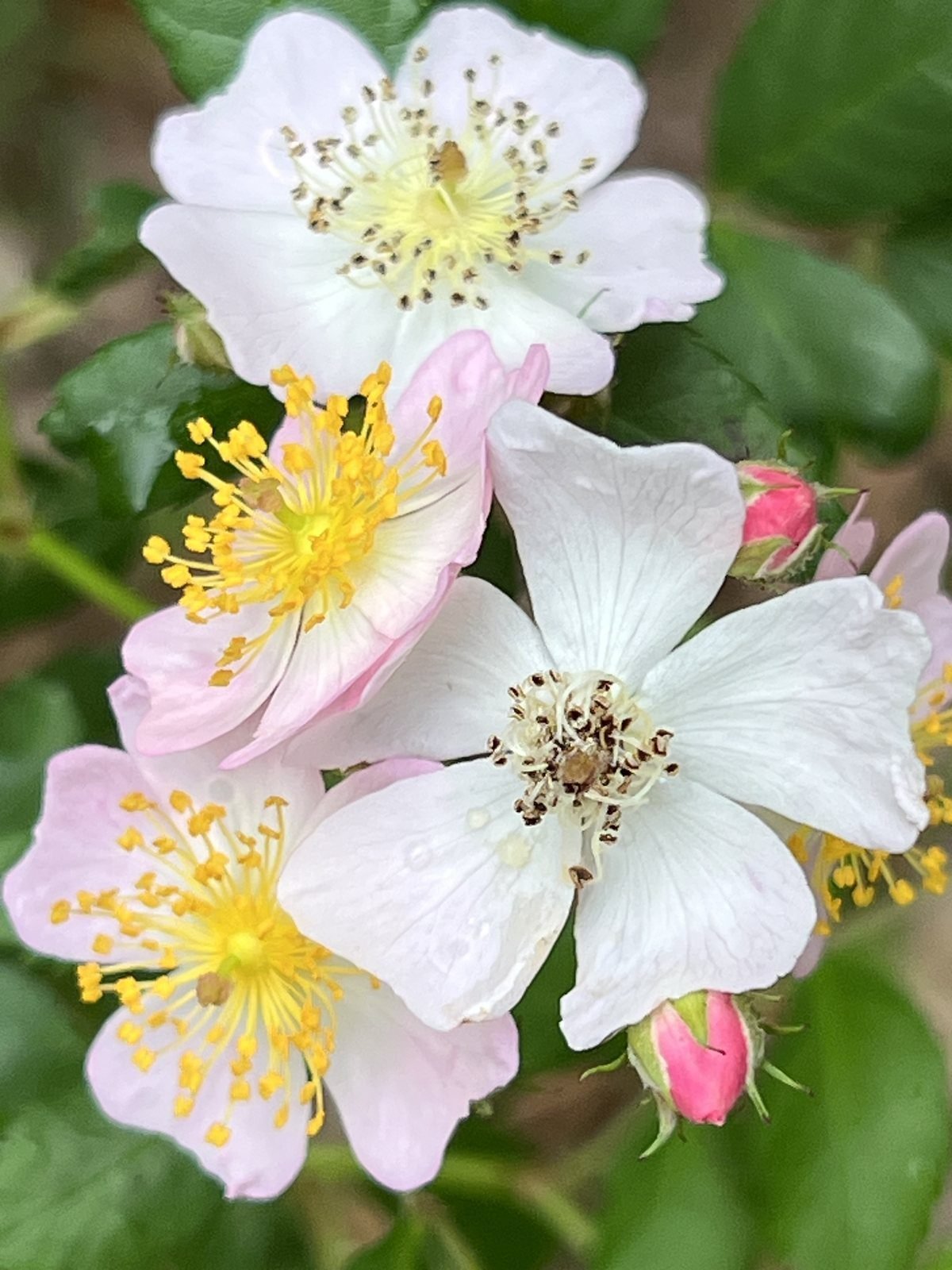
Not everything blooming here is welcome. This is a beautiful flower, and we’re fairly sure it’s multiflora rose. It’s invasive in Tennessee. It arrived from East Asia in 1866 as rootstock for garden roses, then was planted on purpose in the mid-1900s as a “living fence” for livestock. A single bush can make half a million to a million seeds a year, and birds spread them everywhere. It crowds out the native plants the butterflies depend on.
When we find invasives, we cut or pull them by hand. We don’t spray to spot-kill weeds. If a plant ever leaves us no other choice, we try natural herbicides first.