Butterflies get most of the attention, but the flower beds are busy with plenty of other neighbors. A few of them make some people nervous. All of them are harmless to you, and most are working hard for the property.
Eastern box turtle: Tennessee’s state reptile
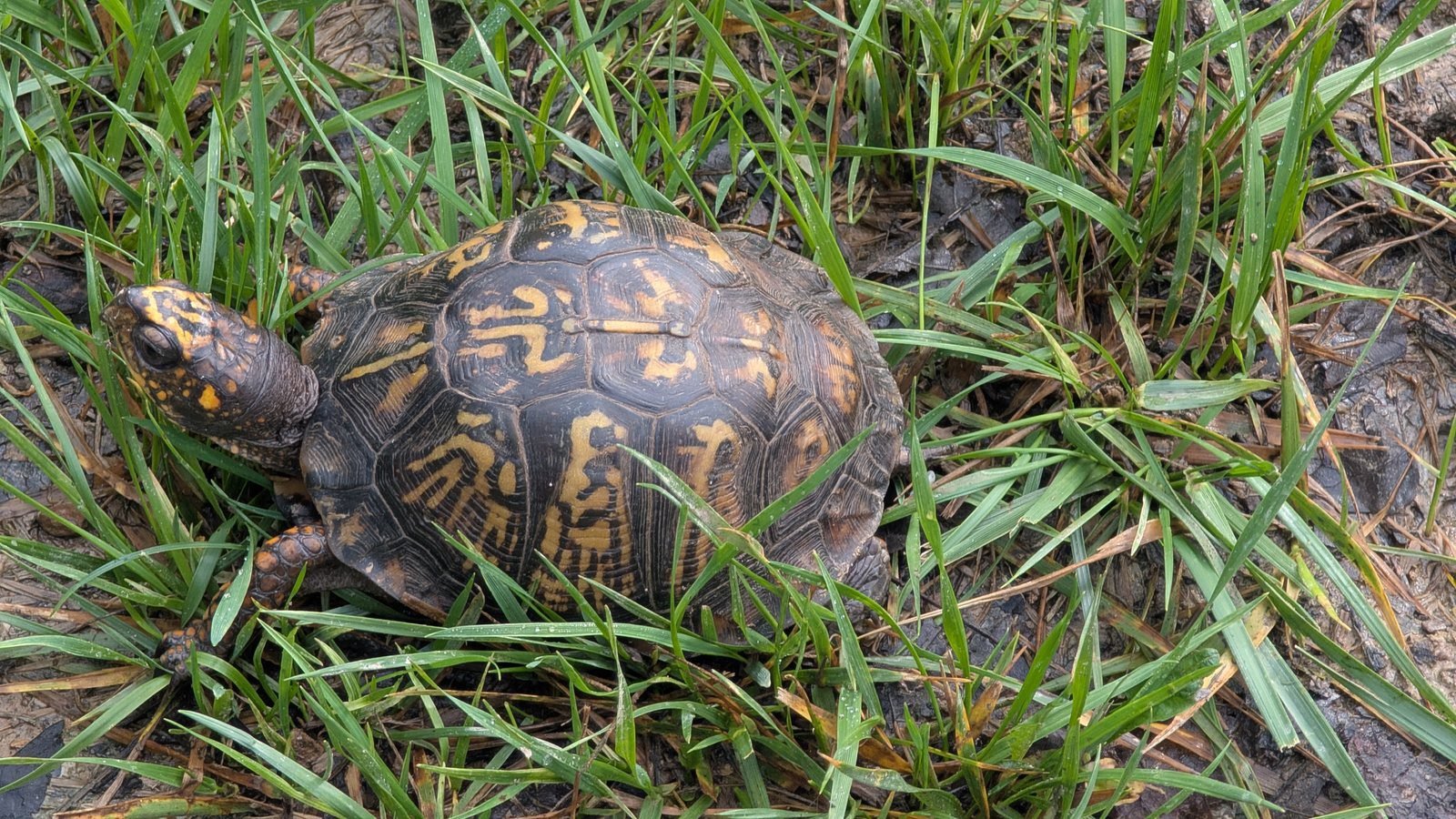
The eastern box turtle is Tennessee’s official state reptile, and one of the longest-lived animals you’re likely to meet. Box turtles commonly live 50 years, and some pass 100. We’ve seen at least three on the property, and we’re glad of every one. Box turtles do poorly where roads and building chop the land into pieces, so finding several is a good sign that the woods and fields here are still connected.
Fun fact: the bottom shell has a hinge, so the turtle can pull in its head and legs and shut itself up like a box. Males usually have red eyes, and females have brown.
Here’s the important part. A box turtle spends its whole life in a home area of just a few acres, and one that gets carried somewhere new will try for years to walk home. So please never take one with you or move it to a “better” spot. If you see one crossing the driveway or a road, the kindest help is to carry it across in the direction it was already heading, then let it be.
White-tailed deer
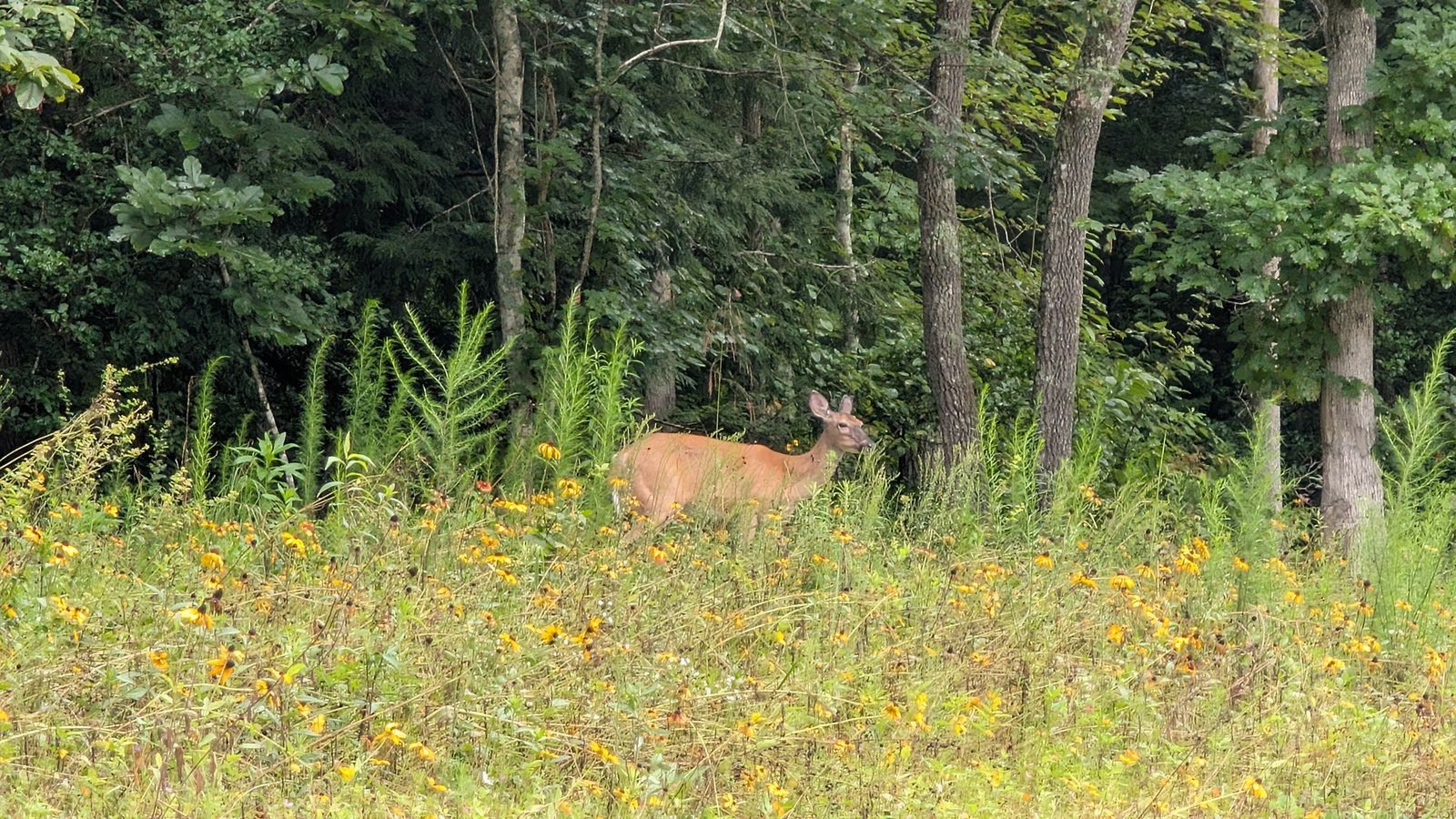
Deer wander through the property most days, especially early and late. Fun fact: when a white-tailed deer senses danger, it raises its tail and flashes the white underside like a flag. That’s a warning to every other deer nearby, and a “don’t bother chasing me” signal to whatever spooked it.
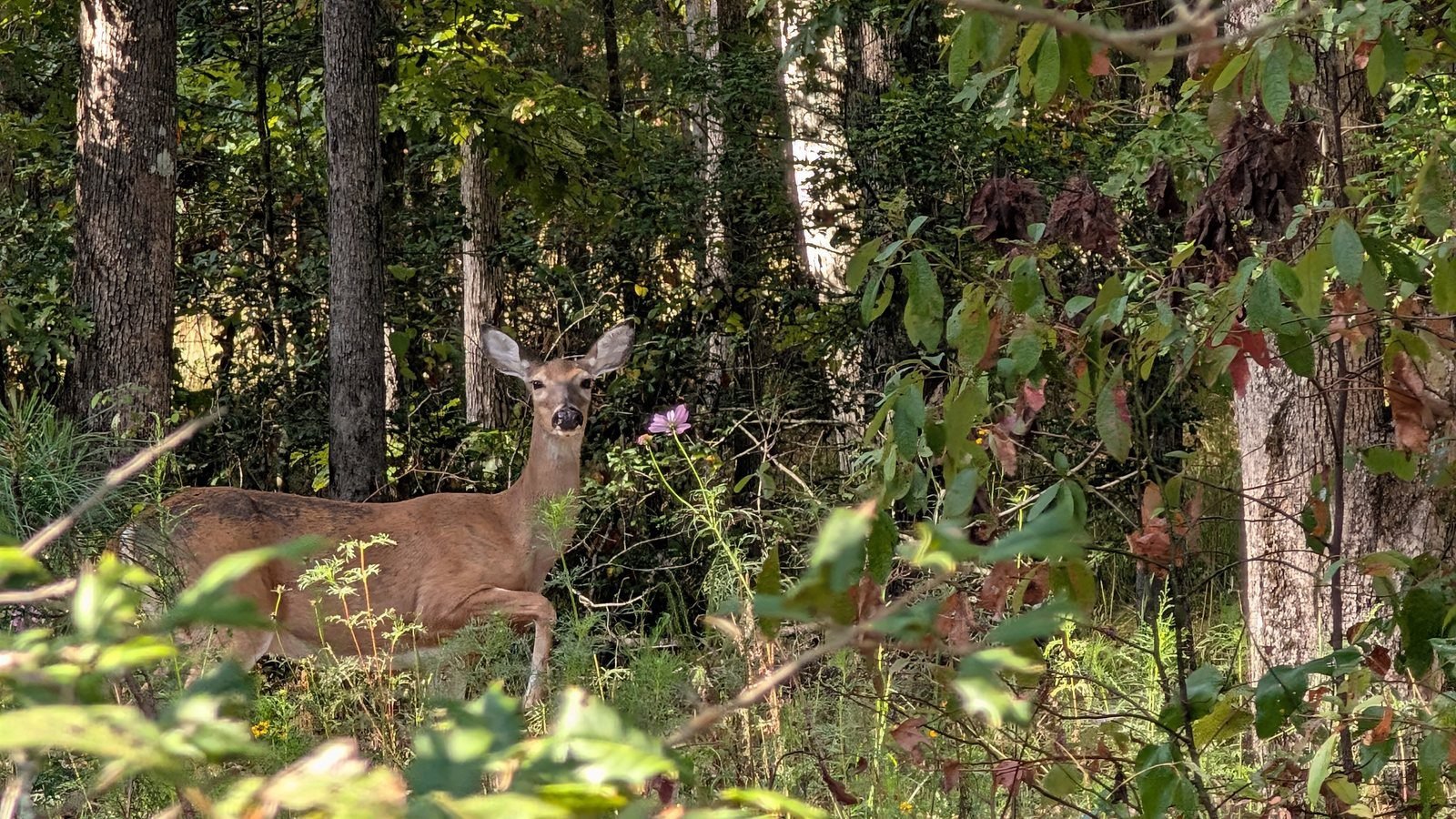
Our deer aren’t very scared of us, so they often come close. This doe was standing near the walkway between the Cozy Spruce Cabin and the Boho Cabin when I got a little too close for her liking. She stomped her front foot, let out two loud wheezing snorts and bounded off into the woods.
Fun fact: a deer’s stomp sends two messages. Deer have scent glands between their hooves, so along with the thump, a stomp leaves a warning smell on the ground for other deer.
Great egret
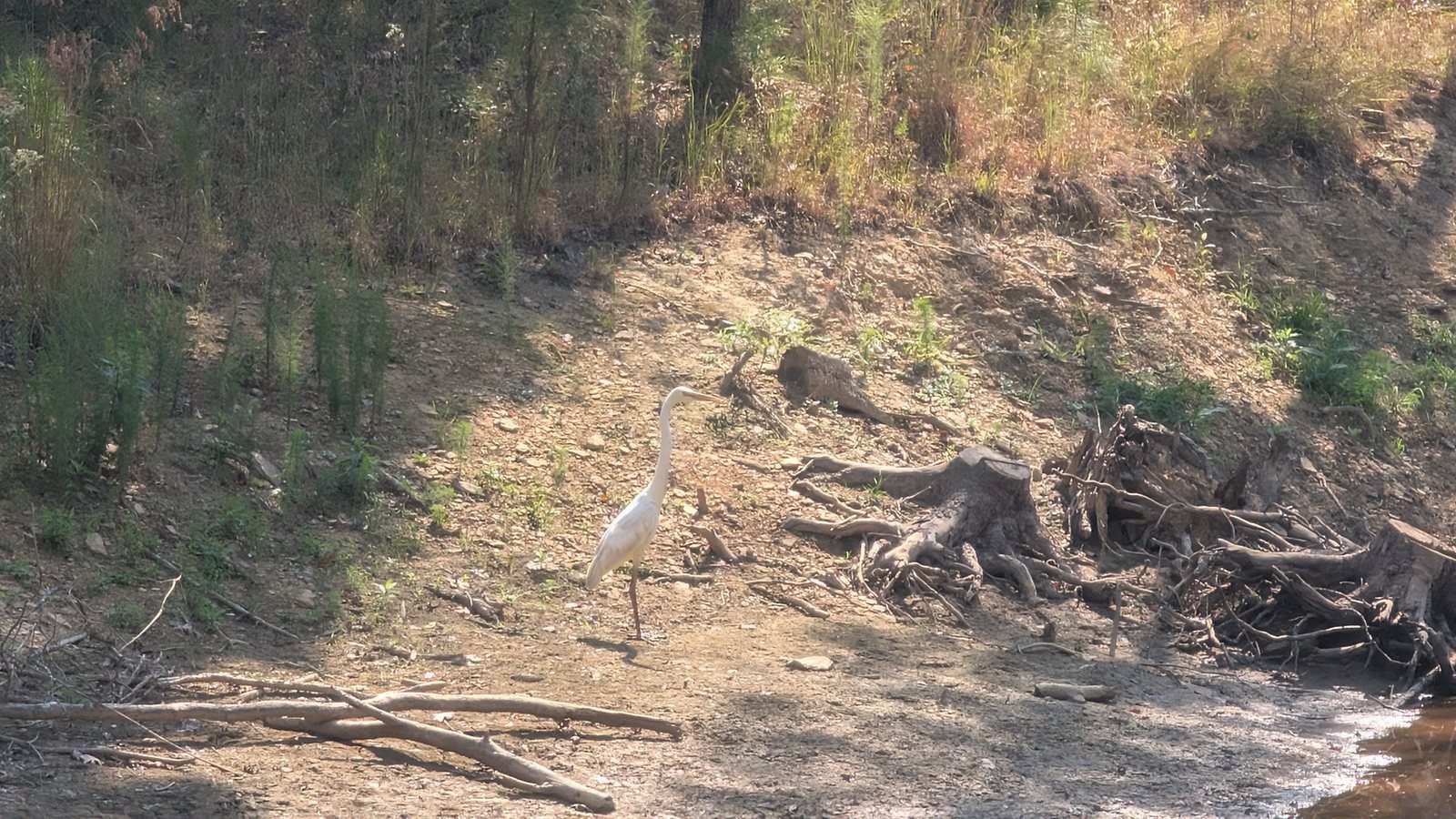
Every late summer for three years now, a tall white egret has come back to the back edge of our pond and stalked the shallows for fish and frogs. We like to think it’s the same bird. After nesting season, young egrets wander far and wide. That’s probably why one turns up here every late summer.
Fun fact: in the late 1800s, great egrets were hunted nearly to extinction for the long plumes on women’s hats. Protecting them helped start the modern bird conservation movement, and the great egret became the symbol of the National Audubon Society.
Pileated woodpecker
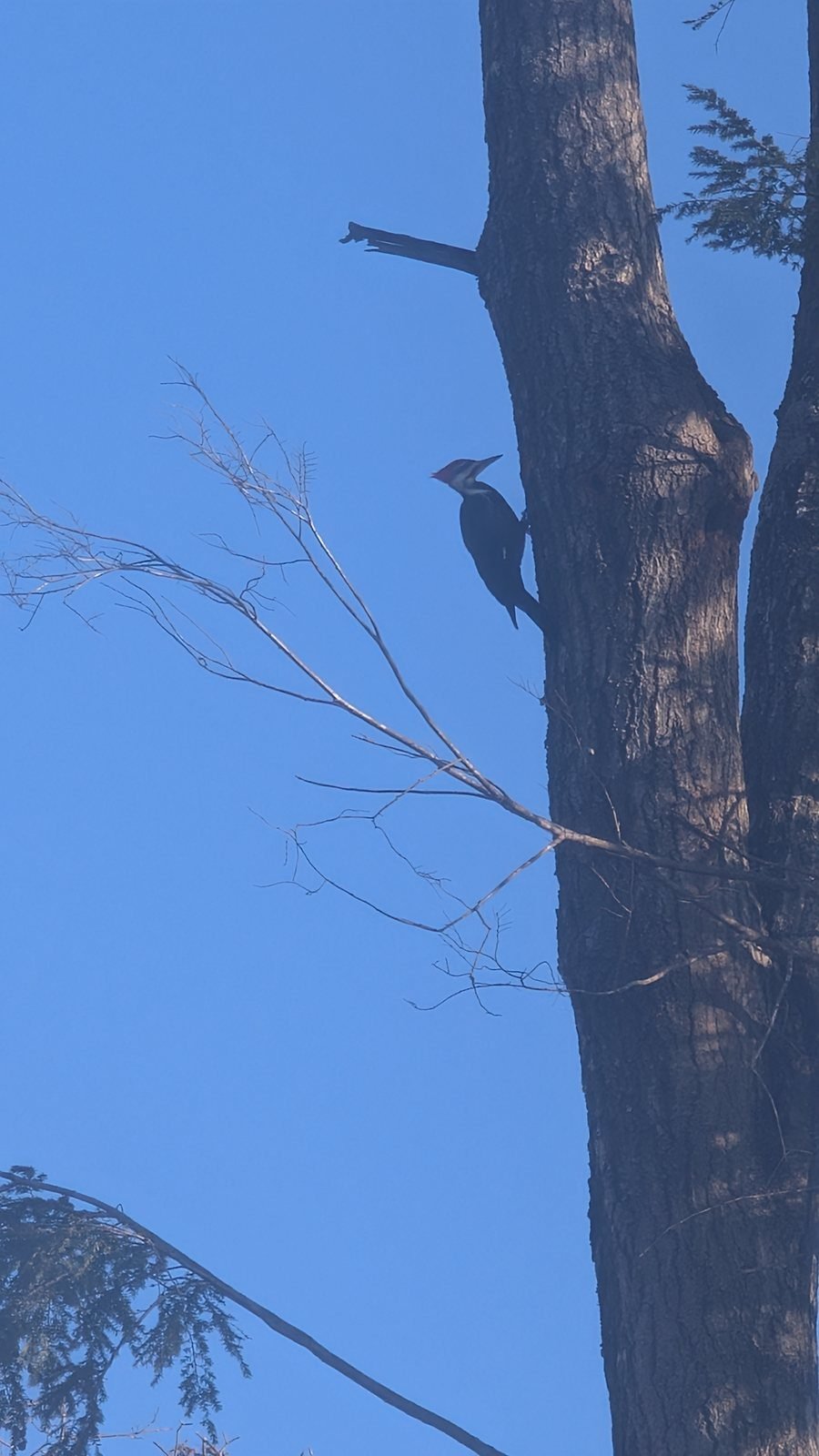
Winter guests get this one. With the leaves down, the biggest woodpecker most people will ever see is easy to spot: about the size of a crow, with a flaming red crest. You’ll often hear its loud, ringing call before you find it.
Fun fact: it chisels big rectangular holes in dead and dying trees to get at carpenter ants, its favorite food. Those holes later become homes for owls and flying squirrels. It’s one more reason we leave the dead trees standing wherever they’re safe.
Honey bees
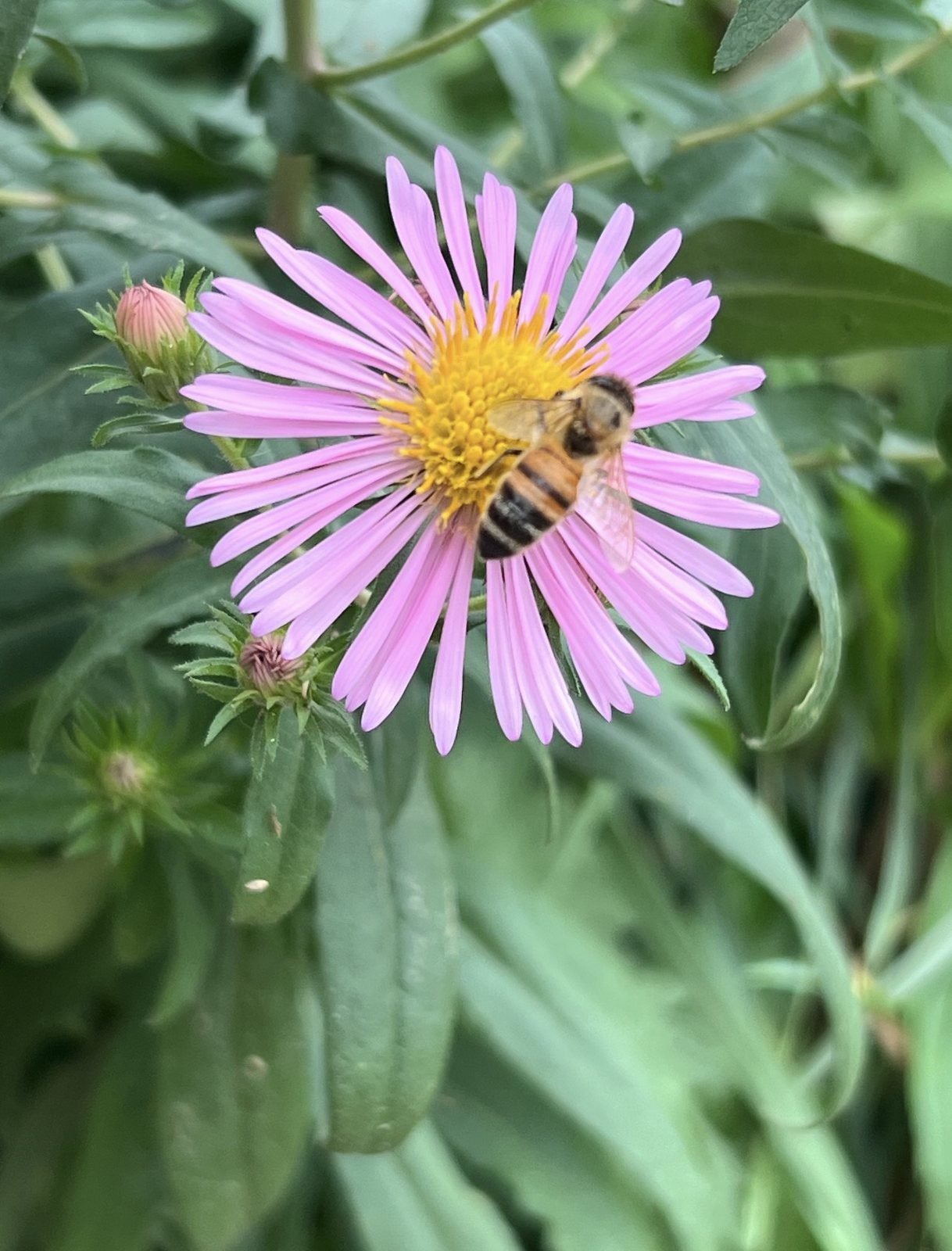
Fun fact: honey bees aren’t native to America. European settlers brought them over in the 1600s. Tennessee has hundreds of its own native bee species, many of them tiny and easy to mistake for flies. On our flowers we see three main types of bees: honey bees, bumble bees, and small native bees like sweat bees.
Bumble bees
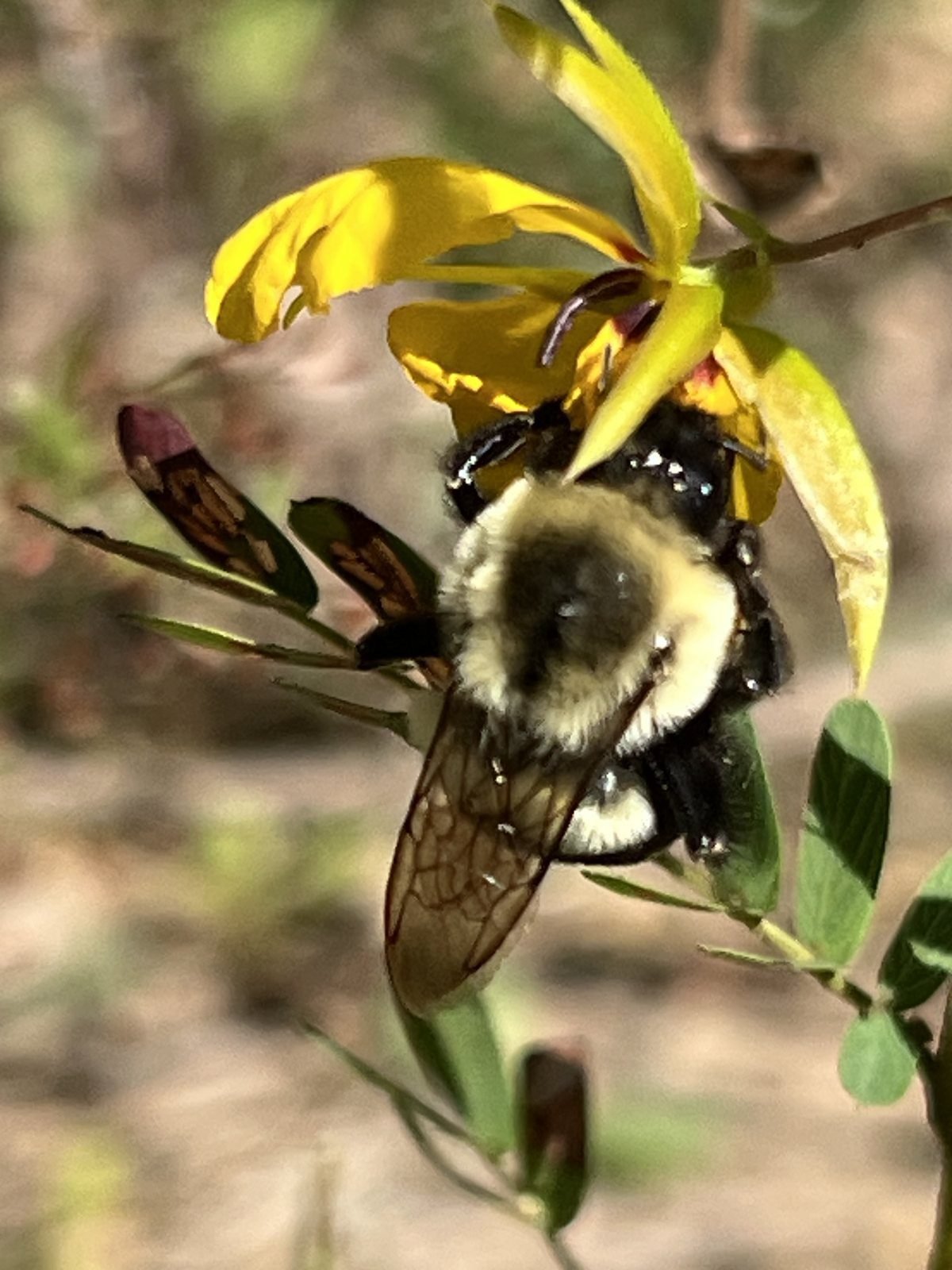
If you hear a buzz from a flower that suddenly gets louder, that’s a bumble bee using a trick most bees don’t have. Fun fact: some flowers, partridge pea among them, lock their pollen inside. A bumble bee grabs on and vibrates its flight muscles until the pollen shakes loose. It’s called buzz pollination, and you can hear it if you stand close.
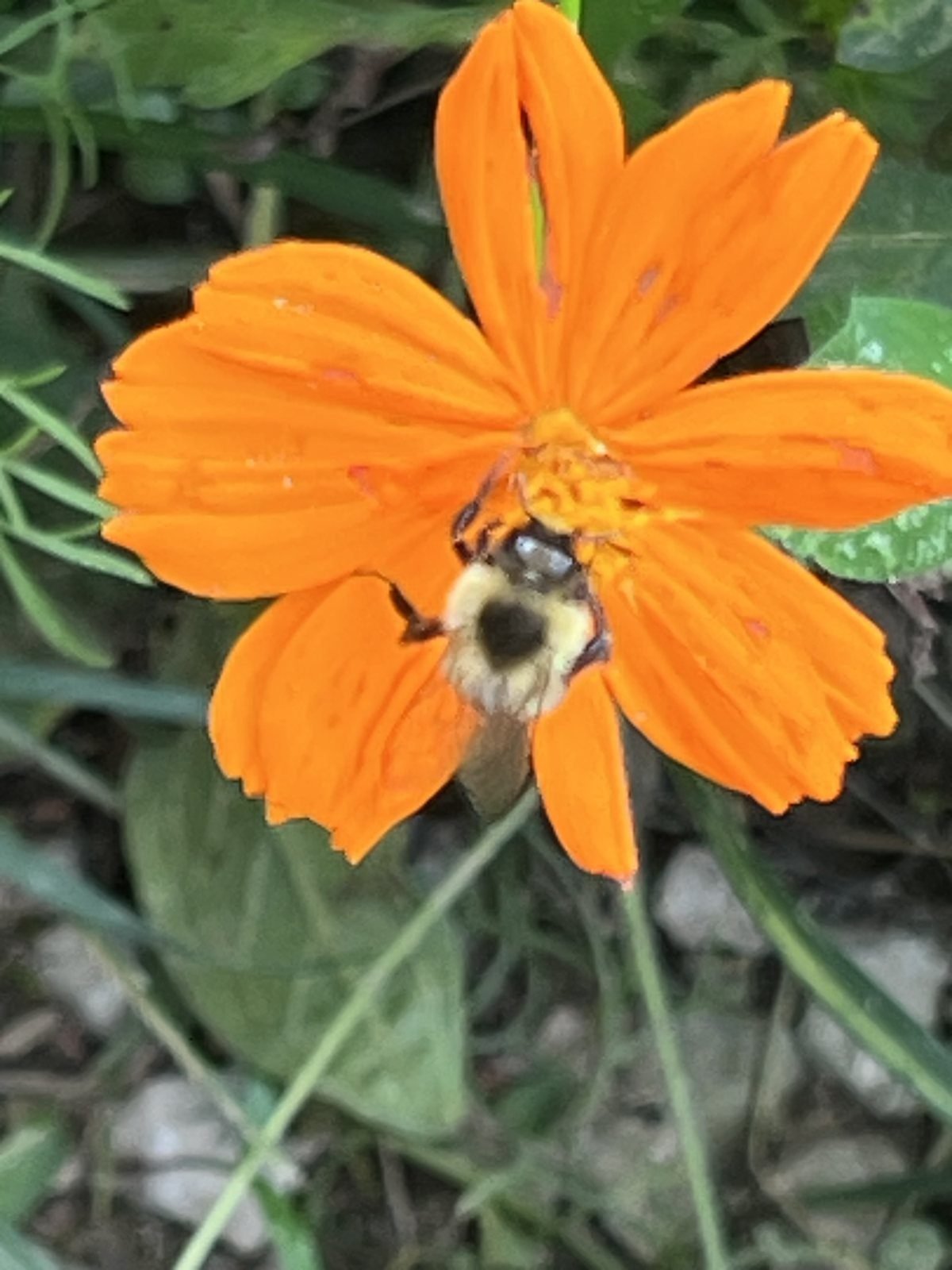
Bumble bees are gentle unless you grab one or step on a nest, so feel free to watch from up close.
Small native bees
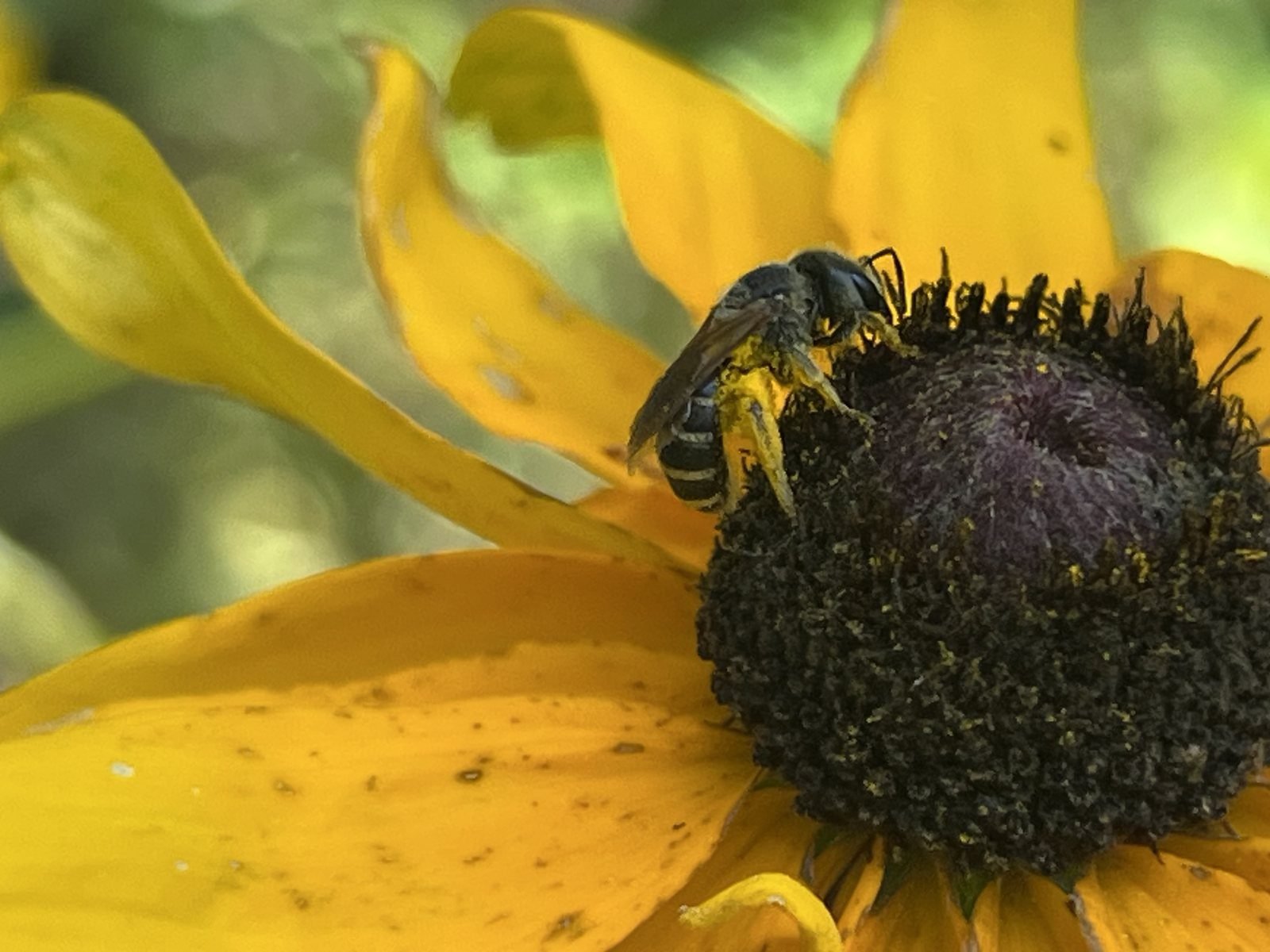
This little one is a small native bee, most likely a sweat bee. Fun fact: sweat bees get their name from landing on people to sip the salt in their sweat. It tickles and that’s about it.
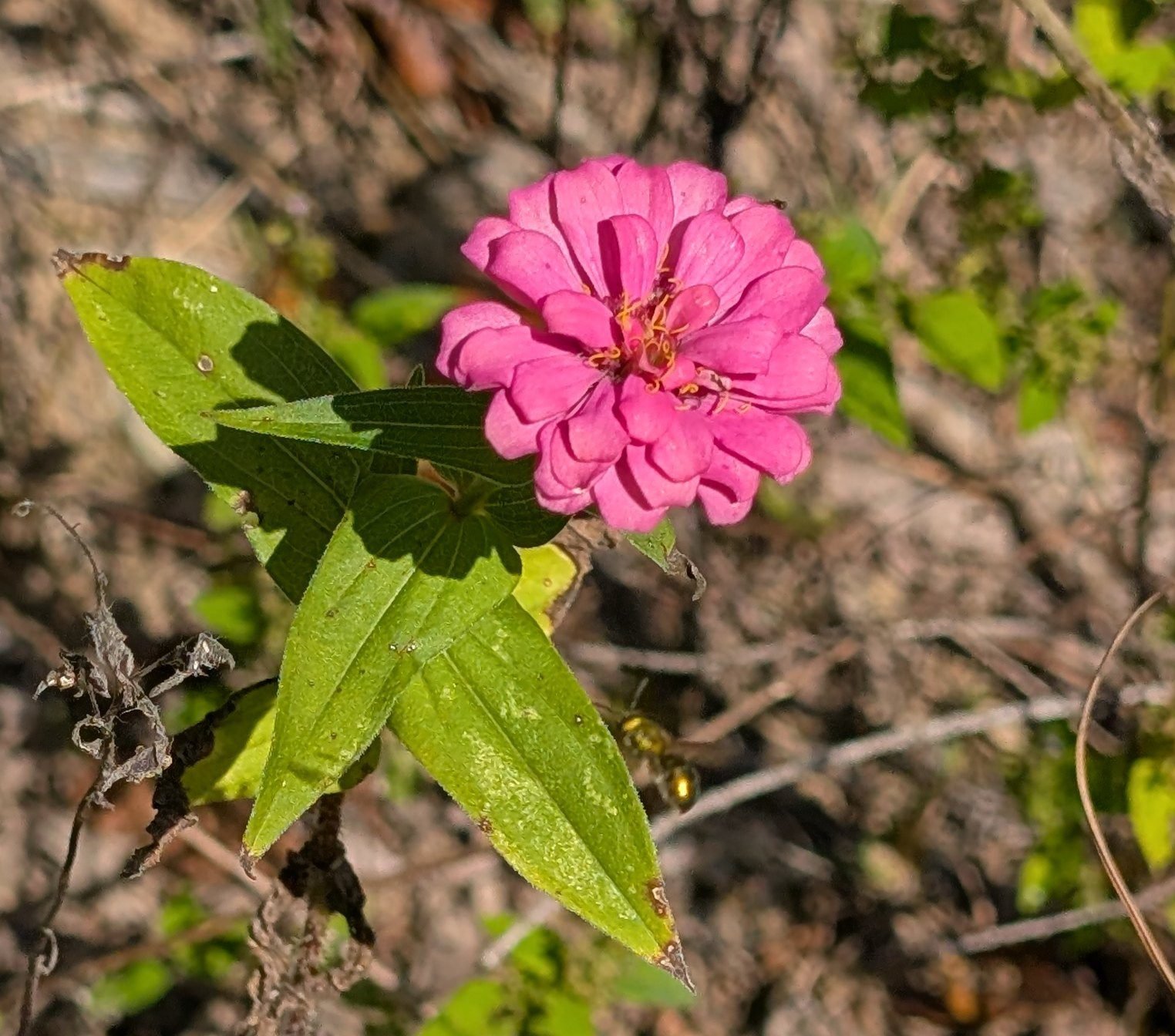
Look closely at this one. Below the zinnia’s leaves there’s a tiny bee caught in midair, shining green and gold. It’s a metallic green sweat bee, and we were lucky to catch it flying. Fun fact: some of the prettiest bees in Tennessee are no bigger than a grain of rice and shine like metal in the sun. They visit flowers from spring all the way to late fall, and most dig little nest tunnels in bare soil. They’re gentle and rarely sting.
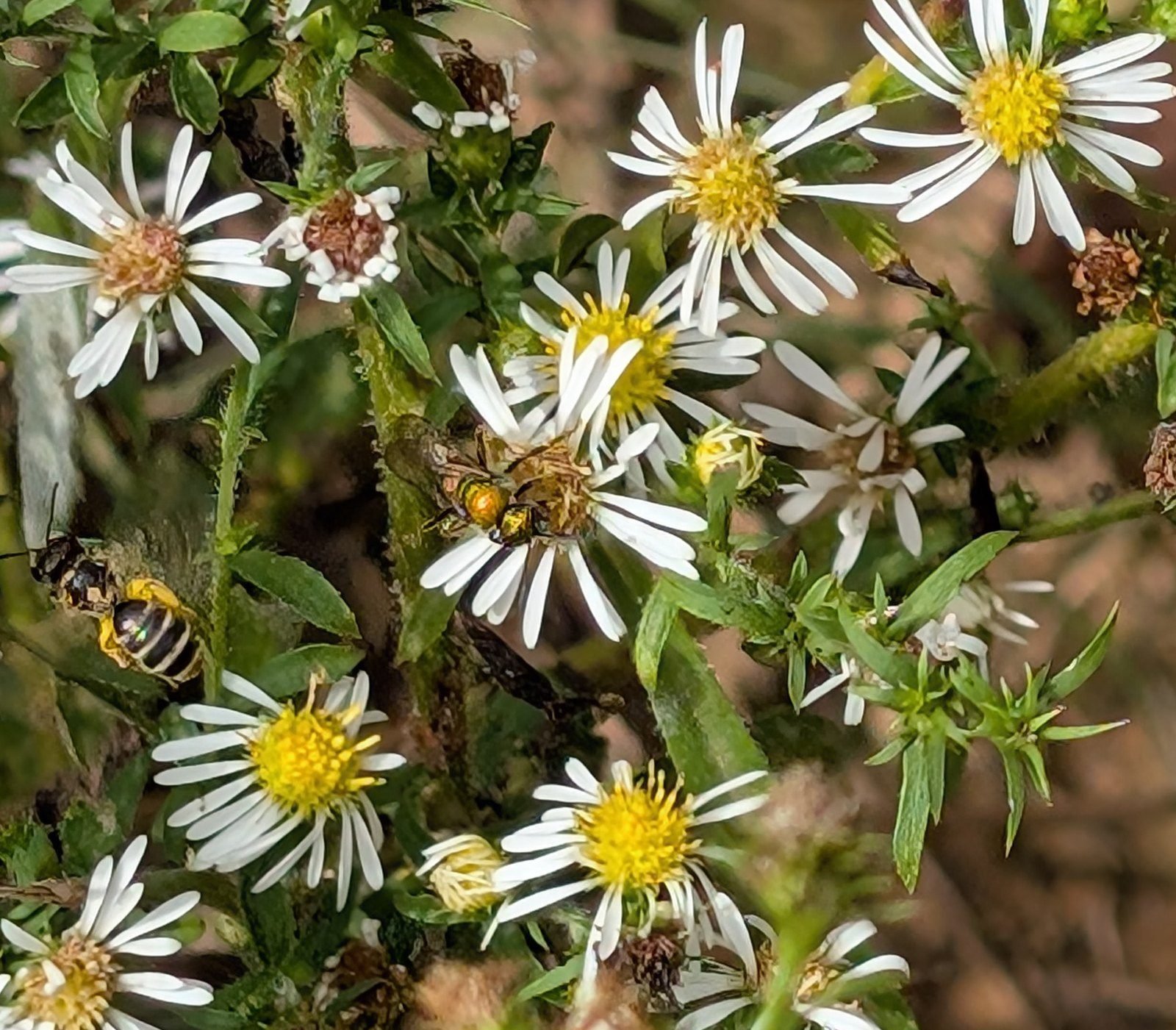
Two kinds of sweat bee working the same patch of little white asters in mid-October. The striped one on the left is a different kind from its shiny green neighbor. Fun fact: look at the flower centers. They start out yellow and turn reddish as they age, a signal that tells bees which flowers are running low on nectar. Asters like these bloom late into the fall, so they’re one of the last good meals for bees before winter.
Salamanders
There are dozens of kinds of salamanders in Tennessee, and we’ve found two on the property so far. Both are harmless and shy, and both are a good sign that the ground here is healthy and damp.
Full confession: we picked up both of these to get a good photo, and we’ve since learned better. Salamanders breathe through their skin, and the natural oils and salt on our hands can soak right in, especially if you’ve been putting on sunscreen or bug spray. If you find one, please admire it where it is and let it go about its business.
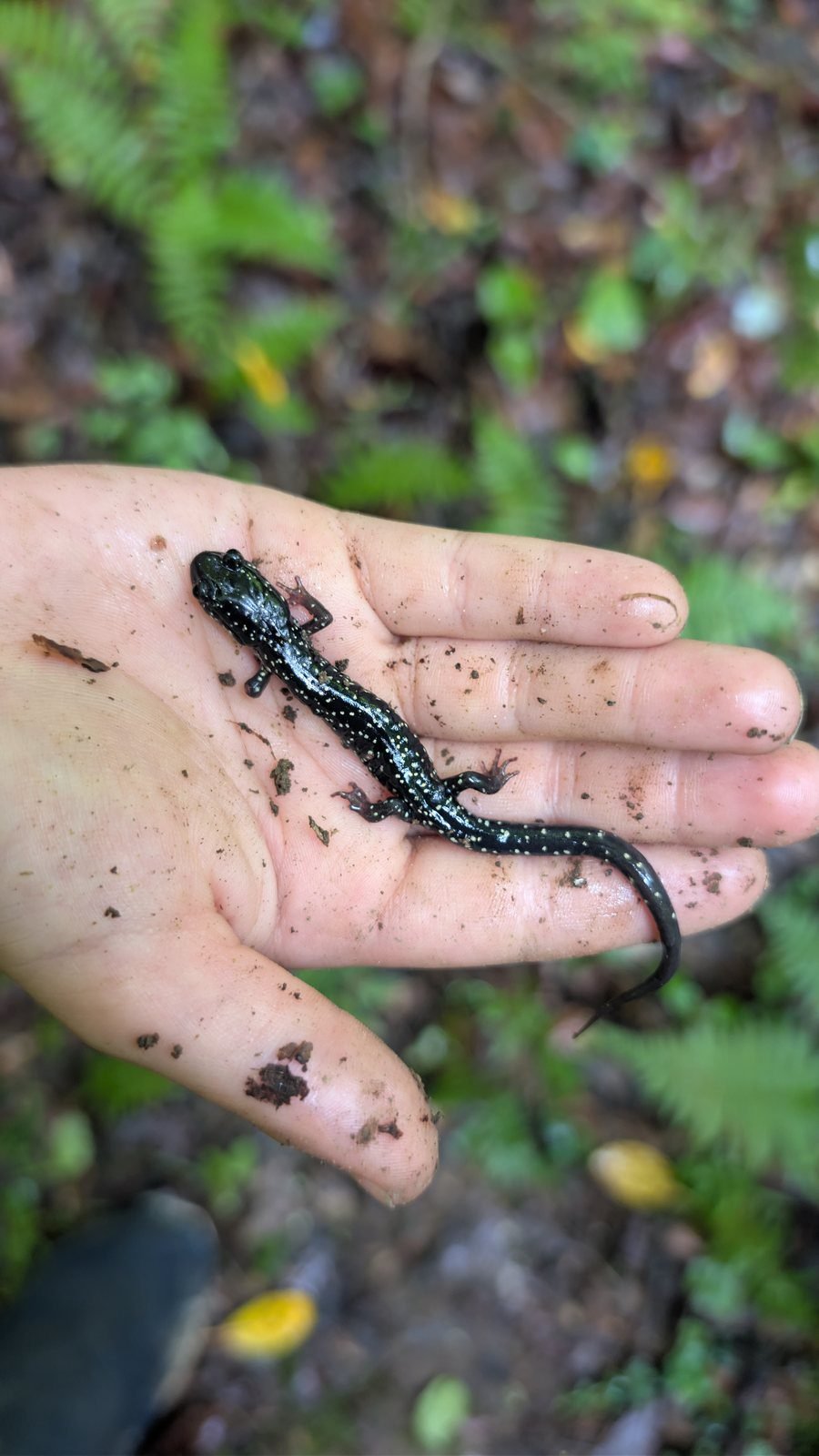
Slimy salamander. Shiny black with white flecks, like a night sky. It’s named for the thick, sticky slime it gives off when grabbed. The slime works like glue on a predator’s mouth, and it’s hard to wash off your hands, as we found out. It has no lungs at all and breathes entirely through its skin.
Fun fact: it skips the swimming tadpole stage. The female lays her eggs in a damp log or underground, and the young hatch as tiny copies of the adults.
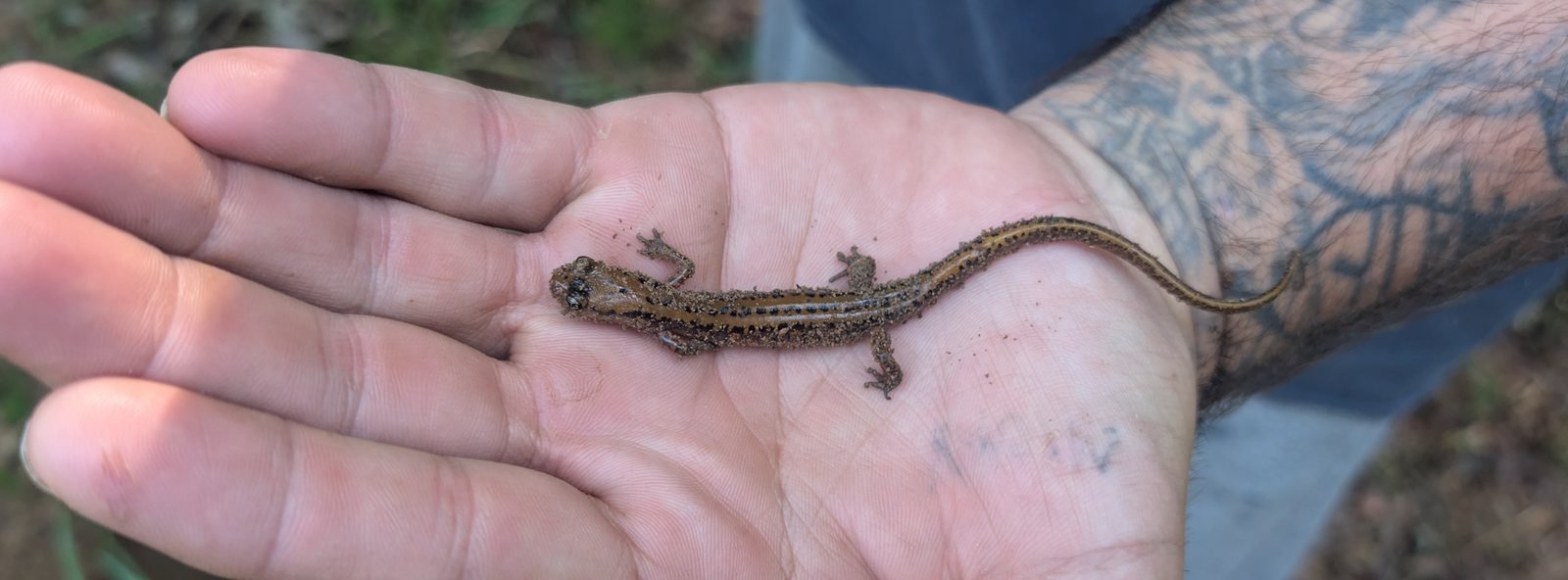
Southern two-lined salamander. Slim and yellow-brown, with two dark stripes down its back, about as long as your finger. It breathes through its skin too, and its young spend their first year or two living in streams, so finding one is good news about the water here.
Fun fact: the southern Appalachians, Tennessee included, are home to more kinds of salamanders than anywhere else on Earth.
Eastern fence lizard
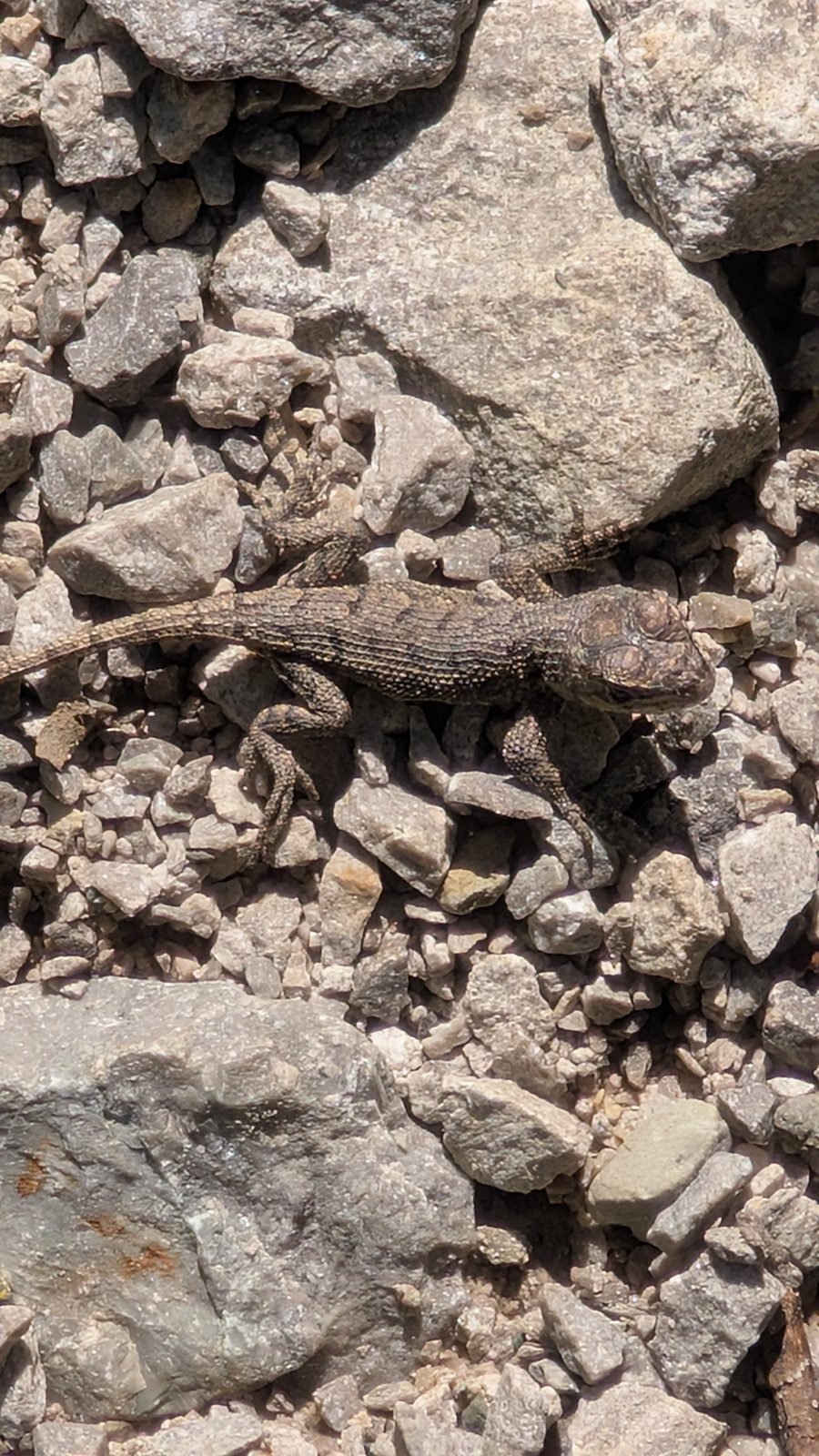
One of the most common lizards in Tennessee: rough-scaled, gray-brown, about the length of your hand, and usually found sunning on a rock or a warm path. It eats insects and spiders all day long. There are no venomous lizards in Tennessee, and this one is harmless to people.
Fun fact: when a fence lizard feels watched, it scoots around to the far side of the post or tree and keeps the trunk between you and it. Walk around and it walks around too. The males also have bright blue patches on their bellies that they flash at rivals.
Katydid
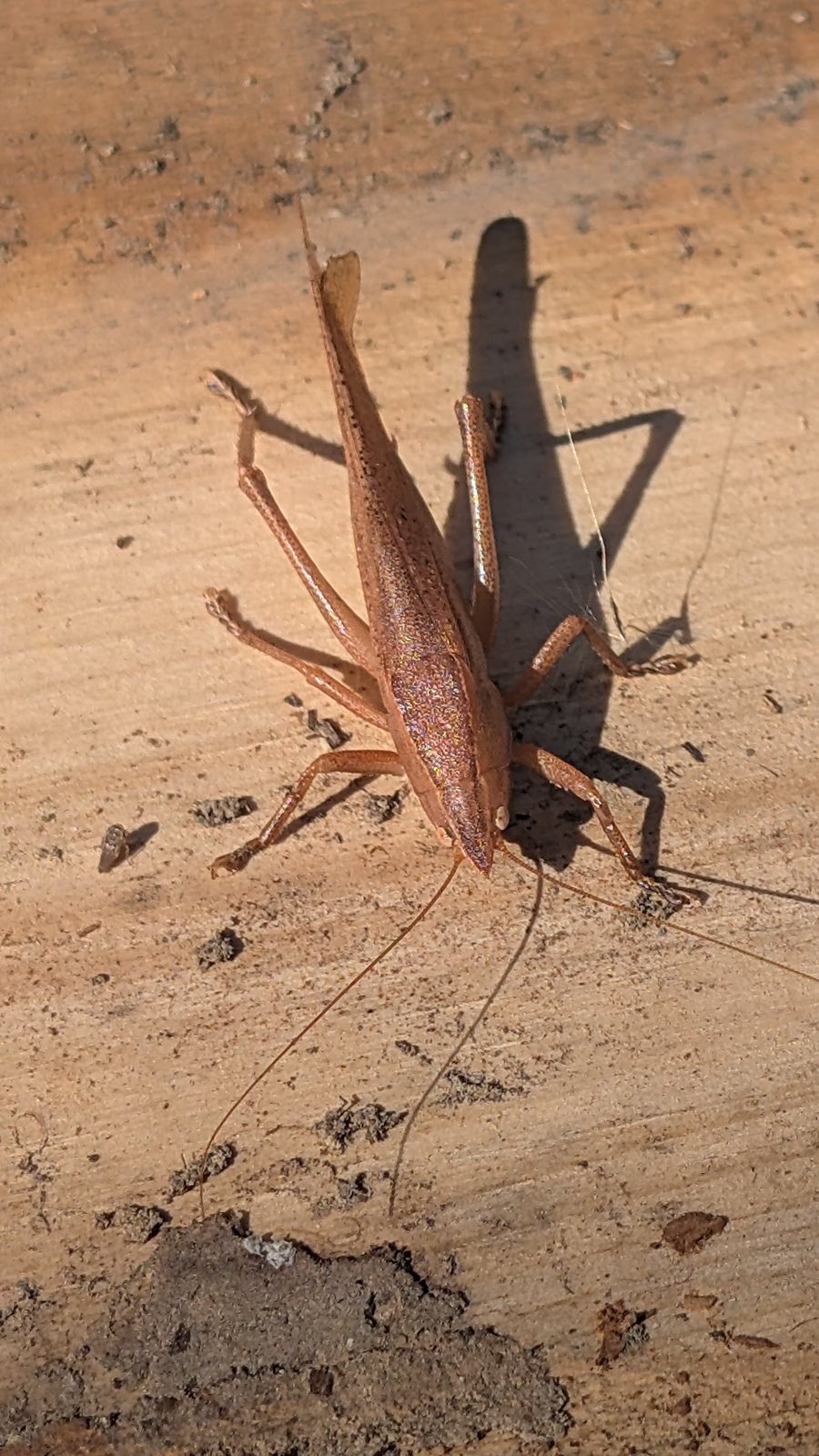
That steady buzzing from the meadow on warm nights is katydids. Fun fact: katydids sing by rubbing their wings together, and they hear with ears on their front legs.
Longhorn beetle
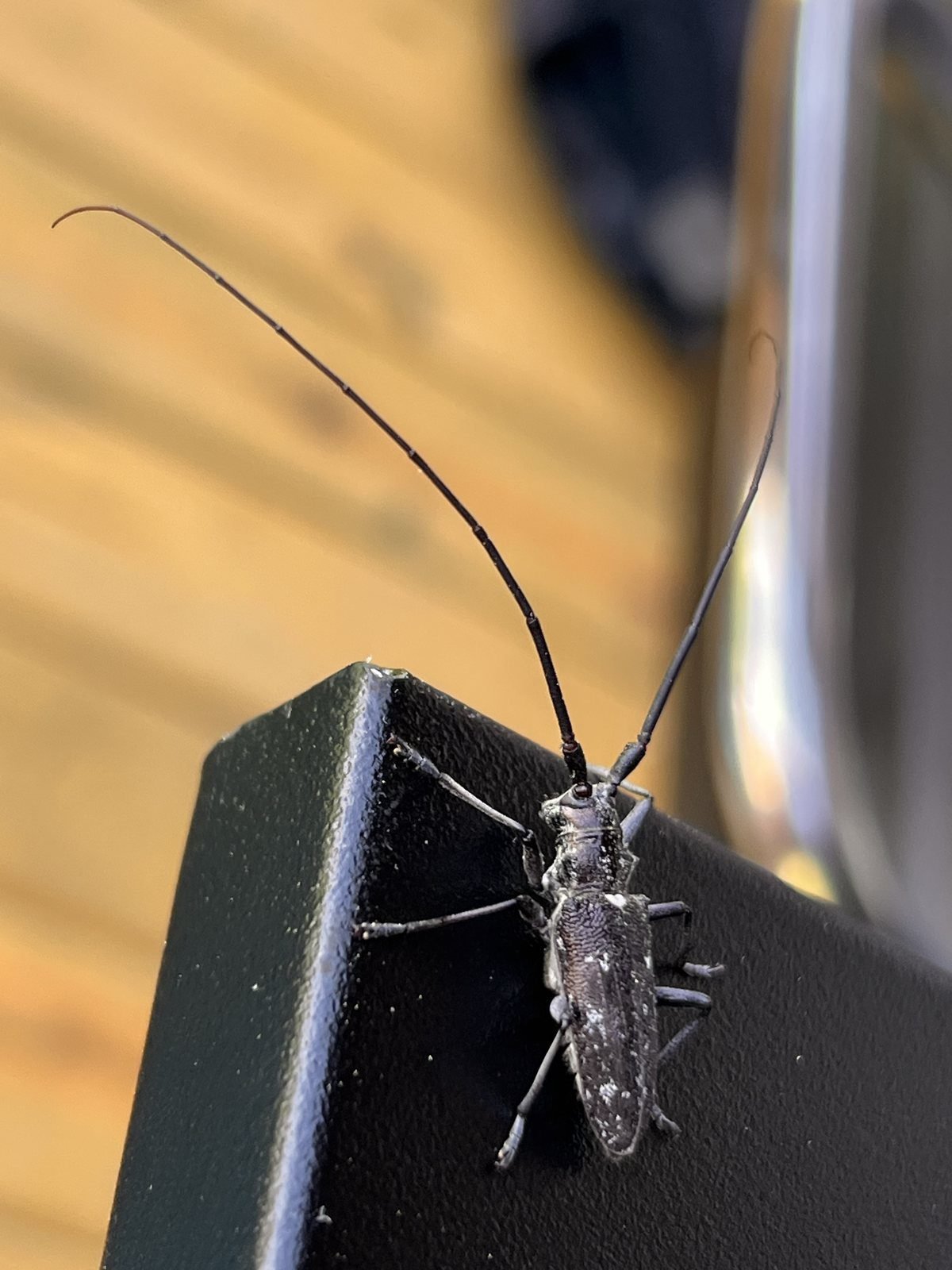
Fun fact: a male longhorn beetle’s antennae can be twice as long as its body. Some longhorns are called sawyers, because their larvae chew through dead pine so loudly that you can sometimes hear them in a quiet log pile.
Yellow garden spider
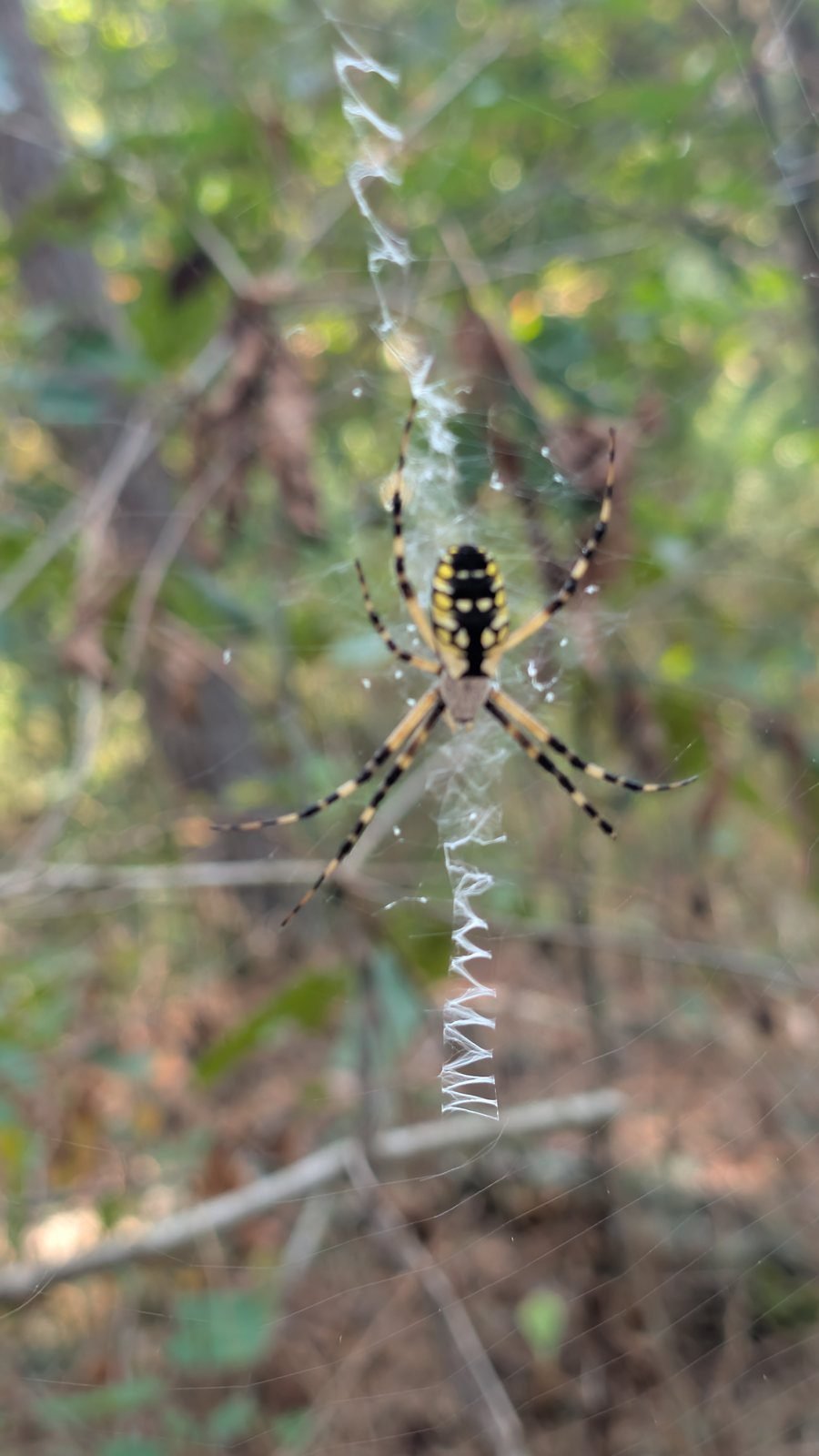
Yes, she’s big, and in nature bright yellow and black often means danger, so she can look a little scary. Please don’t be scared of her. She is completely harmless to people. A garden spider would much rather run than bite, and she’s one of the best friends the flower beds have. Every day she catches mosquitoes, flies, gnats and the grasshoppers that chew on the flowers.
Fun fact: she weaves a thick zigzag of silk down the middle of her web, and folks in the South call her the “writing spider” because of it. Nobody is completely sure what the zigzag is for. She also eats part of her web every evening and spins it fresh, recycling the silk. If you see her, please let her be. She’s on our side.
Ring-necked snake
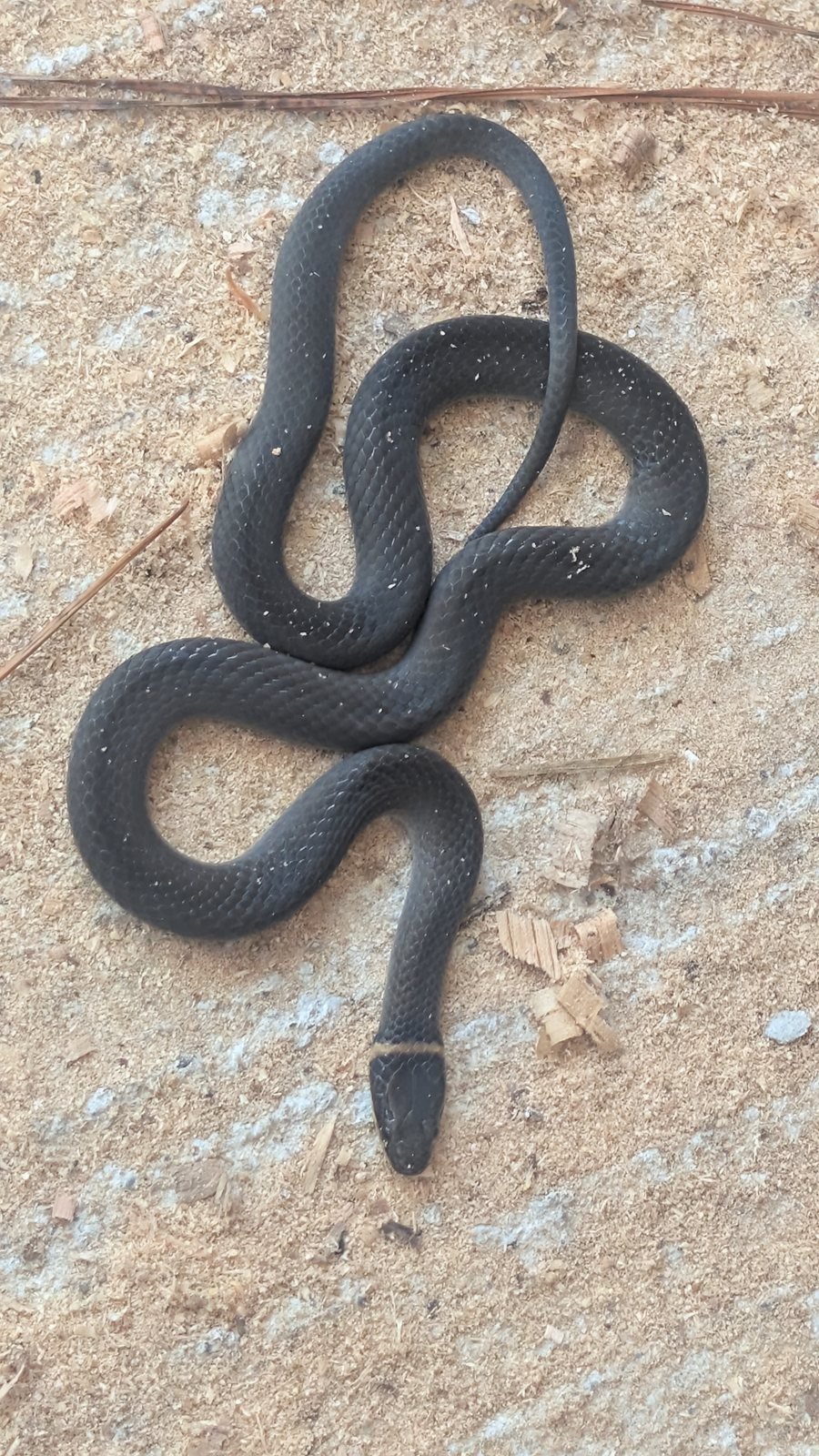
Don’t let the close-up fool you. This snake was about 10 inches long and not much thicker than a pencil. Ring-necked snakes are shy and harmless, and they spend most of their lives hidden under logs and leaves.
They’re good to have around. They eat slugs, earthworms and other small critters, and they’re a sign of a healthy, undisturbed patch of ground.
Fun fact: when a ring-necked snake feels threatened, it doesn’t strike. It curls its tail up to flash a bright yellow-orange belly, a bluff meant to startle whatever is bothering it. If you’re lucky enough to spot one of these little friends, please leave it where it is.