Most of these 18 acres in Coalmont, Tennessee haven’t been touched since at least the 1940s, and we’d like to keep it that way. Here’s how we built our cabins, dome, and tent in the woods while keeping as many healthy trees standing as we could, what we leave alone on purpose, and the two groups we support because they do the same work on a much bigger scale.
Caring for the Land at a Glance
- The property: 18 wooded acres in Coalmont, Tennessee, enrolled in Tennessee’s greenbelt program as forest land
- Before we built: a professional arborist spent three days taking an inventory of every tree
- What was cut: dead and dying trees, plus trees a tornado had already knocked down
- Left wild: about two acres along our creeks, never mowed or cut, with no trails
- Where the wood went: firewood for our wood-fired pizza truck, with a few logs saved for building
- Native wildflowers: planted since 2025, with seed saved every fall
- Weeds: cut or pulled by hand, or treated with natural weed killers, never chemical ones
- Groups we support: Tread Lightly! and the Xerces Society for Invertebrate Conservation
How Did We Build Here and Keep the Woods?
We bought the property in late 2020 and started work in 2021. Before anything was cut, a professional arborist spent three long days walking the land and taking an inventory of every tree’s species and size. The arborist marked every tree that was dead or close to it, and those were the trees we had cut.
A tornado had come through several years before we bought the land and left downed trees where the bathhouse and the dome now stand. We cleared those spots and used a few natural openings for the cabins, the dome, the tent, and the bathhouse. We took down as few healthy trees as we could.
Every tree we cut became firewood for Pyro Pies, our wood-fired pizza truck, and we’ve set a few logs aside for future building.
What Parts of the Property Do We Leave Wild?
Two parts of the property stay as close to untouched as we can keep them. The first is a low, wet hollow with a wet-weather creek running through it, roughly 100 feet across and 500 feet long. The second is a strip 30 to 40 feet wide along the banks of our creeks, about 1,700 feet of it in all. Together that’s about two acres that we never mow or cut, with no trails through them.
That ground is thick with ferns, and it’s where our lady slippers grow. Lady slippers are native orchids that can take years to bloom, and they almost never survive being dug up and moved. That’s why we don’t publish where they are.
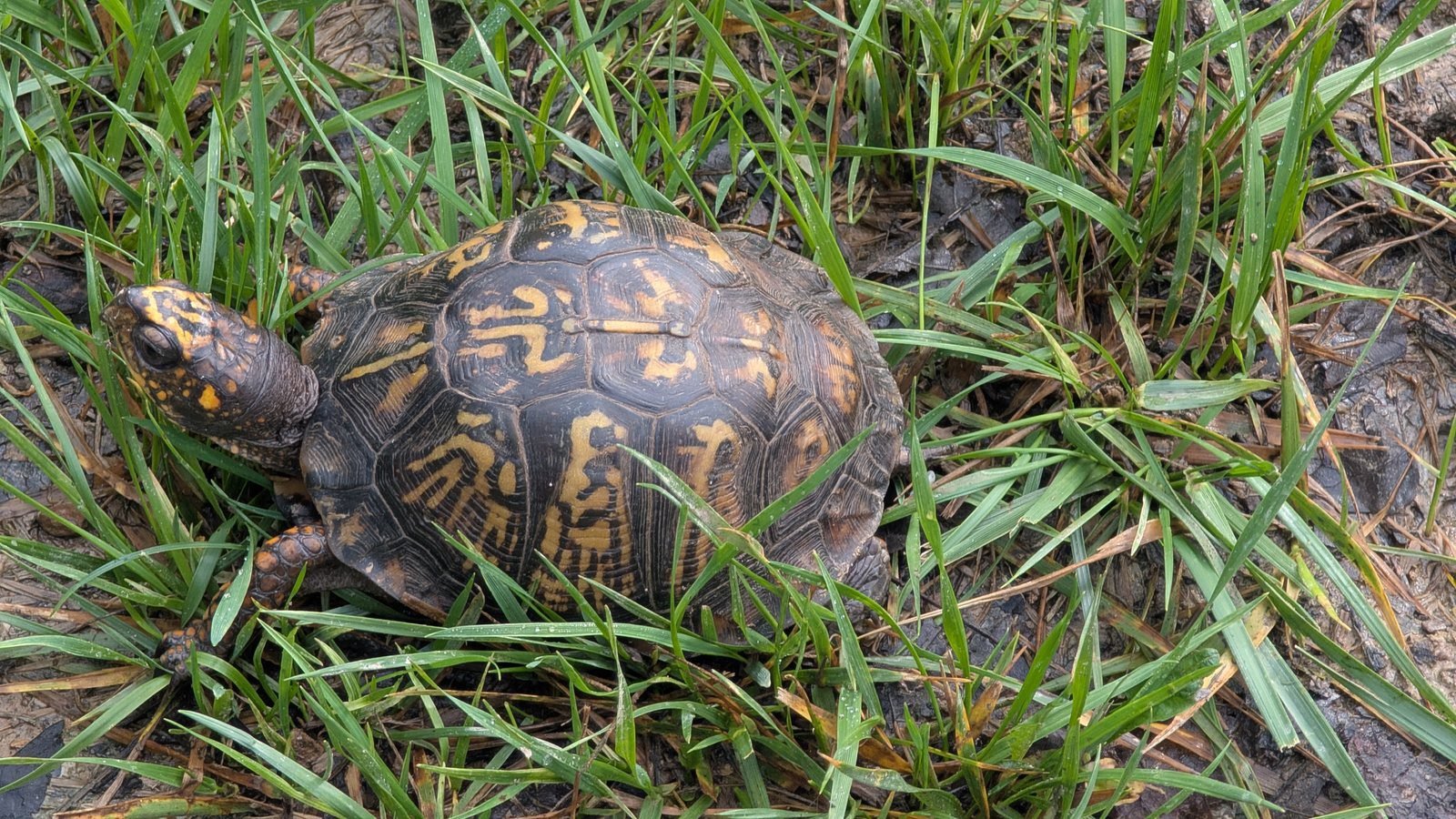
Damp leaf litter and old logs are home to the small animals that keep a forest working. We’ve found beetles, spiders, a millipede, and a snail or two here. They break down fallen leaves and wood, and they feed the salamanders, box turtles, and birds on our Other Neighbors page. The southern two-lined salamander we found spends its first year or two living in a stream, so it needs clean creek water.
Why Do We Leave Dead Trees Standing?
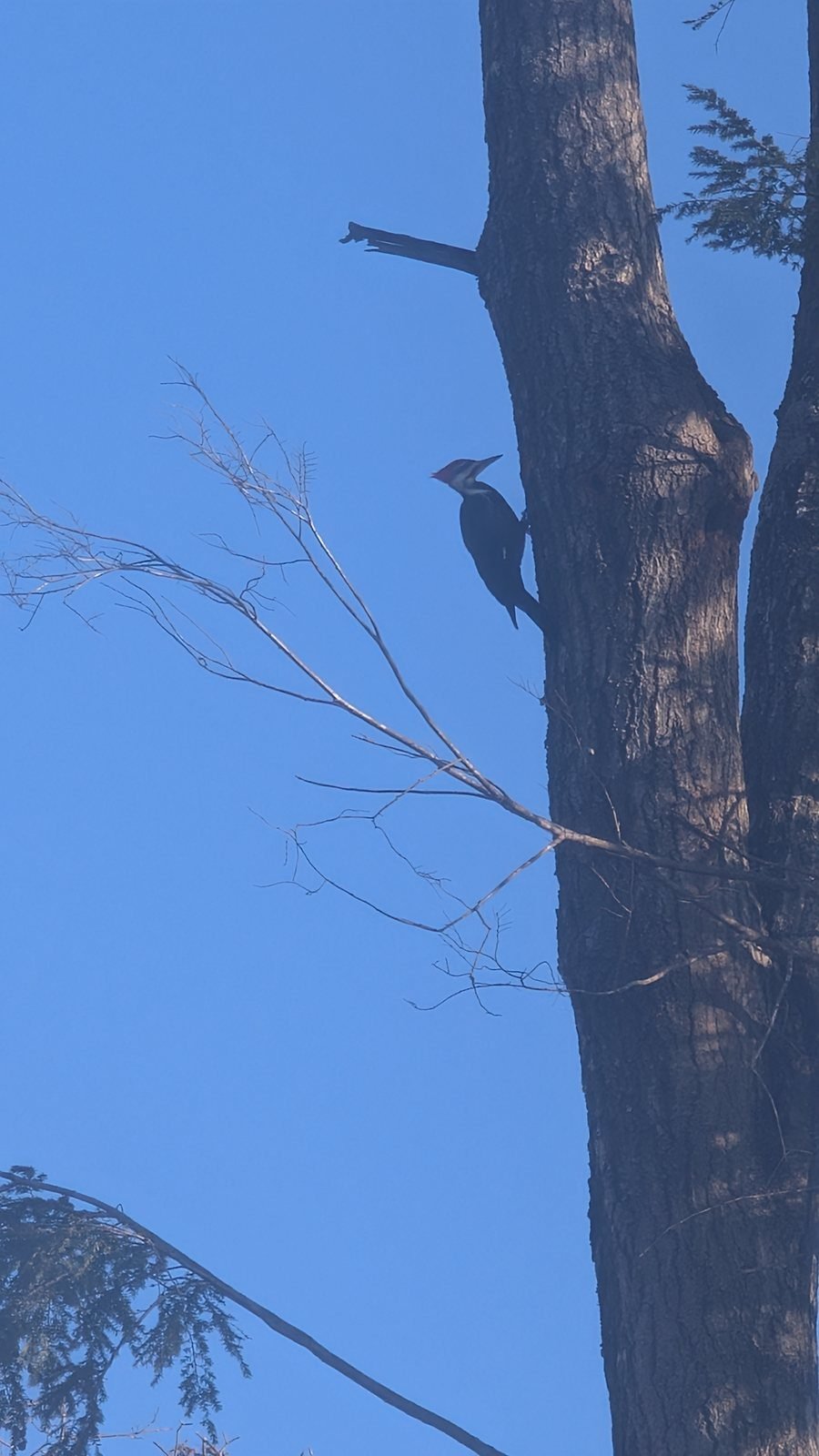
Wherever a dead tree is safely away from the units, paths, and parking, we leave it standing. Pileated woodpeckers chisel big rectangular holes in dead and dying trees to get at carpenter ants, and owls and flying squirrels move into those holes later. Longhorn beetles lay their eggs in dead pine, and their larvae chew through it.
How Are We Bringing Native Wildflowers Back?
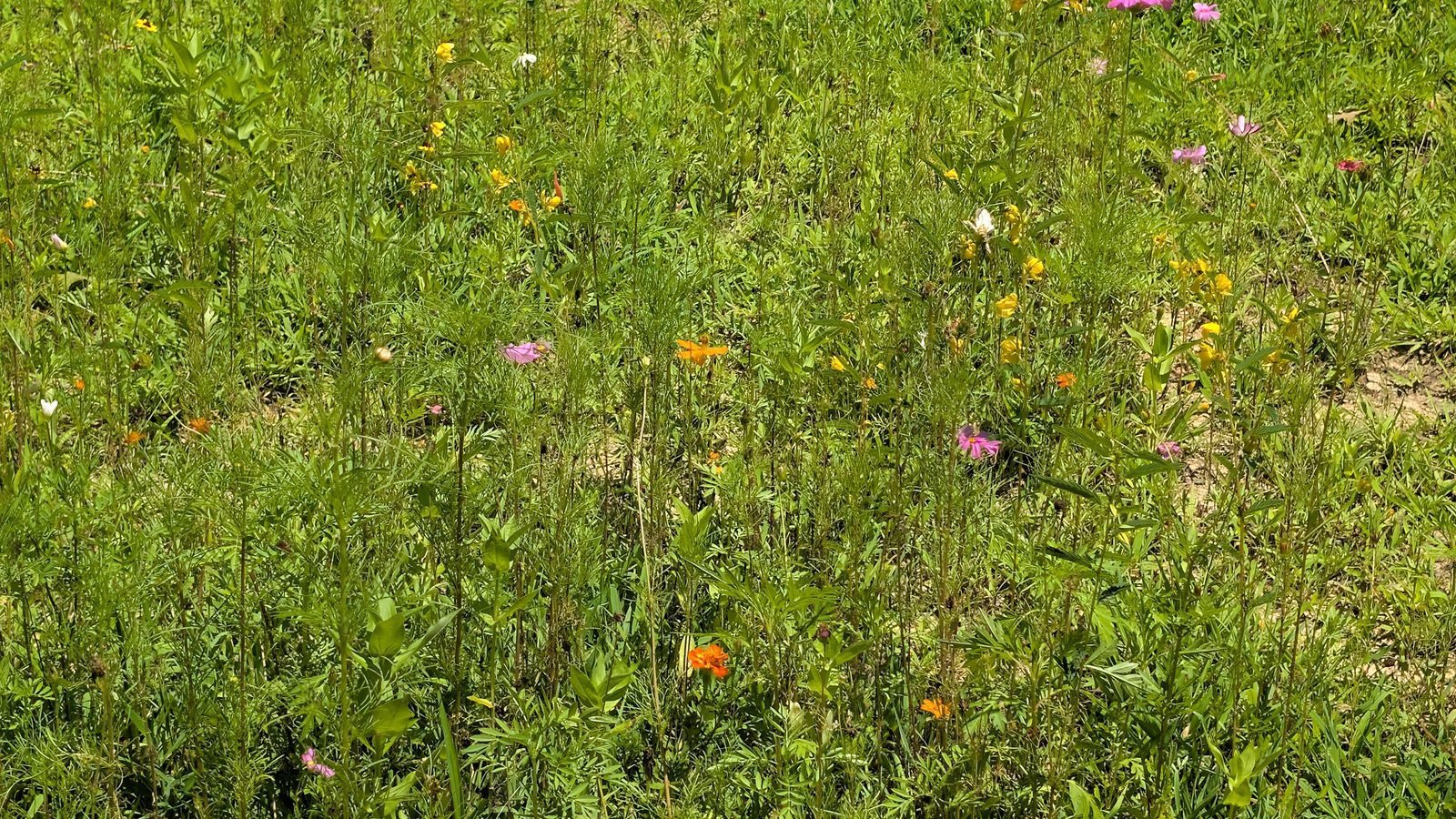
In 2025 we started planting native wildflowers. It’s slow, expensive work, and the first patch didn’t take. We replanted that fall and again in spring 2026, and by summer it was full of black-eyed Susans and coreopsis. In 2026 we added four more beds, and this fall we’re starting new patches in the back meadow and along the pond.
We collect seed from the beds every fall to start the next ones, and we leave about a third of the seed heads standing because the goldfinches eat them. Partridge pea brought the cloudless sulphur butterfly, which now raises its caterpillars here, and its locked-in pollen feeds bumble bees and other big native bees. The full list of what we grow, natives and garden flowers alike, is on our Wildflowers page.
How Do We Handle Weeds and Bugs?
When we find invasive plants like multiflora rose, we cut or pull them by hand. We don’t spray chemical weed killers. When hand-pulling isn’t enough, we use natural weed killers, most of them made from common household products.
Inside the units we use natural pest treatments. Outside, our chickens and ducks do a lot of the bug control for us. You can meet them on the Our Animals page.
Which Conservation Groups Do We Support?
Tread Lightly! We’re a member of Tread Lightly!, a national nonprofit that promotes responsible use of off-road vehicles outdoors and leads trail maintenance and stewardship projects across the country. Coalmont OHV Park is about 19 minutes from us, and many of our guests come here to ride it. We want those trails to stay open and in good shape. Our page on Coalmont OHV Park camping has more on riding the park.
The Xerces Society. We proudly support the Xerces Society for Invertebrate Conservation, whose work includes pollinator conservation. Invertebrates are the small animals without backbones: the bees, butterflies, moths and beetles that pollinate plants, and the spiders, millipedes and snails that keep the soil healthy. Our wildflower beds and our wild creek banks are there for them.


Caring for the Land: Frequently Asked Questions
Do you use pesticides or weed killers?
We don’t use chemical weed killers. We cut or pull invasive plants by hand, and when that isn’t enough, we use natural weed killers, most of them made from common household products. Inside the units we use natural pest treatments.
Can I see the lady slippers?
We don’t publish where they grow, to protect them. If you’re staying with us, your guest guidebook has more. Wherever you find wildflowers on the property, please enjoy them where they are and leave them for the next guest.
What is greenbelt forest land?
Tennessee’s greenbelt program covers land kept as working farm, forest, or open space. Our 18 acres are enrolled as forest land.
Can I charge an electric vehicle?
Yes. Level 1 charging with a J1772 plug is always available, and Level 2 is available by request. Both are free. Let us know before your stay if you’d like Level 2.
Are the animals on the property dangerous?
No. Everything on our Other Neighbors page is harmless to people, including the big yellow garden spider. Please admire the salamanders, turtles, and snakes where you find them and let them be.
How can I support the Xerces Society?
You can donate to support invertebrate conservation, follow these four simple steps to help bring back the pollinators, and plant native, flowering plants.